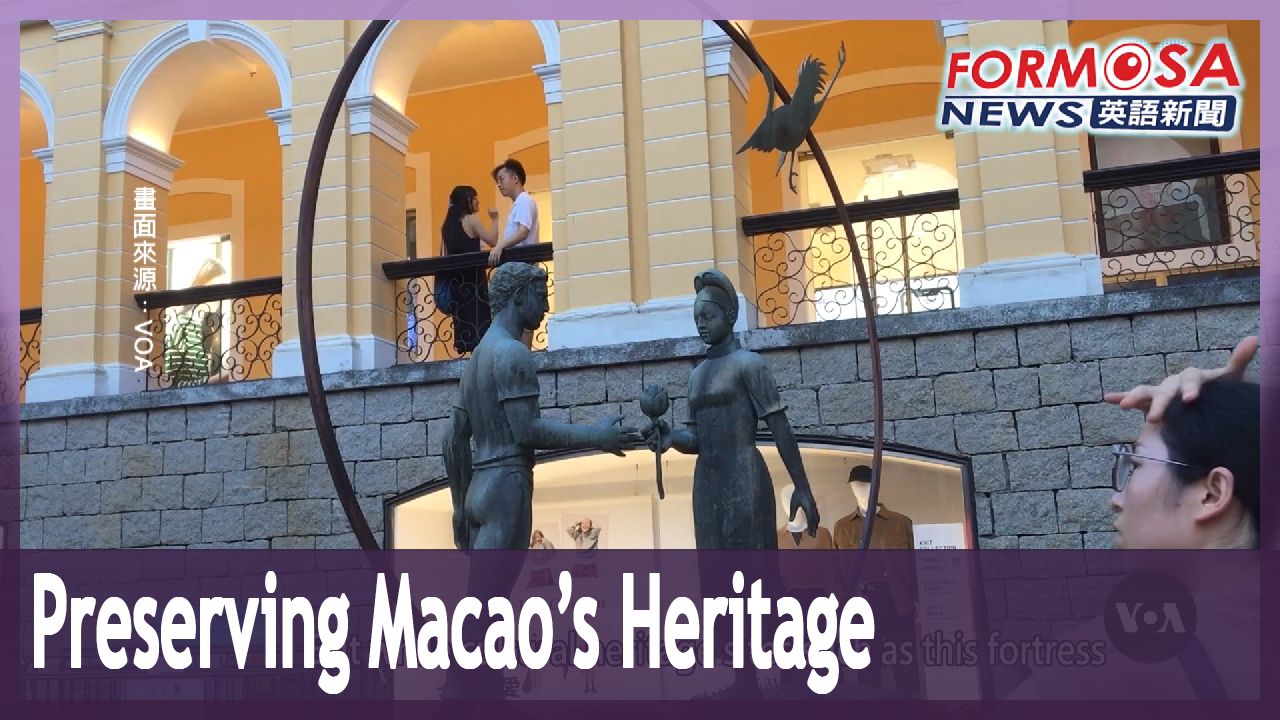
25 years after China handover, Macao fears losing unique heritage
Macao is known as "the Las Vegas of Asia," with a huge gaming industry in glitzy casinos. It is also home to a unique ethnic group the Macanese. Twenty-five years after the former Portuguese colony’s handover to China, however, there is worry among the Macanese and others that a part of Macao’s unique identity is fading away. Voice of America’s Cindy Sui explains.
Cozinha Aida is a restaurant with generations-old recipes, preserved and passed down. The eatery is a place to enjoy some home cooking of Macao’s Portuguese-Chinese mixed-race population, known as Macanese. And it is named after its founder, the grandmother of Ivone de Jesus.
Ivone de Jesus
Macanese restaurant operator
“The special thing about Macanese people is because Macanese people usually speak a few languages ... Portuguese, Macanese ... and like my grandma, she’s one of the 50 people who actually maintains the dying language called Patua.”
The Macanese say their identity is unique, from the languages they speak – a mixture of Cantonese, Portuguese and English – as the main ingredients, to the food and its fusion of Portuguese and Chinese cuisine.
But the Macanese and Portuguese populations in Macao are seeing a threat to their unique culture.
Although the latest census conducted in 2021 showed the number of people in Macao who are either full or mixed Portuguese has increased by nearly 5,000 compared to 2011 and 2001, shortly after the handover, it’s still just under 2 percent of Macao’s population of about 680,000, according to official statistics.
The Portuguese population, which also makes Macao unique, is also expected to decline.
The government has stopped giving preferential treatment to people from Portugal who want to live and work in Macao. They’re now treated like other foreigners, given a temporary work permit if they have a job.
Delfim Chacim
Macao resident
“This means our Portuguese culture will be weak for the next generation. All we’ll see will be the architecture built by the Portuguese people, such as the fortress, but they won’t know the real story. It will be no different from another province in China without such things.”
But while cultural heritage sites such as this fortress are being protected, and Portuguese is an official language here, along with Chinese, Macanese residents fear as time passes and with a decline in their population, they will lose their language and culture – something they say is crucial to keeping Macao’s uniqueness alive.
Cindy Sui, VOA News, Macao.
For more Taiwan news, tune in:
Sun to Fri at 9:30 pm on Channel 152
Tue to Sat at 1 am on Channel 53
2024-02-02