Succulent expert and Chinese immigrant shares gardening love
Succulent expert and Chinese immigrant shares gardening love
2024-02-26
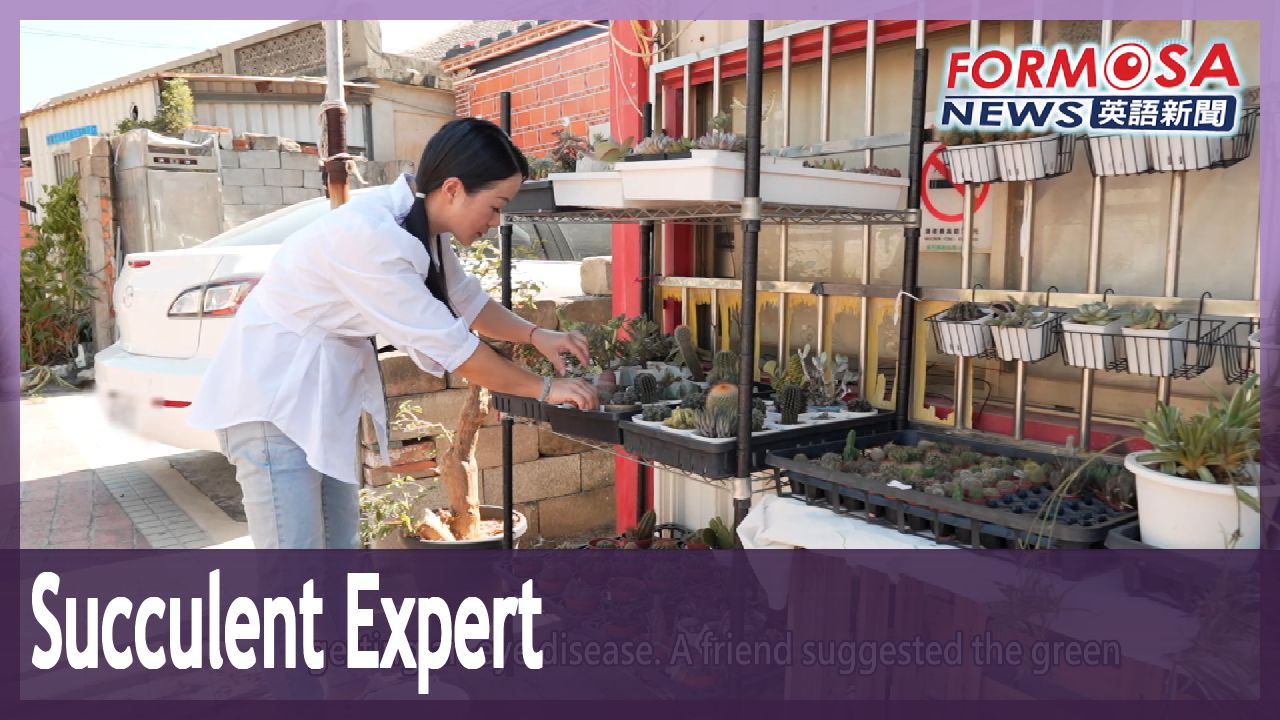
Today we meet a succulent expert and Chinese immigrant who is sharing her gardening knowledge with her community. Qiu Zhifen moved to Kinmen 19 years ago to be with her husband. After she developed an eye disease, friends encouraged the homemaker to start growing succulents. Soon, she fell in love with the beautiful green hues of this special family of plants. Now she runs her own succulent studio, creating pots and spreading the love of these plants far and wide.
After sending her kids off to school, Qiu Zhifen gets down to caring for her potted succulents, removing dead leaves, and giving them fertilizer. This desert rose is getting so big, it needs a larger pot.
Qiu Zhifen
Succulent expert and Chinese immigrant
Generally, when you repot a desert rose you use a set of pots.So, you take it straight out of the old pot, without touching the roots, and you put it straight into the new one, and then you fill it up with earth.
Qiu started growing succulents four years ago after getting an eye disease. A friend suggested the green would help her eyes relax. Qiu fell in love with the vast world of succulents. Today her studio is full of more than 1,000 plants across 100 species to look after.
Qiu Zhifen
Succulent expert and Chinese immigrant
Kinmen has a very dry climate, with little rain, so it’s good for succulents. Especially in the winter, the succulents are beautiful. When there’s a large drop in temperature from day to night, the succulents gain a very beautiful color. That was when I gradually started to fall in love with them.
Qiu advises succulent owners that they need plenty of sunlight, constant ventilation, and moist soil without being flooded. It’s also very important that they’re planted in soil that’s airy and hydrophobic.
Qiu Zhifen
Succulent expert and Chinese immigrant
Most of what I spend goes on soil, because they grow so beautifully when you plant them in a combination of special soil for succulents and peat from South Korea.
She’s also developed her own cement pots and started this succulent studio. She teaches children and adults how to paint their own flower pots, and shares her pots in the local market. Qiu is grateful to her neighbor Chang Ling-li for her friendship and support as she’s grown her project.
Qiu was born in China’s Zhangzhou, and was working in Xiamen when she met her Taiwanese husband. They moved to Kinmen 19 years ago.
She says she’s now used to the climate and pace of life in Kinmen as she spends her days with her plants, enjoying the natural world.
As her children grow up, she hopes she can grow her studio even further and break out of the restrictions she finds herself in.
This story was provided by the program "We Are Family"
Funded by New Immigrant Development Fund
For more Taiwan news, tune in:
Sun to Fri at 9:30 pm on Channel 152
Tue to Sat at 1 am on Channel 53
栽種百款多肉植物 家庭主婦成綠手指職人
2024-02-26
中國新住民邱智芬四年多前栽種多肉植物,原本是為了讓眼睛多接觸綠色,放鬆舒壓,如今她已成為多肉植物的專業講師。從家庭主婦創業有成到成為綠手指職人,她非常感謝一直在身旁鼓勵支持的貴人,讓金門媳婦不寂寞。
送小孩上課後,邱智芬開始檢查多肉盆栽,挑掉枯葉、添加肥料,已經越長越大的沙漠玫瑰,得換個盆器讓他生長。
[[中國新住民 邱智芬]]
“沙漠玫瑰一般換盆就直接用套盆的,套盆就是直接從盆子裡拿出來,不要把它的根用掉,直接放進去,旁邊再把土給它填滿。”
四年多前,因為眼疾,朋友介紹種植多肉植物讓眼睛舒壓,結果,邱智芬迷戀上多肉的百變樣態,如今工作室裡有上百個品種,超過千盆的多肉植物要照顧。
[[中國新住民 邱智芬]]
“金門也是很乾燥的天氣,雨水又少,很適合種多肉。特別是冬天的時候,多肉都超美的,日夜溫差大,多肉的顏色就變得很美,那時候就慢慢喜歡上多肉了。”
邱智芬提醒,家裡的多肉要有足夠的日照、保持通風,維持土壤濕度,不能夠積水,介質的透氣、疏水性很重要。
[[中國新住民 邱智芬]]
“我花最多錢就是它的土,因為有多肉專用的多肉土,加韓國的泥炭土,這樣搭配種起來的多肉都很漂亮。”
為了讓植物長得更好,她也開發水泥盆器,成立工作室,讓社區的大人小孩學習盆器彩繪,也在市集裡分享創意盆栽。邱智芬很感謝鄰居張玲麗一路溫情相挺,給予協助。
當年在廈門上班的漳州姑娘,因為跟臺灣先生相遇、相戀,來到金門生活19年。
邱智芬已經習慣這裡的天氣、生活步調,每天捻花惹草,享受金門的寧靜自然。
她希望孩子漸漸長大後,騰出時間,把工作室做得更好,超越現況。
以上內容由《我們一家人》節目提供內政部移民署監製
更多新聞內容,請鎖定:
民視台灣台(152頻道)週日至週五晚上9:30
民視新聞台(53頻道)週二至週六凌晨1:00
Related News