Retirees learn to make traditional floral hairpins
Retirees learn to make traditional floral hairpins
2024-05-17
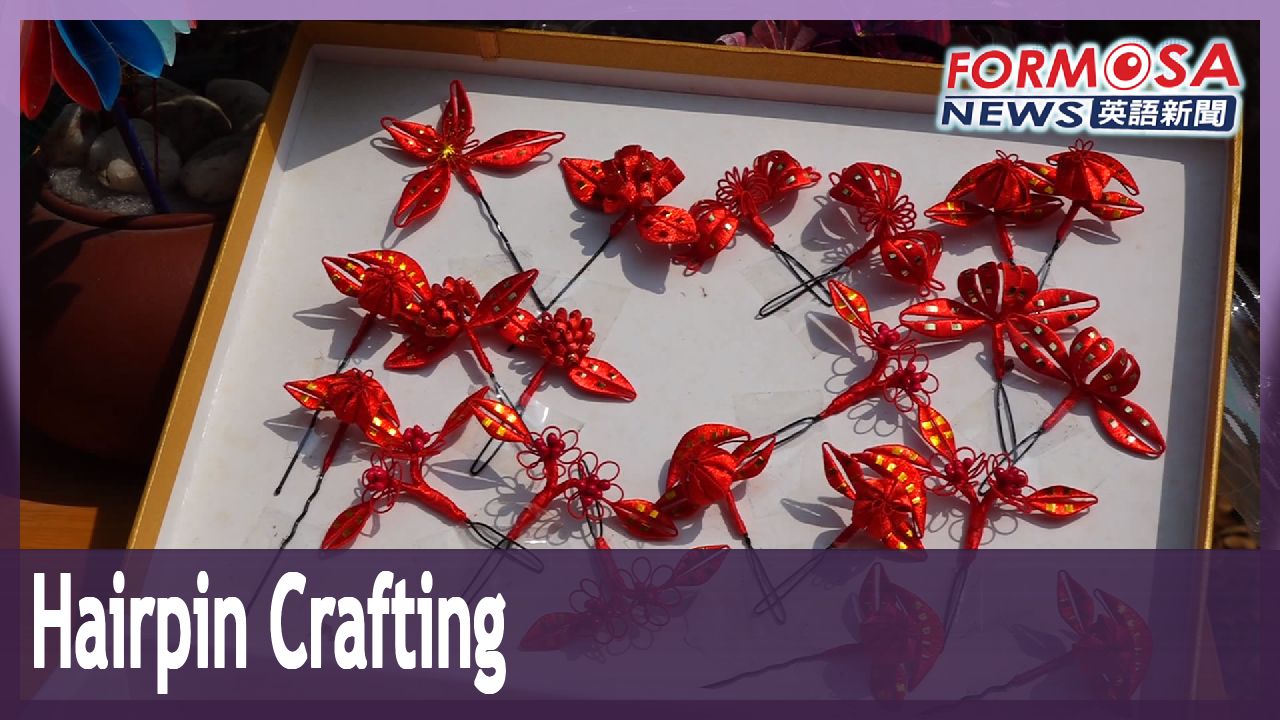
In Yulin county, a local hairpin maker, Wu Ssu-han, used to have a very different job doing animal husbandry and manufacturing. But after retiring many years ago for her health, she learned a new skill through a government retraining program. She now teaches in her community in Yunlin’s Dounan Township, helping her students take a walk down memory lane by making traditional hairpins.
These hairpins are a classic Taiwanese handicraft, at one time essential for every new bride. They used to come with all kinds of decorative flourishes, requiring attention to detail and patience to make. But as times have changed, the tradition has waned.
Wu Ssu-han lives in the Hsinlun community of Yunlin’s Dounan Township. She used to work in husbandry and manufacturing, but had to retire from the burden it placed on her health. But she’s still skilled with her hands, and eight years ago got the chance to learn a new skill through a Ministry of Labor program.
Wu Ssu-han
Hairpin crafting teacher
When I started out, I didn’t know what they were. Favorlang River Community College was accepting students in their hairpin crafting program. I figured since I know so little about it, I want to give it a try, so I signed up. That was already seven or eight years ago.
Wu regularly holds classes teaching elderly residents how to make hairpins and other crafts using the technique. In the process, it helps them reminisce about art from their youth.
Wu Ssu-han
Hairpin crafting teacher
The flower that brides used to wear in their hair was sometimes made of cloth or plastic, so they didn’t know it could be so beautiful with wire and paper. So I wanted to share this with my older neighbors.
The Hsinlun Community Development Association organizes activities to help elderly participants stay active and healthy.
Chen Ching-chuan
Community association chair
We have some classes geared toward delaying the onset of dementia. Sometimes people come in with shaking hands, but after a while it improves.
Although she’s retired, Wu hasn’t slowed down. She has never stopped seeking meaning in life and living to the fullest.
For more Taiwan news, tune in:
Sun to Fri at 9:30 pm on Channel 152
Tue to Sat at 1 am on Channel 53
退休後的春天 樂齡學習春仔花工藝
2024-05-17
雲林斗南新崙社區有位纏花老師,她本來從事畜牧和製造業,但多年前因為體力因素選擇退休,之後透過勞動部的計畫學習第二專長,接觸到春仔花。有雙巧手的春仔花老師,現在就在社區擔任教學老師,指導學員編織春仔花,也帶領眾多學員,回憶早年的手工藝之美。
春仔花又稱纏花,是台灣民間特殊的手工藝品,也是早期新娘出嫁時必備的髮飾。古早纏花配件各個細緻典雅,製作過程需要細心和耐心,更需要投入大量的時間,但隨著時代改變,在現今社會中越來越稀少。
住在雲林斗南鎮新崙社區的吳絲涵,原本從事畜牧業和製造業,但因體力不堪負荷選擇退休,有雙巧手的她,八年前因緣際會下,透過勞動部計畫學習第二專長,從中便接觸到春仔花。
[[社區編織老師 吳絲涵]]
“剛開始也不知道什麼是春仔花。後來就是虎尾溪社大,剛好有針對春仔花在招生,我就想既然稍微知道這項手藝,我就想要再深入了解,所以我就報名去學,學到現在已經七、八年了。”
吳絲涵還定期到社區,教導長輩製作春仔花,讓參加的長輩回憶早期手工藝之美。
[[社區編織老師 吳絲涵]]
“他們早期結婚戴在頭上的那朵,有的是布做的,有的是塑膠製的,所以他不知道用線跟紙片編出來的顏色有辦法這麼漂亮,所以我才想說跟長輩大家分享這個成果。”
新崙社區發展協會安排各項動靜課程,讓長輩在創作的過程,動手動腦進而達到延緩退化。
[[新崙社區發展協會理事長 陳靜娟]]
“讓他們配合一些延緩失智的課程,讓長輩不至於說(退化)那麼快,因為他有時後來上課手會抖,但做久了手會比較進步。”
雖然退休了,但吳絲涵並未停下腳步,而是積極尋找人生的意義,活出自己的價值。
更多新聞內容,請鎖定:
民視台灣台(152頻道)週日至週五晚上9:30
民視新聞台(53頻道)週二至週六凌晨1:00
Related News