How to grow street trees that don’t endanger pedestrians
How to grow street trees that don’t endanger pedestrians
2024-05-26
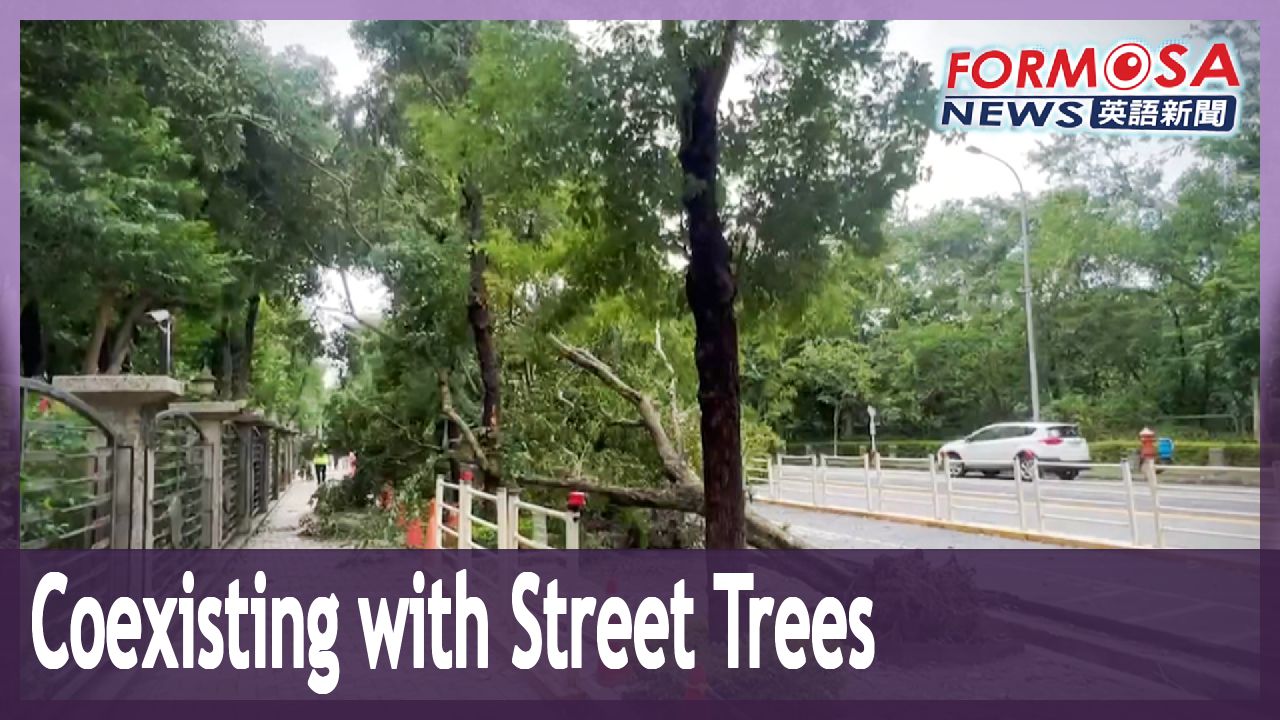
In Taiwan’s big cities, trees can be seen almost everywhere. These trees provide shade, purify the air, and even reduce noise pollution. But street trees can also be hazards to the people around them. They’ve caused a number of issues in recent years, whether it’s by buckling sidewalks with their roots or by falling onto roads. Is it possible to have all the benefits of street trees and none of the risks? We find out in our Sunday special report.
Here in Kaohsiung, next to Chung-cheng Industrial High School, a row of roadside trees has been cut down. This stump belonged to a towering Bodhi tree and is now covered with cloth.
Looking back with Google Street View, in 2022, this Bodhi tree stood five stories tall, and three people were needed to encircle its trunk. But as the tree grew, its roots cracked the sidewalk. Putting pedestrians first, officials cut the row of trees to create a safe space for walking.
Zhuang Jie-ren
Forest City Association, Taiwan head
So, when this tree was first planted, it was still very small, so they create a tree pit of 1 square meter. Then the tree grew into a giant, so of course it burst out from that space.
Confining big trees to small shoes not only ruins the shoes, but also makes the trees unsteady, so that they can easily topple over onto people and vehicles. And these aren’t the only problems that can be caused by street trees.
Some trees drop flowers that make surfaces slippery or that emit unpleasant odors. Other trees shed leaves or fruits that can cause injuries. The question officials grapple with is whether such trees should be removed.
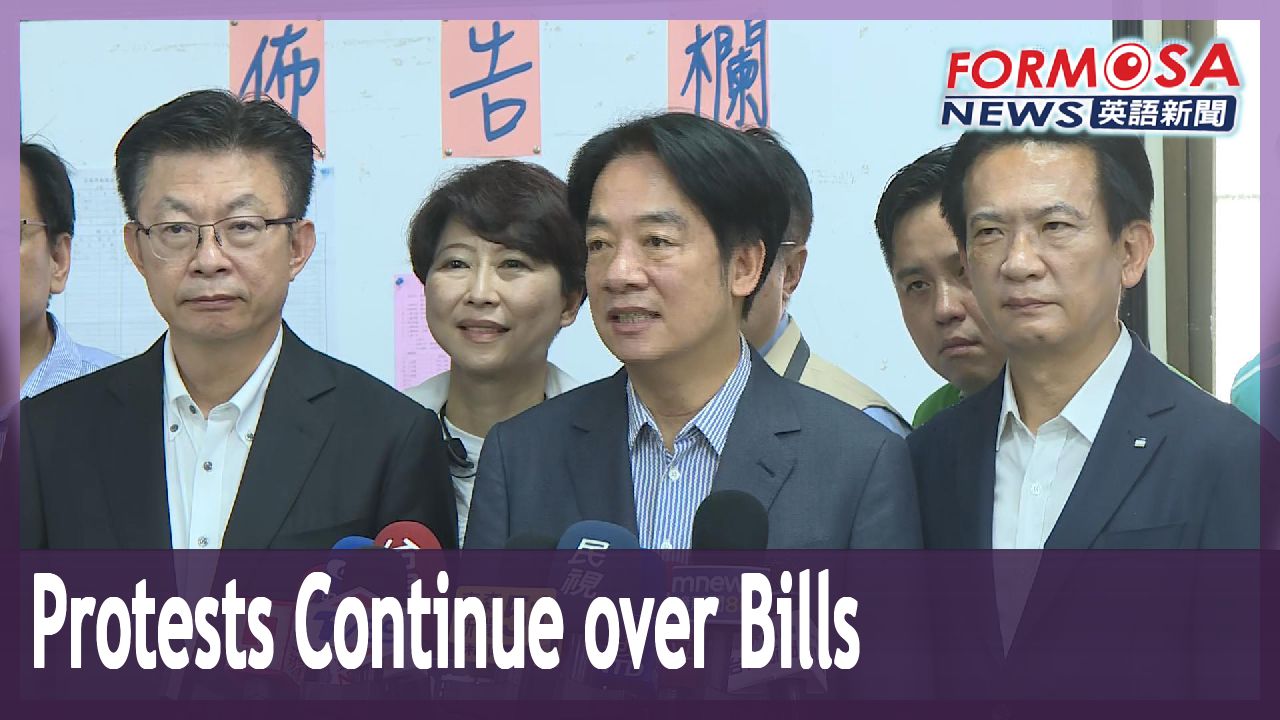
This issue is at play here in Xindian District’s Meitan Borough. The borough warden, Chien Ming-feng, is concerned about a group of 60-year-old breadfruit trees. They stand unsteadily under the sidewalk, and are especially hazardous in the summer when their fruits ripen.
Chien Ming-feng
Meitan borough warden
The fruit of the breadfruit tree is about this big. You can imagine what would happen if it fell from a great height.
The borough warden furnishes a stack of information on the trees. Discussions on relocating the trees began 10 years ago. Opinions were sharply divided, and 10 years later, the trees remain, with locals still lodging complaints.
Chien Ming-feng
Meitan borough warden
The main problem is that the trees endanger that path by the school. It’s a pedestrian safety problem. Navigating that path is already challenging enough for able-bodied people, let alone for someone in a wheelchair.
Despite the presence of a sidewalk, locals are forced to walk on the road and compete with passing vehicles. Why has it been so hard to relocate six breadfruit trees? What’s the case for leaving them in place?
Hsu Mei-hui is an urban planner and a resident of Meitan Borough. Today she’s measuring the cooling effect of tree shade.
In winter, tree shade can provide cooling of 3.6 degrees Celsius. In summer, the cooling effect is as much as 13 degrees. Hsu is an advocate of retaining the trees, saying they’re needed to mitigate heat waves amid climate change.
Hsu Mei-hui
Urban planner
Summer is arriving earlier these days. I remember that in 2016, in 2014, temperatures were already as high as 38 degrees Celsius in May. It’s especially bad in greater Taipei, where there’s a significant urban heat island effect.
Trees lower temperatures, reduce noise pollution, absorb carbon dioxide, and improve air flow to disperse air pollution. They also play an important role in pedestrian and vehicle safety.
Hsu Mei-hui
Urban planner
Look at the median strips of roads. They are mainly composed of shrubs, and that’s a safety consideration. They reduce the headlight glare of oncoming vehicles. Trees can also serve as a divider. On sidewalks, because people walk slower, large trees that provide shade are used.
Street trees enhance safety by separating pedestrians from vehicles. Their green leaves can reduce eye fatigue for drivers and provide a calming oasis for urban dwellers.
Shen Shu-chiao
Forestry and Nature Conservation Agency official
The planting design is multilayered, for instance, there are large trees at the top, followed by shrubs, and then flowers or grass at the bottom. This creates a rich visual effect that is more pleasing to the eye. The other thing is that this design attracts insects, butterflies, bees, and birds, creating an unfiltered and accessible natural landscape for the public.
Zhuang Jie-ren
Forest City Association, Taiwan head
If you look at it from a variety of angles, you’ll find that these trees can help to lower health insurance costs. They can save us the cost of building power plants, of installing infrastructure like air purifiers and air conditioning. You’ll find that trees are very cost-effective utilities.
But while street trees offer immense value, they can also endanger the people around them, by falling over, destroying sidewalks, or otherwise causing injuries. Is it possible to have all the benefit of trees without any of the risk?
Deep in the mountains of Yilan, a government-run nursery focuses on trees most suited for the urban environment.
These verdant saplings are trimmed routinely so that they thrive. They are all species indigenous to Taiwan.
Shen Shu-chiao
Forestry and Nature Conservation Agency official
These trees are naturally from Taiwan. They have some unique characteristics and are already well-adapted to the environment here.
The Forestry and Nature Conservation Agency selected 110 native species that are most suited for urban planting. The goal is to preserve the many benefits of street trees bring, while eliminating issues like shallow roots or unpleasant flower odors.
Shen Shu-chiao
Forestry and Nature Conservation Agency official
Currently we’re focused on promoting trees with more deeply rooted systems, such as the Formosan gum, Subcostate crape myrtle, Taiwanese cheesewood, and Formosan ash. These species have been well-received.
But the plain look of native trees can’t compete with more eye-catching, trendier species such as the cherry tree, pink trumpet tree, or the giant crepe-myrtle.
Pan Han-chiang
Association of Taiwan Tree-Huggers secretary-general
These trees are used mainly due to public preference, and due to PR from the horticultural industry. Take cherry trees, today’s most popular tree. They are more suited for viewing in gardens or parks, as they’re in bloom only two to four weeks out of a year. As street trees, they’re very poor at providing shade.
Zhuang Jie-ren
Forest City Association, Taiwan head
When it comes to the street trees we have today, there’s the bald cypress, which damages sidewalks with its roots. The pink trumpet tree’s branches snap easily and it has an unstable root system, which leads to toppling. Twenty years after planting these trees, we realized that they had problems. And we are not assessing the trees we plant today, so we’re forever going to be discovering problems 20 years too late.
The Forestry and Nature Conservation Agency provides native saplings free of charge for public use, or to charitable organizations. But good urban planting design isn’t only about using native species. It’s also about planting the right tree in the right place.
Zhuang Jie-ren
Forest City Association, Taiwan head
For example, if a sidewalk is not very wide, you should plant a medium-sized tree. If there’s quite a bit of room on a sidewalk and you can have a large tree pit, go for a big tree. These considerations must be included in the planning stage.
After planting the right tree, proper pruning is essential. Completely removing the top of a tree can weaken its structure, making it prone to toppling. As the tree grows, more room must be made under a sidewalk to allow roots to expand.
Pan Han-chiang
Association of Taiwan Tree-Huggers secretary-general
New Taipei City’s tree protection ordinance had stipulated that tree pits should measure 1 square meter. The interior ministry increased that to 1.5 square meters. This allows trees to grow properly. If there’s a sidewalk, you could consider using an elongated nature strip. An elongated nature strip provides enough space, enough soil so that the roots can absorb water and nutrients.
Zhuang Jie-ren
Forest City Association, Taiwan head
The other thing is, it’s good for the roots to grow deeper. Actually the best typhoon defense is improving the trees’ habitat, not pruning the trees. If a tree is stable, you don’t need to fear high winds from a typhoon. A tree topples because of issues with its roots, not its branches.
In Xindian’s Meitan Borough, the New Taipei City Maintenance Office offered two plans for dealing with the six breadfruit trees. The first was tree relocation. The second was working around the trees to create more space for pedestrians. This plan earned the city rare applause from conservationists.
Hsu Mei-hui
Urban planner
The city government’s plan is very good. It will slightly reduce the size of these scooter parking spots, moving them away from the six old trees. But the parking spots will be preserved. The scooter spot will measure 1.9 meters and it will allow the sidewalk to be widened, so that wheelchairs and strollers can be used on it, too.
Chien Ming-feng
Meitan borough warden
The trees are not being removed. The tree pits are being expanded, ensuring the trees’ right to live and thrive. As a borough warden, I have fulfilled my duty to public safety because they’re going to widen the sidewalk. When it comes to sidewalk accessibility for locals, students going to school, and people with disabilities, the Maintenance Office has done what it should.
With every tree, flowering and fruiting are part of the seasons of life. The expansion of the root system is integral to its growth. Even so, humans need not live in conflict with urban trees, but can learn how to coexist in peace.
For more Taiwan news, tune in:
Sun to Fri at 9:30 pm on Channel 152
Tue to Sat at 1 am on Channel 53
樹倒傷人問題多 但植樹效益價值高 魚與熊掌如何兼得?
2024-05-26
很多人可能沒想過,隨處可見的行道樹,突然倒塌,壓到用路人或車輛,另外有某些特定的樹種,落花容易讓騎士滑倒、有的花朵被抱怨會散發臭味等等。行道樹的種植,原本是要綠化市容、淨化空氣、守護用路人安全,為什麼反而衍生出這麼多問題,甚至危及民眾安全呢?這又該如何解決?
高雄中正高工旁,一整排行道樹遭到砍除。其中這棵大菩提樹,原本裸露的砍伐面,現在用布蓋了起來。
從最近一次的Google街景來看,2022年時,這棵大樹約莫四、五層樓高,要兩、三人才能環抱,但也因為大,樹根伸展的同時毀壞人行道。為了行人優先,打造安全的行走空間,這一整排樹便被砍了。
[[城市森林協會理事長 莊傑任]]
“現在這個樹種下去的時候還很小,所以我先給它一米寬(樹穴),一乘一,結果那棵樹是大喬木,它一定爆掉的。”
給樹木巨人穿小鞋,不僅會撐破鞋,還會站不穩倒下,傷人傷車,事故不斷。而行道樹造成的問題,還不僅如此。
一些行道樹樹種,有些落花容易讓人滑倒,有些花朵散發臭味,還有些落葉、落果傷人。該不該砍除或移走?
行道樹爭議全台上演,新店美潭里里長簡明峰就憂心,人行道上這幾棵60多歲的大麵包樹,長在小小的樹穴裡站立不穩,加上每年夏天果熟也是危險。
[[新北美潭里里長 簡明峰]]
“一棵麵包樹的果實大概這麼大,它如果從高空墜落,你可想而知。”
里長手中厚厚資料,這幾棵樹,從十年前就開始討論移植,但正反意見紛歧,十年過去,樹依然存在,里民依然向他抱怨。
[[新北美潭里里長 簡明峰]]
“最主要還是通學的問題,就是人行道的問題,再者就是安全的問題。光是正常人要行走,就是很困難的因素,我們就不要再提身障者的輪椅了。”
明明有人行道,卻無法好好行走,居民被迫走上馬路與車爭道。為何簡單移六棵樹卻延宕了十年,反對者究竟在捍衛什麼?
都市計畫技師許美惠,是美潭里居民,她在實測樹蔭的降溫效果。
冬天有樹蔭的地方,溫度就低了3.6度,夏季時更下降了足足13度,她力主留下大樹,才能在高溫氣候的趨勢下,緩解在地熱浪。
[[都市計畫技師/新北美潭里居民 許美惠]]
“不只夏天來得更早,我記得2016年、2014年,五月就已經高溫到38度。尤其雙北,都市熱島效應越大。”
樹可以降溫、減輕噪音、淨化空氣,也能促進風的流動,快速帶走空污,更在人車安全上,扮演關鍵角色。
[[都市計畫技師/新北美潭里居民 許美惠]]
“你看中央分隔島,是以灌木為主,主要是在做安全上面,對向車輛眩光的阻擋。另外一個是分流的效果。可是人行道,因為我們行走的速度更慢,所以是要以林蔭比較大的喬木為主。”
路邊的樹可以隔開車與人,守護路人安全,而綠色還能降底駕駛的視覺疲勞,也是撫慰水泥叢林都會人的綠色療癒。
[[林保署宜蘭分署技正 沈舒蕎]]
“多層次的種植法,譬如說上面是喬木,再來灌木,底下可能有一些草花,比較豐富的景觀效果,我們看起來比較賞心悅目。再來這樣子營造的狀況,會吸引一些蟲、蝶、蜂,還有鳥,是一個最直接,也是民眾最容易靠近的自然氛圍。”
[[城市森林協會理事長 莊傑任]]
“如果我們從各種角度去看,它可能會省我們健保費,會省我們發電廠的興建費,會省去裝空氣清淨機,裝冷氣機的硬體設施費用,我們會發現說,它是一個好划算的基礎設施。”
行道樹默默發揮著驚人價值,卻也有傾倒、毀壞人行道或傷人的等風險。魚與熊掌能兼得嗎?
位在宜蘭山中的林保署苗圃,孕育著兼顧之道。
這片青翠山林裡的小苗,得不時修根剪枝讓,它長得好。這些全都是台灣原生樹種。
[[林保署宜蘭分署技正 沈舒蕎]]
“它本來就在我們台灣裡面生長的,而且有它的特色在,再者是它適應力本來就很好。”
林保署精選110種相當適合當行道樹的原生樹種,一來既能保有,樹在城市的多方效益,二來又能避免淺根易倒、傷人或開花異味等問題。
[[林保署宜蘭分署技正 沈舒蕎]]
“我們現在主要在推廣的,會是比較屬於深根性的樹種,譬如說像楓香、九芎、台灣海桐或是光臘樹,這幾種都是還滿熱門的。”
不過原生樹種樸實,往往敵不過吸引目光的繁花,就像近幾年流行的行道樹,正是櫻花、風鈴木、大花紫薇等等。
[[台灣樹人會秘書長 潘翰疆]]
“這種流行一般就是人民的喜好,還有一些園藝廠商的炒作。我們就以櫻花,現在是最流行的,可是櫻花它適合在花園,或者是公園裡面來賞花,一年裡面,只有兩個禮拜到四個禮拜的花期,它在以行道樹的功能來講,它的遮蔭率就非常差。”
[[城市森林協會理事長 莊傑任]]
“我們現在種的樹種,這個落羽松,它膝根也會破壞人行道;風鈴木枝條很脆,根系抓不穩,容易倒。現在我們常常是說,二十年後發現有問題了,我們現在新種的樹一樣沒有評估,所以永遠都是造成二十年後才發現好像有問題。”
目前對於公家單位或公益用途,林保署都免費提供原生樹苗,除了廣植原生樹種外,要減少人樹衝突,還要適地適種。
[[城市森林協會理事長 莊傑任]]
“比如說人行道就不夠寬,你就是種中喬木;如果人行道夠寬、樹穴夠大,我就可以種大喬木,所以這個在規劃初期你就要納入。”
選對樹種後,還得正確修樹,樹木上方這樣斷頭式修剪,樹當然活不好、易倒。而樹木下方也得放大巨人小鞋,讓樹根得以伸展。
[[台灣樹人會秘書長 潘翰疆]]
“本來像新北市樹保條例,樹穴是1米乘以1米寬的規範,在內政部已經有提高到1.5乘以1.5。讓樹木可以好好生長,又有人行道的話,可能要考慮長形植栽帶,長形植栽帶就是,從長度的部分去,讓樹根能夠有足夠的土壤,可以吸收水分跟養分。”
[[城市森林協會理事長 莊傑任]]
“另外一個點是,它還是需要往下扎深一點。其實要防颱,最該做的是去改善它的棲地,而不是去修剪,樹頭站穩了,就不怕颱風襲樹梢,真的會倒樹的原因,永遠是樹根,而不是上面的枝微末節。”
新店美潭里的人行道改善,新北養工處推出兩套工法,除了常見的移樹外,又多了不移樹的改善方式,讓護樹團體史無前例的,大力讚揚新北市府。
[[都市計畫技師/新北美潭里居民 許美惠]]
“所以市政府的方案很好,因為他把機車格的格位變小一點,往六棵老樹兩邊移開,原地保留機車的停車位。這個機車格大概有1.9公尺,它就可以拓寬為人行道,所以輪椅、娃娃車也可以走。”
[[新北美潭里里長 簡明峰]]
“在不移樹的前提之下,請他們把樹穴擴大,它才能夠有基本的生存權利,它才能夠更為茁壯,就我里長而言,維安的責任已經做到了,因為他把人行道拓寬了,里民的行走、學童的上下學,包括無障礙的通行,養工處這邊都已經做到位了。”
樹木屹立,開花落果是季節更迭,展根、茁壯是順時生長。人與樹的衝突,不必然非得走上你死活的拚搏,也能有著共好的空間。
更多新聞內容,請鎖定:
民視台灣台(152頻道)週日至週五晚上9:30
民視新聞台(53頻道)週二至週六凌晨1:00
Related News