Taiwan builds satellite system to stay online should China attack
Taiwan builds satellite system to stay online should China attack
2024-05-28
Taiwan is building a satellite system to secure communications in the event of a Chinese attack. Currently, Taiwan is linked to the rest of the world by 15 submarine cables, which could become a prime target for a PLA attack. Already last year, residents of Matsu were left without internet for weeks, after two underwater cables were damaged by passing ships.
More than a thousand low-orbit satellites make up SpaceX’s Starlink, a satellite internet constellation. The system has provided internet service in the warzones of Ukraine and Gaza and at natural disaster sites, allowing locals to connect with the outside world when ground telecoms equipment is damaged. But the system is largely under the control of SpaceX CEO Elon Musk.
Elon Musk
SpaceX CEO
The policy has been to reunite Taiwan with China. From that standpoint, it is maybe analogous to Hawaii.
Due to Tesla’s business interests in China, Musk has made clear his pro-China sentiments. Taiwan currently does not have access to Starlink. Its connectivity, which depends on 15 submarine cables, is at risk if China were to attack. Last year, Matsu was left without internet after two of the cables were severed.
Reporter
If the internet or the communication lines were cut, Taiwan could go into the dark, right? Without this.
Wu Jong-shinn
Taiwan Space Agency
Yes, I think so.
CNN spoke with Wu Jong-shinn, director-general of the Taiwan Space Agency. It asked about Taiwan’s multi-billion U.S. dollar program to build its own version of Starlink, to ensure secure communications.
Wu Jong-shinn
Taiwan Space Agency
China is rising up in space tech. For example, Taiwan has these political difficulties internationally, as you know. But in space there is no country divisions, there’s no boundaries.
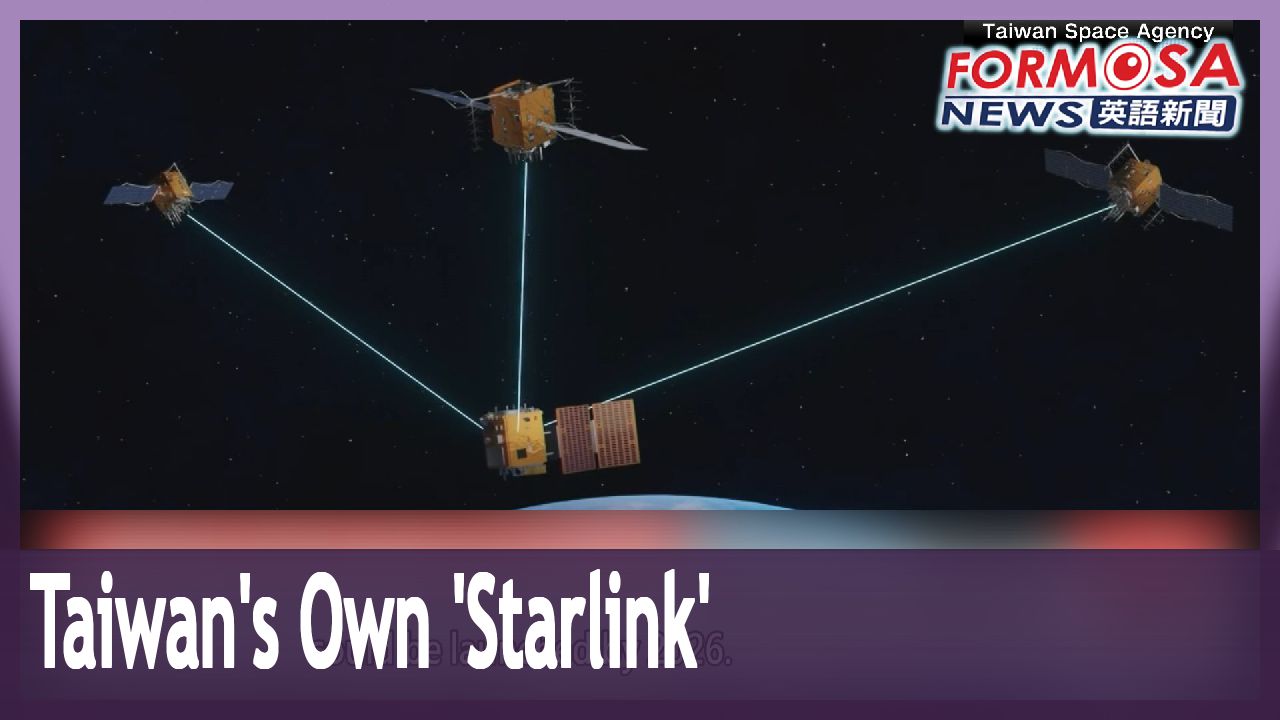
The Taiwan Space Agency is developing two communication satellites, the first of which could be launched by 2026. But according to an Australian expert, Taiwan would need at least 50 satellites to provide, quote, “fairly decent” emergency coverage. He said that for reliable bandwidth, hundreds of satellites would be required, and the more the better, provided that there’s enough funding to launch them all.
For more Taiwan news, tune in:
Sun to Fri at 9:30 pm on Channel 152
Tue to Sat at 1 am on Channel 53
如何打造台版"星鏈"抗中? CNN訪國家太空中心
2024-05-28
中國近年大搞"灰色地帶"戰術,全方面施壓台灣,去年的馬祖斷網事件,更是一記警鐘。美國CNN記者就特地訪問國家太空中心,了解台灣如何打造台版"星鏈"系統,保障自家通訊安全。
上千顆低軌道衛星,圍繞地球,這就是SpaceX的"星鏈"系統,號稱"太空高速網路",不論是加薩、烏克蘭戰區,還是天災災區,即使電信設施全毀,也能靠著它保持與外界的聯繫。但這麼厲害的系統,卻有個問題,就是它幾乎全由大老闆馬斯克掌控。
[[SpaceX執行長 馬斯克]]
“他們(中國)的政策就是要把台灣統一,像夏威夷之於美國”
馬斯克因為特斯拉生意緣故,超級親中,台灣根本無法信任。不過,台灣通訊全靠15條海底電纜,如果中國攻台,根本岌岌可危。去年馬祖就因為電纜被斷,網路沒法用。
[[記者]]
“關於你們研發的衛星,如果網路或通訊的電纜被切斷,台灣可能就陷入黑暗,對嗎?”
[[國家太空中心主任 吳宗信]]
“是的 我是這樣認為”
CNN記者特地採訪了國家太空中心主任吳宗信,了解台灣投資數十億美元的自家"星鏈"計畫,要打造本土衛星網絡,保障通訊安全。
[[國家太空中心主任 吳宗信]]
“中國正在太空科技崛起,你也知道台灣的國際政治處境艱困,但在太空那是沒有國家差異、邊界之分”
台灣雄心萬丈,國家太空中心計畫研發兩顆通訊衛星,預計2026年就會發射第一顆。但有澳洲的學者提醒,想靠自家衛星網絡,就必須至少有50顆衛星,才能獲得"還算不錯"的緊急涵蓋率,如果要有可靠頻寬,則要有上百顆。只要能籌得到資金發射,衛星當然是越多越好。
更多新聞內容,請鎖定:
民視台灣台(152頻道)週日至週五晚上9:30
民視新聞台(53頻道)週二至週六凌晨1:00
Related News