Deaf educator encourages early sign language education
Deaf educator encourages early sign language education
2024-09-19
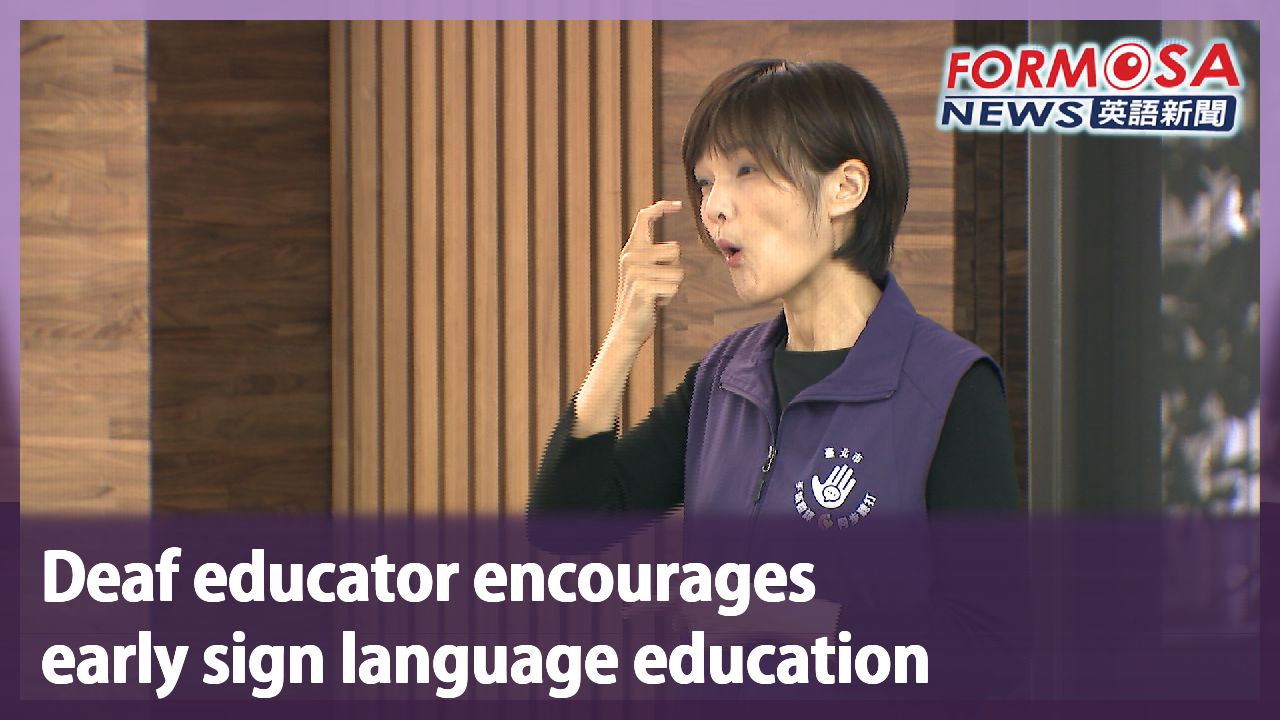
Sept. 23 is the UN’s International Day of Sign Languages. Ku Fang-huai, a doctor of deaf studies and education from Lamar University in Texas, was invited alongside people in the deaf community to share their experience of deaf children’s education. They encourage teaching sign language from a young age to protect the basic wellbeing and interests of the deaf community.
Simple gestures paired with vivid facial expressions make it clear what the other is thinking. To the deaf community, sign language is a crucial form of communication.
Chiu An
Sign language interpreter
I find every translation very rewarding, no matter the size of the interaction. I can help deaf and hearing people communicate with each other. I can help them complete a dialogue or meeting or forum or doctor’s visit, or even something simple. As long as I can help them smoothly complete an interaction, I feel accomplished.
Ku Fang-huai
Signing Village Workshop founder
Sign language is enormously helpful to deaf children. If they can use sign language, they can learn more. They can absorb more information, get a better education, and then find a better job.
There are about 70 million deaf people in the world and over 3 million different kinds of sign language. In Taiwan, sign language doesn’t have a long history. It came out of the Japanese signing family. But with recent advancements under the Development of National Languages Act, Taiwanese signing is getting more attention.
Ford Liao
Taiwan New Century Foundation
It’s a form of communication. If the form is complete and accurate, people are better able to understand what’s being said. On the other hand, the greater consideration is you don’t want to cause more harm from a breakdown in communication. For example, in many legal cases the content is extremely important.
Although there’s still a long way to go before sign language is popularized, advocates hope that through education and promotion, the deaf community can fully enjoy their rights while building a more friendly environment for all people.
For more Taiwan news, tune in:
Sun to Fri at 9:30 pm on Channel 152
Tue to Sat at 1 am on Channel 53
聾教育博士顧方槐 盼從小落實手語教育
2024-09-19
今年9月23日是聯合國訂定的世界手語日,美國德州拉瑪大學聾教育博士顧方槐,受邀與聾啞人士們一起分享聾童的教育經驗,期盼從小落實手語教育,確保聾啞人士身心有基本保障。
簡單比手畫腳,搭配豐富表情,就能知道彼此在想些什麼,手語對聾啞人士來說是相當重要的溝通方式。
[[手語翻譯員 丘安]]
“每一場的翻譯,不論大小場合,我都會覺得很有成就感,就是協助聾人跟聽人之間的溝通,然後幫他們完成這一場對話也好,或是會談,或是座談也好,或是就醫,或是簡單的,只要是溝通幫他們,就是順利完成,我都覺得很有成就感”
[[手族文化村負責人 顧方槐]]
“其實手語對聾童是有非常大的幫助,而且他們能夠用手語,能夠學更多東西,然後吸收了更多資訊,然後能夠有更好的學歷,然後就有更好的工作”
全球約有七千萬名聾人,存在300多萬種手語,其中台灣手語發展時間較短,屬於日本手語族的一員,隨著近年國家語言發展法推動,台灣手語逐漸受到重視。
[[台灣新世紀文教基金會董事長 廖福特]]
“因為它是一個溝通的方式,這個溝通方式能夠完整跟確實的話,才會更了解內容,同時另外一方面,我們更大的考量是說,不要因為溝通不完整,而造成其他的傷害,比如說很多的法律案件,這個溝通內容就非常非常重要了”
雖然距離手語普及還有好長一段路要走,期盼透過手語教學宣導,讓聾啞人應有的權利不會受到傷害,打造更友善的社會環境。
更多新聞內容,請鎖定:
民視台灣台(152頻道)週日至週五晚上9:30
民視新聞台(53頻道)週二至週六凌晨1:00
Related News