Tensions remain after Taipei MRT priority seat redesign
Tensions remain after Taipei MRT priority seat redesign
2025-10-21
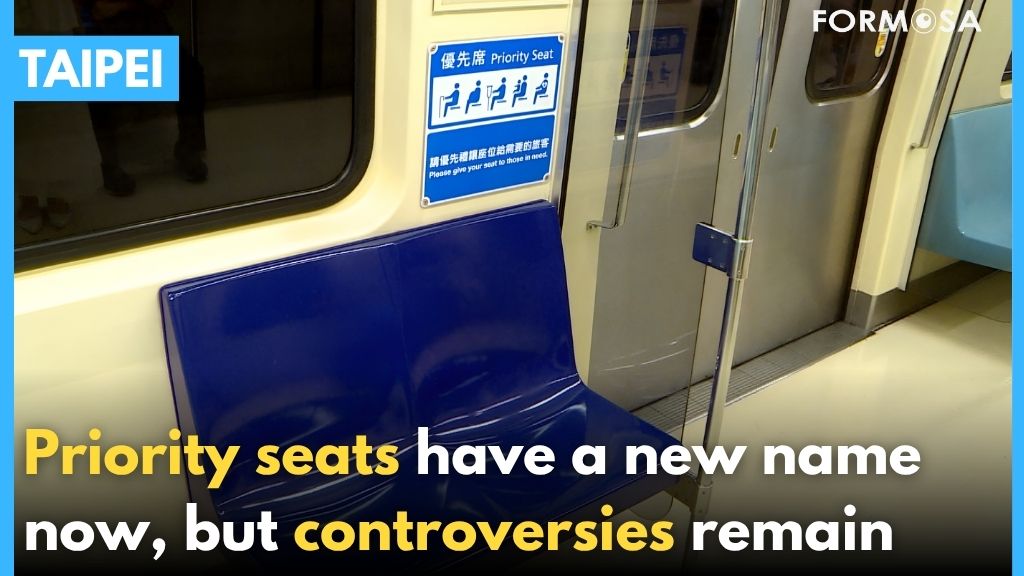
Labels for priority seats on Taipei’s MRT were recently redesigned, adding a depiction of a person with invisible needs and changing the name to clarify their purpose. But tensions between older and younger passengers over who has the right to these seats remain high. A doctor said this could be due to the dark color and clear labeling of the seats as requiring “need” to use. This labeling turns the friendly spirit of giving up your seat into a culture of emotion coercion, which only creates more tension.
Hung Chiao-hsuan
FTV reporter
“Courtesy seats” are now a thing of the past, after the name was changed to “priority seats.” But can changing the name resolve generational conflicts between passengers? Disputes over these seats remain all too common.
The Taipei MRT recently changed the name of its seats for those in need from “courtesy seats” to “priority seats.” Courtesy is a more emotionally charged term rooted in compassion, while priority is a more straightforward label for those in need. The description was also updated to include those with invisible needs. But conflict over who has the rights to these seats remains common.
MRT passenger
I saw young people sitting here many times, while people in their 80s or 90s stood in front of them. They didn’t give up their seats. They just sat there without even looking up, staring at their phones the whole time.
MRT passenger
Of course we can give up our seats to seniors, but I saw a video where there were lots of other free seats. So, I think that sometimes seniors cannot just think they are always right.
Recently, a video of an older woman bullying a younger passenger to give up their priority seat went viral after the younger passenger kicked the woman in retaliation. Many netizens praised their actions, especially considering there were lots of free seats in the subway car. One psychiatrist said that the spirit of giving up seats can easily turn into emotional coercion, suggesting that the seats should not be so clearly labeled.
Yang Tsung-tsai
Psychiatrist
From a psychological and physiological perspective, simply changing the name isn’t enough. The signs still show seniors, pregnant woman, children, and those with mobility issues. The labeling shouldn’t be so strong.
MRT passenger
In other words, there should be clearer guidelines defining what it means to be in need and when a seat should be given up to an elderly person.
MRT passenger
I don’t often see priority seats like this abroad. Maybe seniors would be less likely to think that only elderly people can sit in these seats.
Society remains divided about the best way to handle priority seats. But regardless of personal viewpoints, it’s important to respect those around us.
For more Taiwan news, tune in:
Mon to Fri at 9:30 pm on Channel 152
Tue to Sat at 1 am on Channel 53
#priorityseat #courtesyseat #subway #MRT #TaipeiMRT #conflict #generationalgap #seniors
改名沒用? "優先席大戰"仍劍拔弩張 專家:應該去標籤化
2025-10-21
博愛座改名為優先席,世代對立卻仍然沒變!有醫生就認為,以深色強調識別效果,是「標籤化」讓座資格,容易激化矛盾。建議改善優先席設計,讓座不必靠顏色區隔"。因為當"讓座精神"變成"情勒文化",反而增添衝突。
[[民視記者 洪巧璇]]
“博愛座走入歷史,現在已經改名為優先席,不過改個名就能化解,年輕人跟年長者之間的世代矛盾嗎,讓位糾紛依舊是頻頻上演”
捷運博愛座改名優先席,適用對象還新增了"其他有實際需求者",但誰該坐、誰不該坐,不同世代看法不同。
[[年長者]]
“我看好幾次坐在這的都是年輕人,80、90歲站在他前面,他不讓啊,就是反正坐著,眼睛也不看你,一直滑手機啊”
[[年輕人]]
“長者我們當然可以讓他,可是我看那影片好像,其實後面也有空位,所以我就覺得,有時候長輩他們也不能夠只是覺得自己是對的”
北捷日前發生白髮婦人逼年輕人讓位,結果反被一腳踹飛,沒想到網路上多數竟然是叫好聲。正因為"讓座精神"很容易變成"情勒文化",反而增添衝突。醫生建議改善優先席設計,讓座不必靠顏色區隔"標籤化"。
[[精神科醫師 楊聰財]]
“分成心理環境跟生理來看,改優先席而已,其他都沒改,所以上面貼的仍然是老弱婦孺,不要太標籤化”
[[年長者]]
“就是說有另外一個規劃說,什麼叫做有需要,什麼叫做該讓給老人家”
[[年輕人]]
“因為我在國外也比較少看到這種優先席,可能長輩就比較不會覺得,這個是一定要長輩才能坐的位子”
儘管對優先席社會上仍有正反兩面的聲音,但無論立場如何,都應該學會彼此尊重。
更多新聞內容,請鎖定:
民視台灣台(152頻道)週一至週五晚上9:30
民視新聞台(53頻道)週二至週六凌晨1:00
Related News