Taiwan and international artists’ joint exhibition at Vaikuntha Art Gallery
Taiwan and international artists’ joint exhibition at Vaikuntha Art Gallery
2026-02-04
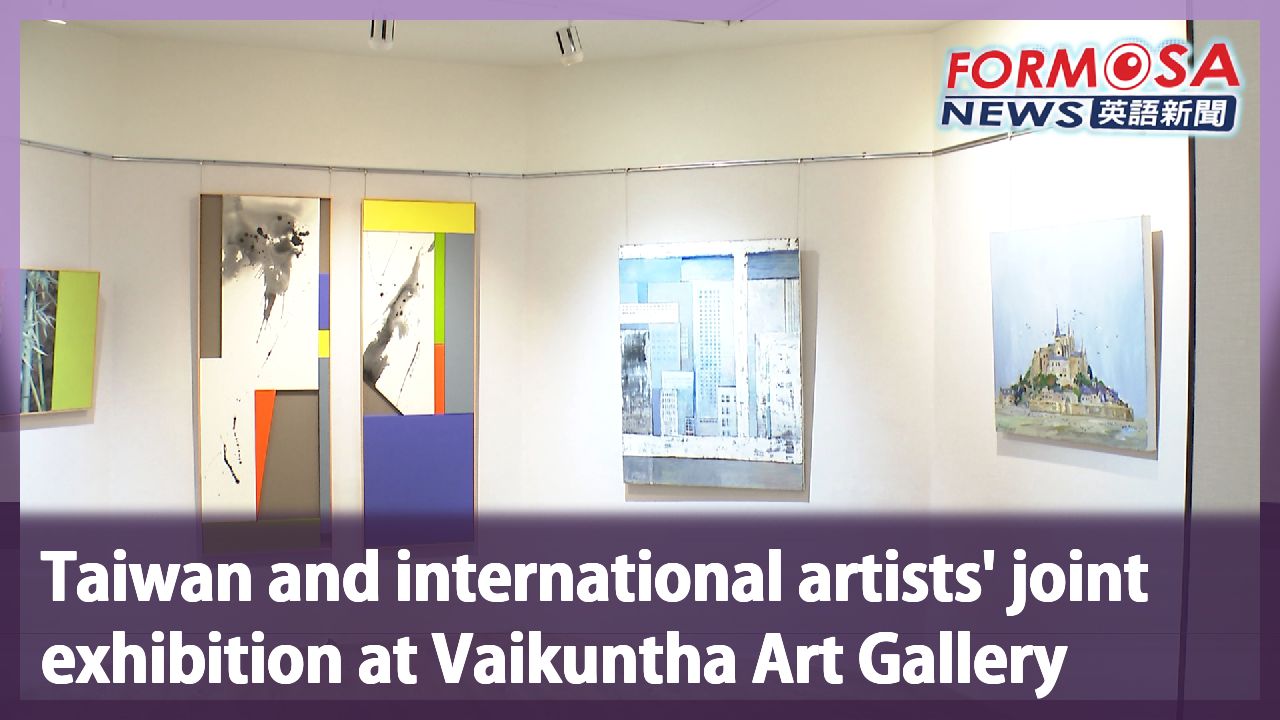
Today we take you to an art exhibit in Taipei that displays an intercultural dialogue between Western and Eastern painting techniques. Featuring works by artists from Taiwan and abroad, traditional Bhutanese Buddhist painting styles known as Thangka, along with traditional Chinese ink painting techniques are combined with Western approaches. Our very own Stephany Yang takes us in for a look!
These works were created by Fr. Guillermo Ke, a Catholic priest of Opus Dei who has served in Hualien and Taipei. Besides being a priest, he is also an artist. Drawing inspiration from the landscapes of Hualien—most notably Taroko Gorge—his art captures the profound beauty of light breaking through forests and mountains.
Christine Lin
Gallery founder
He has another identity as a priest. He came to Taiwan and also traveled around the world to serve. This series of works was created when he was serving in Hualien. While working in rural areas, he happened to pass by mountains and saw light cutting through the forest. He began studying how to use light to cut, exploring different compositions. Behind him are all the scenes of Hualien. This particular piece depicts Taroko Gorge.
Taiwanese artist Daniel Shi created several works combining Eastern and Western art styles.
Christine Lin
Gallery artistic director
He has a strong foundation in traditional ink painting and meticulous brushwork. When he was in Taiwan as a student, he studied ink painting. However, when he went to the US to pursue further studies, he was exposed to Western art and began to reflect on how Eastern and Western styles could be combined. He uses blocks of color to express the rhythm of Western art’s more intense emotions, while also incorporating the expressive techniques of Eastern ink splashing. His works unfold like a symphony.
Another artist’s works on display is Dorji Wangchuk from Bhutan. His works blend traditional Buddhist Thangka techniques with modern abstract expression.
Christine Lin
Gallery artistic director
He comes from Bhutan, often called the happiest country in the world. Among the Bhutanese artists I have seen, his work is particularly distinctive. While his creations are rooted in Western painting traditions, he integrates elements of Bhutan’s traditional culture into them. This box represents a “wish-fulfilling treasure box.” In Bhutan, when offering blessings, small symbolic items are placed inside such a box. Through this treasure box, he hopes to bring blessings of happiness to everyone.
This exhibition brings together ten artists from Taiwan and abroad, showcasing a dialogue across cultures. The exhibit will be held at the Vaikuntha Art Gallery until Feb. 15.
For more Taiwan news, tune in:
Mon to Fri at 9:30 pm on Channel 152
Tue to Sat at 1 am on Channel 53
#Art #VaikunthaArtCenterExhibiton #fusion #culture #events
交匯之境—台灣及國際藝術家聯展 集結國內外藝術家作品
2026-02-04
今天帶您來看一場展現東西方繪畫技法、跨文化對話的藝術展。展覽匯集了來自台灣及海外藝術家的作品,其中包括將不丹傳統的佛教繪畫風格唐卡、中國傳統水墨畫技法與西方藝術手法巧妙融合。
這些作品出自天主教主神父余愷之手,他曾在花蓮和台北服務。除了神職工作,他也是一位藝術家。他的藝術靈感源自於花蓮的自然風光,尤其是太魯閣峽谷,捕捉了陽光穿透森林和山巒的深邃之美。
[[外琨塔Vaikuntha藝術中心藝術總監 林青芬]]
“他另外一個身分是一個神父,他來台灣或是到全世界做服務。後面這系列的作品是他去花蓮做服務的時候,在偏鄉做服務的時候,無意中經過山嶺看到光線從樹林之中切割下來的畫面,他開始研究以光線切割的方式,來研究不同的構圖。身後都是花蓮的景象,這件是在描述太魯閣。”
台灣藝術家石大年創作了多件融合東西方藝術風格的作品。
[[外琨塔Vaikuntha藝術中心藝術總監 林青芬]]
"他有很深厚的水墨畫、工筆畫的底子,在台灣,學生時候,他是正統的水墨畫的學生,但當他到美國留學的時候,開始看到了一些西方的繪畫,他就開始去思考怎麼樣讓東西方的繪畫可以做一個融合。他用不同的色塊表達西方比較激烈情感的韻律,但是他又將東方的水墨潑墨的表現的形式融入進來,他的作品呈現好像是一個交響樂的感覺。"
另一位參展藝術家是來自不丹的王楚丹。他的作品融合了傳統的佛教唐卡技法和現代抽象表現主義。
[[外琨塔Vaikuntha藝術中心藝術總監 林青芬]]
“來自最幸福的國家不丹,他是我看到不丹藝術家很有特色的,他完全屬於西方的繪畫創作,但是帶入了他們的傳統文化特色在裡面,他這個盒子代表就是一個如意寶盒,在不丹祝福人時候會有一些祝福的小物放在盒子裡面,他希望寶盒可以帶給大家幸福的祝福。”
本次展覽匯集了來自台灣及海外的十位藝術家,展現了跨文化對話。展覽將於外琨塔藝術中心展至2月15日。
更多新聞內容,請鎖定:
民視台灣台(152頻道)週一至週五晚上9:30
民視新聞台(53頻道)週二至週六凌晨1:00
Related News