Ultrasonic repeller backfires to worsen Keelung station’s bird problem
Ultrasonic repeller backfires to worsen Keelung station’s bird problem
2026-05-13
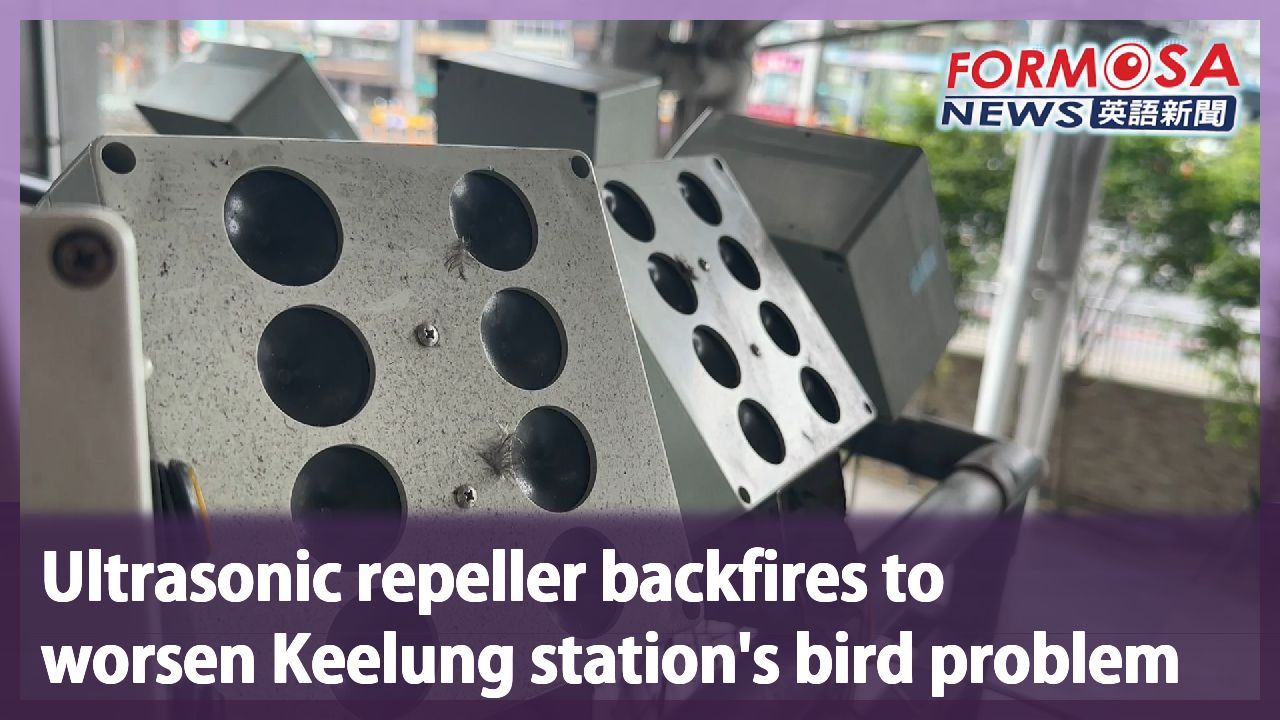
Since the Keelung Transit Station has an open-aired design, it’s appealing as a nesting place for birds. But while it may be great for them, it leaves behind a mess of difficult-to-clean droppings. The city installed an ultrasonic repeller to drive them away, but it seems to have backfired. The pigeons left, only to be replaced by the more aggressive myna bird, making the situation even worse.
As far as the eye can see, there are white spots dotting the pavement at Keelung Transit Station—all bird droppings. The cleaners stay busy with mops and scrapers to clear it away, because if they miss just three days, it’ll start to corrode the pavement.
Cleaner
Keelung Transit Station
It sticks, so to get it off, you have to scrape it or use a wet mop to soak it first so it’s easier to clean. By the time I get here in the morning, it’s usually already hardened.
Cleaner
Keelung Transit Station
It’s like this every day. We’ve been cleaning it for nearly three years now. Like this. It won’t come off now.
Since the station plaza is open to the air, it’s become a haven for birds. Travelers have to be careful when passing through, or they may get an unwelcome gift from above.
Huang Shih-han
Keelung transportation official
We installed ultrasonic bird repellers at the transit station, but found out that some birds still fly into the station to roost in the evening or at night.
The city originally set up these ultrasonic repellers hoping that the high-frequency sound would make the birds uncomfortable. While it did drive off the pigeons, it inadvertently cleared the way for a far more stubborn species: the invasive myna bird.
Cheng Wei
Wild Bird Society of Keelung chair
The device plays generic bird sounds, so it’s not specific to any species. The aim is to drive away anything nesting up there. Apart from the invasive mynas, like the common myna or Javan myna, there are also native pigeon species nesting up in the large station roof. But the invasive species account for at least 90%.
With invasive mynas proving both highly adaptable and fast-breeding, the city said it would enlist the help of the Wild Bird Society and Animal Protection Office to find a better solution, hopefully clearing the way for a cleaner commute.
For more Taiwan news, tune in:
Mon to Fri at 9:30 pm on Channel 152
Tue to Sat at 1 am on Channel 53
#Keelung #birds #myna #pigeon #ultrasonicrepeller #birddroppings #KeelungTransitStation #invasivespecies #wildlife
基隆轉運站鳥事! 民眾遭"空襲"超音波趕鳥效果有限
2026-05-13
基隆轉運站由於開放式頂棚設計,吸引大批鳥類築巢,帶來難清的鳥類排泄物,市府雖祭出超音波來驅鳥,但沒想到鴿子變少,卻引來更強悍的"外來種八哥",讓狀況更加惡化。
放眼望去,基隆轉運站走道上,滿是斑斑點點,這些全都是鳥類排泄物。清潔人員馬不停蹄,拿著拖具奮力清洗,因為只要三天沒清理,鳥糞就會侵蝕地面。
[[清潔人員]]
“黏稠啦,所以你要清它的話,要嘛用刮的,你要嘛就是要用拖把,濕、拖,它會比較好刷。因為等早上來清的時候,其實它已經有點硬化了。”
[[清潔人員]]
“每天都有我們已經擦了快三年了,這種就是擦不掉了。”
因為轉運站採開放式頂棚,成為鳥類築巢天堂,民眾經過時一不小心,就可能被鳥類排泄物"擊中"。
[[基隆市府交通處副處長 黃詩涵]]
“轉運站的部分,我們有設置超音波的驅鳥器,那我們發現,會有一些鳥禽呢,它晚上、傍晚的時候,它會跑到轉運站裡面來棲息。”
市府原先安裝超音波驅鳥器,想利用高頻率音波,讓鳥類感到不適,這招的確嚇跑了鴿子,但卻沒想到迎來更難纏的外來種"八哥"。
[[基隆市野鳥協會理事長 鄭暐]]
“它其實是放鳥音,所以它沒有針對特定物種,只要來到這上面築巢的,它都會做驅趕。除了外來種的八哥,不管是家八哥、白尾八哥以外,還會有原生種的鳩鴿科的,在這個轉運站大頂棚上築巢,但外來種應該佔九成以上。”
外來種八哥適應能力強,繁殖迅速,市府表示將會和野鳥協會以及動保所,研討對策,希望早日還給旅客一個乾淨的候車空間。
更多新聞內容,請鎖定:
民視台灣台(152頻道)週一至週五晚上9:30
民視新聞台(53頻道)週二至週六凌晨1:00
Related News