Self-serve buffet uses AI to calculate meal price
Self-serve buffet uses AI to calculate meal price
2026-05-27
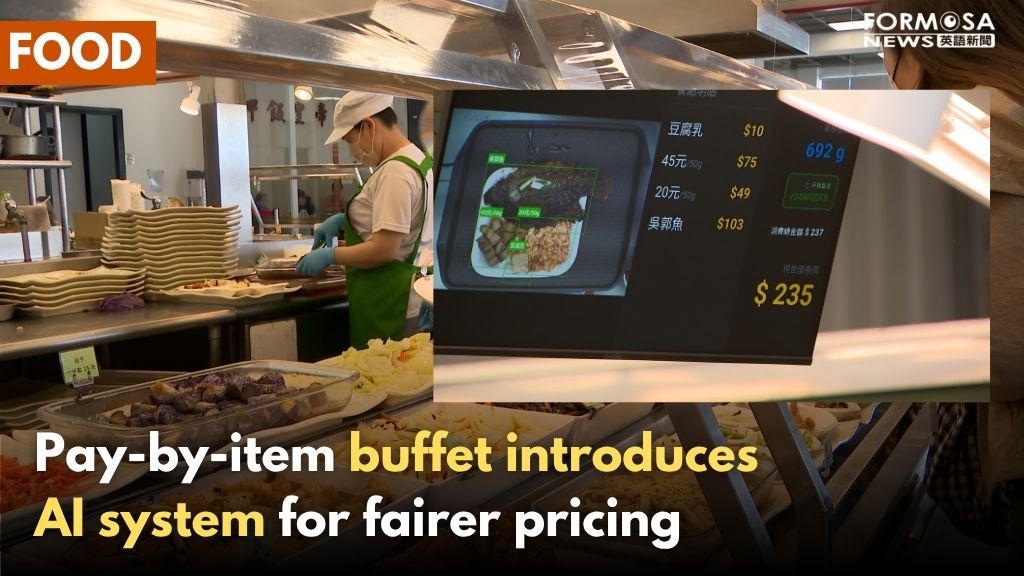
A self-serve buffet in Taichung’s Nantun District has developed an AI pricing system to make prices more transparent after it was criticized for overcharging customers. After diners select their food, the technology uses image recognition and weight to automatically calculate the total price, helping avoid disputes.
Grabbing trays and tongs, customers can choose the dishes they want at this self-serve buffet. But it’s no longer the employees who calculate the price. That’s been turned over to AI.
When a customer puts their meal on the scale, a camera identifies the types of food and calculates the price based on weight, displaying it clearly on the screen.
Customer
Likes the change
It’s nice. They’re keeping up with the times. People can make mistakes, but AI should be more accurate.
Customer
Likes the change
People have complained before that the cashier was calculating the price based on their own judgement, but with AI, that shouldn’t be a problem.
This self-serve buffet in Taichung’s Nantun District had received many complaints that cashiers were overcharging, even making the news. To prevent further disputes, the restaurant developed an AI system to calculate meal prices.
Hsu Yang-ling
Restaurant manager
It uses the scale to measure the total weight of the food, and then calculates the price based on the types of food. Employees still have to organize the food, because the computer wouldn’t be able to tell if meat is hidden under vegetables.
The scale weighs the food, and AI identifies the different dishes, calculating each ingredient’s proportion of the total weight to determine the final price. The technology is more than 90% accurate.
Hsu Yang-ling
Restaurant manager
We kept running tests until we were confident the system would work without any major discrepancies. It took more than half a year and, honestly, a great deal of effort went into it.
The restaurant spent time and resources to develop this system, making price calculations more transparent to avoid disputes. The manager emphasized that the new technology is merely to help, and they would not cut any staff.
For more Taiwan news, tune in:
Mon to Fri at 9:30 pm on Channel 152
Tue to Sat at 1 am on Channel 53
#selfserve #buffet #price #dispute #pricing #AI #technology #weight #Taichung
清粥小菜店研發"AI計價系統" 業者:自動辨識餐點避糾紛
2026-05-27
台中南屯區有一家清粥小菜店,先前曾因菜色價錢計算,在社群媒體,遭網友質疑太貴,現在店家研發一套AI計價系統,讓價格透明化,民眾夾完菜,鏡頭影像辨識後,配合秤重機台,自動計算出總價,一目了然,避免消費糾紛。
來到店裡,拿上盤子、夾子,再依喜好,選菜,夾菜,夾多少,算多少,不過到結帳區,不是櫃台阿姨算錢,而是靠它。
把餐點放在秤上,鏡頭直接辨識餐盤裡的內容物,克數、價錢,一次性顯示在大螢幕。
[[用餐民眾]]
“不錯啊,跟上時代潮流。人有人情味,AI就是比較正確吧?”
[[用餐民眾]]
“以前都有人反應,就是自助餐結帳阿姨憑個人意識在算價錢,用AI比較不會有這個問題。”
台中南屯區一間清粥小菜店,過去曾遇過不少次,客人認為店員算太貴的消費糾紛,今年年初,這家店也曾因為算錢爭議事件,躍上新聞版面,業者乾脆自己研發出一套,AI算菜錢的系統。
[[經理 許暘靈]]
“利用磅秤重量基礎去鎖定菜的總重,利用物質特性做計算,它可以去精準算出每一道菜價格。我們人工一定會去做菜的整理,因為如果肉藏在菜下面,電腦是拍不出來的。”
餐盤一放到磅秤上,上頭攝影機就會拍下照片,利用AI辨識,區分菜品,再計算每道菜占比、重量,就能得出最後的價錢,經過測試,準確率超過9成。
[[經理 許暘靈]]
“內部測試,測試到確定這東西經得起考驗,不會有很大落差。花了大概半年多的時間,坦白說花了很多心力。”
業者耗時耗力,研發這套系統,價格更透明,不再像以往的人力肉眼計價引發爭議,業者也強調,引進科技是為了減少糾紛,不會因此縮減人力。
更多新聞內容,請鎖定:
民視台灣台(152頻道)週一至週五晚上9:30
民視新聞台(53頻道)週二至週六凌晨1:00
Related News