Laughter yoga brings back joy to older adults
Laughter yoga brings back joy to older adults
2022-09-25
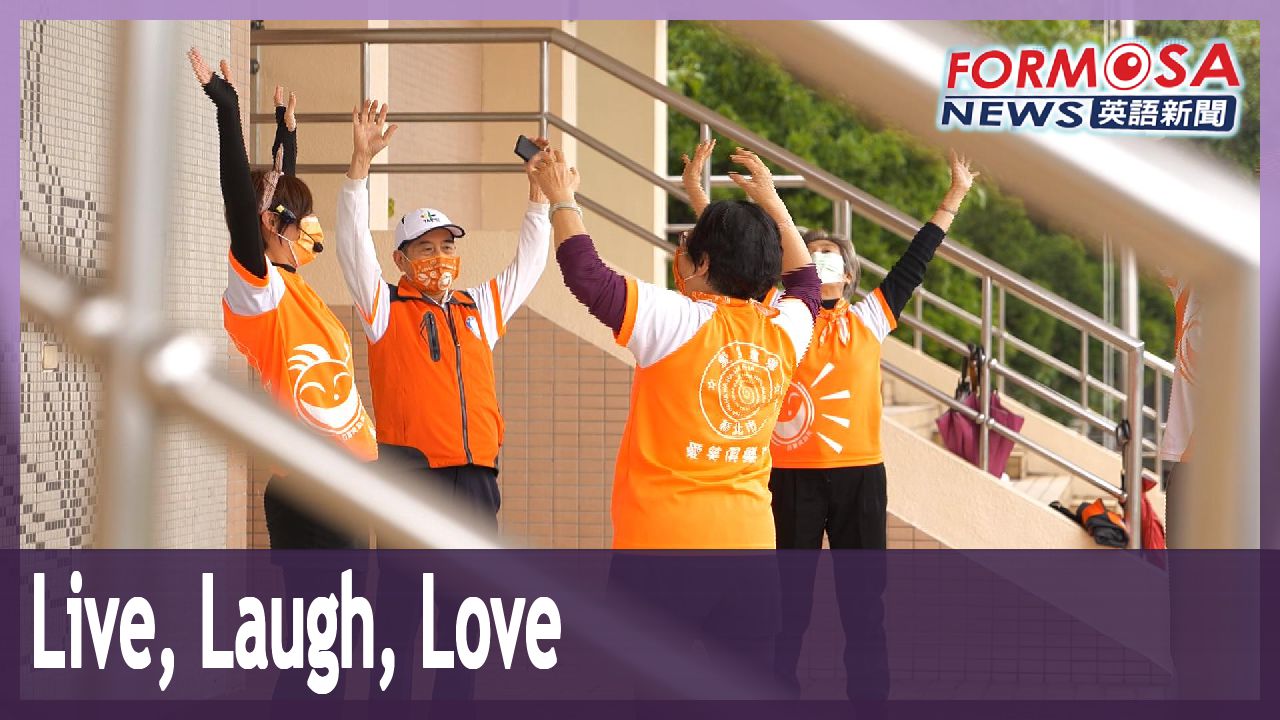
Few things in life feel quite as good as having a hearty laugh with friends. And don’t underestimate the power of that. Laughter can help keep depression at bay, and even slow down dementia in seniors. In Taiwan, several clubs have cropped up over the years promoting "laughter yoga," which has become especially popular among older adults. The clubs hold meetups regularly, encouraging participants to giggle, chortle, and chuckle to stave off loneliness and encourage wellbeing. Here’s our Sunday special report.
It’s Monday morning, and a group of older adults have gathered at a stadium in New Taipei’s Sanchong District. All together, they can laugh and laugh for a straight hour.
These are members of New Taipei’s laughter yoga association. They are experts at having a cackle. And they all have their own silly nicknames.
Laughter yoga was popularized by Indian physician Madan Kataria, who in 1995 started organizing meetups in parks in Mumbai. Since then, countless laughter clubs have been founded in more than 110 countries around the world. Taiwan’s first club was founded in 2005, in Taoyuan’s Luzhu District. Sixteen years later, more than 50 laughter clubs have formed nationwide.
Nina Ho
Psychologist
Laughter yoga is a special kind of yoga. Firstly, it uses your external expression to influence your inner thoughts and emotions. Secondly, it is a kind of breathing exercise that uses your diaphragm. Breathing exercises can lower your body’s stress response, boost your immune system, and regulate your mood.
According to medical studies, laughing can be very beneficial. It releases stress, boosts the immune system, burns calories, promotes cardiovascular health and can even make you live longer. And doing laughter yoga comes with even more advantages.
The people gathered at the stadium are mostly over the age of 65. Some are locals, and some come from other areas of Taiwan. They leave home to put up a fight against aging.
No matter how healthy one’s body is, aging alone at home without social interaction can give rise to depression and dementia.
Nina Ho
Psychologist
Most people think that when you get old, you don’t have interests, your body functions deteriorate and you don’t want to go out. But actually, all these are symptoms of depression. Dementia and depression are closely linked. That is to say, depression can speed up dementia, and dementia can cause depression.
Joan Wang is the host of a radio program, and found out about laughter yoga during an interview. A few years ago, her father passed away, leaving her mother depressed and grieving alone at home. It was only then that Wang realized she had long ignored the fact that her parents were aging. So, she decided to take her mother to a laughter club meetup, to see if laughing could truly heal all wounds.
Joan Wang
New Taipei laughter yoga association
My mother was all alone, crying every day. But then we found, she was always happy when she was surrounded by people her age.
Wang delved deep into the laughter yoga, carrying out research, raising awareness about it, and eventually organizing laugh meetups at the Sanchong stadium. She says all she has done has been because of the love for her mother.
Joan Wang’s mother
My husband was no longer with me, and I was depressed. I couldn’t laugh. I wasn’t happy and I couldn’t laugh. I looked miserable every day. My husband passed away six years ago. If I hadn’t learned to laugh, I wouldn’t be the same today.
The laugh yoga sessions eventually prompted her to establish an association that’s active at community care sites and dementia service centers. From Monday to Friday, the association fills the spaces with laughter to keep depression at bay and slow down dementia.
Wang’s mother can have a fun time with people her age, taking a stroll and singing songs. She even volunteers to help bring joy to elderly care homes.
Joan Wang
New Taipei laughter yoga association
The only condition to joining the volunteer team is that you need to be able to laugh. Nothing else matters. It doesn’t matter if you need a cane to walk. Or if you have had a stroke, or have had cancer. It’s OK! You can also be of any age.
The average age of the volunteers is around 70, but they are all committed to helping other older adults. The only thing that’s needed is to be able to break out in laughter and spread it to others. The volunteers bring other older adults living alone out to do laughter yoga, sing and dance and make each other happy. Among the volunteers are Ah Chao, who has reduced mobility due to spinal issues, and Hsiang Pen Pen, who has systemic lupus erythematosus. They say that thanks to Wang, their lives have significantly improved.
Ah Chao
Volunteer
We go around together to entertain older adults. Sometimes I see them, and they seem to not want to laugh. But I get very happy once we are able to crack them up. Seeing them happy makes me happy.
Hsiang Pen Pen
Volunteer
I used to admire people who lived to 80 and were looking good. I didn’t know whether I’d ever reach my 80s. But now that I’m here my perspective has changed.
One of the key members of the volunteer group is Tsao Wen-yen. At 8 a.m. she sets off from her home in Xindian District, riding her scooter for an hour to the laughter yoga sessions in Sanchong.
Tsao Wen-yen
Volunteer
The year I turned 71, and without any physical or mental preparation, I suddenly became an older adult living alone. It was terrifying. I was afraid I wouldn’t know what to do.
Tsao had been a preschool teacher for more than 40 years. When she first turned up in Sanchong, she found it very awkward to laugh without a reason. But laughter is infectious. Though she was just ready to follow the motions and clap along with everyone, in the end, she really did end up bursting out laughing.
Tsao Wen-yen
Volunteer
How did I end up laughing back then? I really did laugh out loud. I had fun despite everything. What started off as a fake laugh ended up being a real laugh. So I kept going there and I attended a course on growth. I started learning as a student.
From student, to group leader, to lecturer, Tsao worked her way up.
Tsao Wen-yen
Volunteer
The spirit of this is for the elderly to help the elderly. That was very shocking for me. But that’s my mission for the rest of my life. To offer support to other older adults as an older adult.
Tsao brought her previous experience in preschools to the laughter workshops. Her ideas were well received, and she found a lot of validation and value in the endeavor. Every time she holds an activity she spreads the true essence of love and laughter to participants.
Tsao Wen-yen
Volunteer
I can gladly say that in these activities I can learn to prepare for the future. If I reach my 90s, I know how to be a happy as a person living alone.
Like Tsao, 65-year-old Chen Yueh-ming also wanted to learn how to be happy living alone. Laughter yoga left a deep impression on her. Eight years ago, her mother passed away, marking the start of her life living alone. She also retired, which left a big hole in her life.
Chen Yueh-ming
Volunteer
When I was going to retire, I was very restless. I didn’t know what I would do after retiring.
Chen found out about laughter yoga on the internet, and searched for clubs she could join. She quickly found a group that brought a smile to her face.
Chen Yueh-ming
Volunteer
My former colleagues told me, “Your face now looks so different from before!”
After retiring and joining others in laughter, Chen became a changed person, with an open heart.
Chen Yueh-ming
Volunteer
The biggest change was in myself. It allowed me to open up my heart. As laugh leaders, we have this responsibility to tell our laugh friends to not just laugh at the meetups, but also at home. When you’re upset, laugh it out.
Most of the volunteers in the laugh club are already retired. Some of them live alone, and some of them have health conditions. But through laughing, they’ve created a new life for themselves.
Nina Ho
Psychologist
They can rebuild a new social environment. There, they can interact with people their age. If you are at home, and you’re an older adult, you just accept it, and think that you have to go take care of so and so. But in a club, you are with classmates. You can help people and learn new things together. It allows people to find a new identity and value.
Joan Wang
New Taipei laughter yoga association
I hope that that more people can do what I’ve done. Perhaps they are unmarried, or they live alone. They can come out and join us, form part of this network. And then, when they get older, there will be a new batch of people caring for them.
This jolly group in New Taipei is trying to bring positive change to older adults in the community through laughter. The head of the group hopes that more people can join to respond to loneliness and sadness with a loud HA HA HA.
一起笑吧 別被老擊敗
2022-09-25
台灣進入高齡化社會,銀髮族的憂鬱和失智也愈來愈受到關注。根據估算,台灣六十五歲以上長者,每十二人就有一位失智;然而,對抗老年憂鬱與延緩失智,不一定得打針吃藥;國內有一群人引進了印度的「愛笑瑜伽」,透過簡單的哈哈幾聲大笑,不但讓一群銀髮長輩找回歡喜,也找回了健康。一起笑,有什麼樣的魔力。
每週一早上,聚集在三重體育館的這群長輩,可以這樣連笑一個鐘頭。
他們是新北市愛笑瑜伽協會的成員,不只笑得很專業,每個人還都會取個可愛綽號,當成自己「笑名」。
愛笑瑜伽是印度醫生卡塔利亞,1995年在孟買的公園發起的運動,目前全世界110個國家,有成千上萬的愛笑俱樂部,而台灣則是從2005年的桃園蘆竹鄉開始笑起。至今十六個年頭,全國北到南,累計超過五十個愛笑俱樂部。
[[心理諮商師 何盈盈]]
“笑瑜伽它做為一種特殊的瑜伽形式,第一個當然是我用外在的表情,去影響我內在的想法跟感受。第二個它是一個規律的呼吸練習,也就是當我運用橫膈膜,去做呼吸練習的時候,它可以降低我身體的壓力反應,增加免疫力並且調適我的心情。”
按照醫學研究結果,大笑好處多多,可以釋放壓力,增強免疫系統、燃燒卡路里,促進心血管健康,甚至延長壽命。而愛笑瑜伽讓笑的好處,有了加乘效果。
願意來三重體育場團練,一起笑呵呵的長輩,大部分都超過六十五歲,有的在地人,有的住在其他地區。他們走出家門,為的就是不被老擊敗。
年紀大如果又老是在家,甚至獨居沒有社會活動,那麼就算外表健康,卻很容易出現憂鬱或失智。
[[心理諮商師 何盈盈]]
“一般人都會覺得說老了,好像就是很多我都沒有興趣,我就是功能會退化,就是不想出門,但其實有時候那是憂鬱的症狀。老人的失智跟憂鬱是有相關聯,也就是憂鬱可能會增加失智,失智也可能會產生憂鬱的狀況。”
王淑芳是廣播電台主持人,在一次工作訪談的機會,接觸到愛笑瑜伽。幾年前,她的父親離世,導致媽媽每天呆坐家中,以淚洗面,出現憂鬱症狀,她才驚覺,長期忽略爸媽「老了」的事實。她決定帶著媽媽加入愛笑瑜伽俱樂部,試圖用笑來改變困境。
[[新北市愛笑瑜伽協會理事長 王淑芳]]
“媽媽一個人,那時候就是每天哭。後來我發現,媽媽只要跟她同年齡的人在一起,就挺開心的。”
王淑芳一頭栽進愛笑瑜伽,認真研究、辦演講推廣,還選址靠近她上班地點的三重體育場,開放團練。她不諱言,所做一切,一開始是為了自己最愛的媽媽。
[[王淑芳母親]]
“老公走了,我就很鬱卒,都沒笑聲,不開心也不笑,每天都愁眉苦臉,六年前我老公離世,如果沒有愛笑出來,這個時候就不是一樣的我了。
從一早的團練,到最後立案協會,設置社區關懷與失智服務據點,讓每週一到週五有不同的室內課程,這個據點成了遠離憂鬱、延緩失智的抗老基地。
王淑芳的媽媽可以和年齡相近的老人家,一起健走、唱歌,甚至還變身愛笑寶貝團志工,到其他老人機構服務。
[[新北市愛笑瑜伽協會理事長 王淑芳]]
那愛笑寶貝團的成員,只有一個條件,就是你要會笑,其他都不管,你撐著拐杖也沒關係,你中風也沒關係,你得癌症也沒關係,你多老我都接受。
愛笑寶貝團平均年齡達七十歲,他們秉持「老老互助,以老帶老」的理念,只要笑得出來,就能服務笑不出來的,帶領其他孤獨長輩一樣做愛笑瑜伽、唱歌、跳舞,溫暖彼此的心。脊椎動刀行動不便的阿招,以及罹患紅斑性狼瘡的香噴噴,都因為王淑芳而受益。
[[愛笑寶貝團志工 阿招]]
我們就是一起去娛老,看到他們這樣子,有時候就是都不愛笑,然後就把他們逗笑,很開心的,看到他們高興我們也很高興。
[[愛笑寶貝團志工 香噴噴]]
“我本來很羨慕別人,活到八十歲還這麼好,我不曉得我能不能活到八十,可是來到這裡我就不一樣了。”
七十五歲的曹雯燕,是志工群的靈魂人物。早上八點,她從新店騎著摩托車,花一個小時前往三重愛笑瑜伽據點。
[[志工講師 曹雯燕]]
“七十一歲那一年,在我生理、心理沒有準備健全的時候,我忽然間變成是獨居老人的行列,那時我很惶恐,很害怕不知要怎麼辦。”
曹雯燕當過四十多年幼教老師,剛來三重團練時,要她沒理由哈哈笑,感到非常尷尬,但笑是有感染力的,她跟著張嘴和大夥一起發聲鼓掌,沒想到最後也莫名其妙真笑出來。
[[志工講師 曹雯燕]]
“當時我怎麼笑得出來?但是我真的笑出來了,苦中作樂,從假笑到真笑,因此我又進入到據點,上那個成長)的課程,從當學生開始學。”
她從學員、小隊長到志工講師,一階一階接受訓練。
[[志工講師 曹雯燕]]
“我的理念就是以老帶老,這個以老帶老震撼了我,往後的人生就以這為使命,我要以老帶老來做服務。”
現在是據點講師的曹雯燕,把之前幼教經驗帶入課堂,也因理念的認同,找到自我價值。每次上課,她總能讓她口中的老寶貝們,充分感受到愛與笑的真諦。
[[志工講師 曹雯燕]]
“非常地喜悅說,我能在這個場合裡學習,學習我將來,我若有能力活到九十,我怎麼樣做一個快樂的獨居老人。”
如何做個快樂的獨居老人,六十五歲的陳玥名,對愛笑瑜伽也有深刻體悟。八年前照顧的媽媽離世後,便開始獨居的生活,退休後更讓她對生命有了巨大質疑。
[[志工督導 陳玥]]
“在我要退休的時候,其實我是很徬徨的,就是不知道說我退休以後要做什麼。”
陳玥名從網路發現愛笑瑜伽,她主動搜尋俱樂部據點,短時間就融入這群充滿歡笑的團體。
[[志工督導 陳玥]]
“我的同事都跟我說,你看你現在的臉,跟以前的臉完全不一樣。”
退休後接觸愛笑瑜伽的陳玥名,變得跟以前不同,心打開了,人也打開了。
[[志工督導 陳玥]]
“最大的就是改變自己,讓自己的心胸能打開。而且很多事情,我們「笑長」也有這樣的責任,告訴我們的「笑友」,來協會笑回家也要笑喔,遇到不愉快的時候,就用笑聲把它帶過去就好了。”
愛笑寶貝志工群大部分都是退休人士,有的獨居,有的是病友,但他們用笑創造了新的人生。
[[心理諮商師 何盈盈]]
“他可以重新建立一個新的社會互動的環境,在那個環境裡面,他可以跟他同齡的人互動,因為如果你在家裡,好像我就是長輩,我就是要去照顧誰,可是我在社團裡面的話,我可以是別人的同學,我可以去幫助別人,我們可以一起去學習一些東西,他會重新找到自己新的身分跟價值。”
[[新北市愛笑瑜伽協會理事長 王淑芳]]
“我是希望說,有更多更多人來做我這樣一個角色。他們可能沒有結婚,或者獨居,應該讓他們出來,然後來服務,這個網子就結起來了,等到他們老了,一樣會有下一批的人進來服務他們。”
在新北愛笑瑜伽協會用笑,讓長輩們逐步找回自己的有用感,王淑芳也希望更多的人能贊同她的理念,影響更多的人,讓老化這件事可以用笑以對。
Related News