Government draws up plans to help firms affected by China’s import suspensions
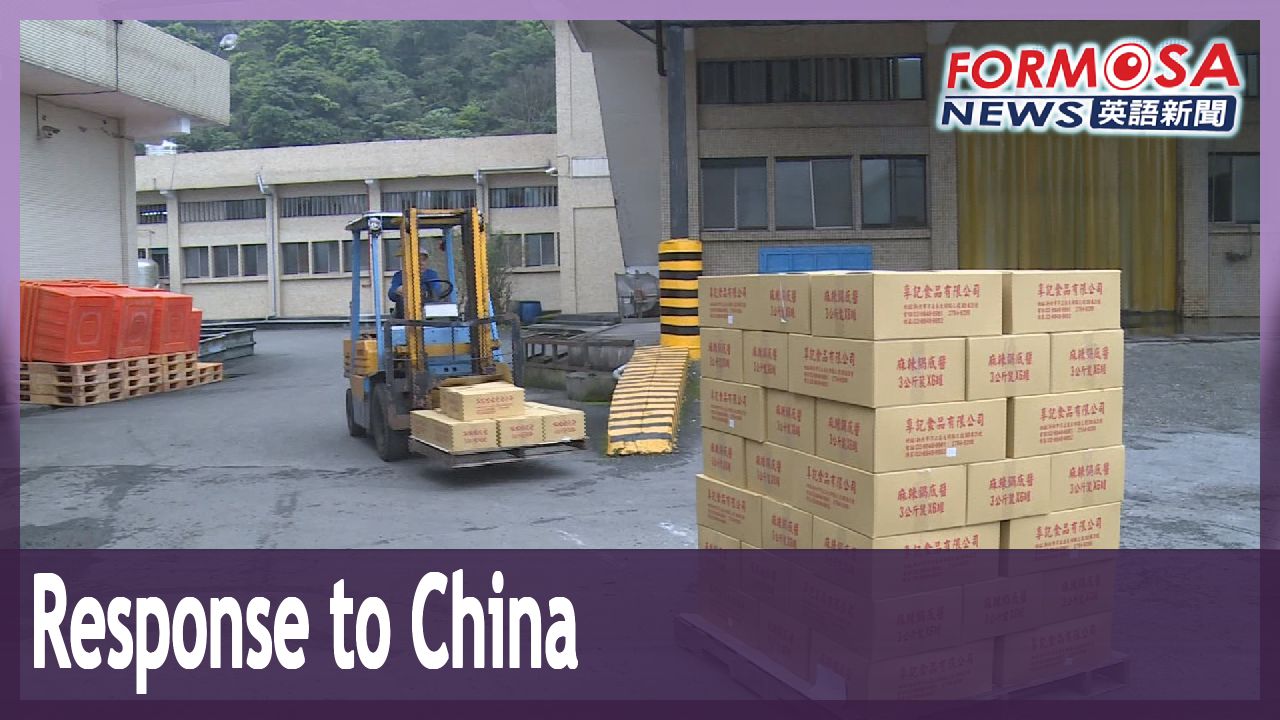
The government is launching response measures, as China continues to suspend more and more Taiwanese products from import. So far, China’s move has affected 2,409 Taiwanese companies, of which 1,800 say they won’t try to apply for import permits again. Beijing claims the companies had incorrectly filled in the relevant application forms required to comply with a new set of customs registration rules it launched earlier this year.
China has continued to suspend imports of some Taiwanese agricultural products. Critics say Taiwan’s central government had not prepared well enough for an expected shift in China’s customs rules. On Sunday, Deputy health minister Victor Wang said that Beijing not responding to Taiwan’s attempts to discuss the matter.
Victor Wang (Dec. 11)
Deputy health minister
We’ve been singled out, in comparison with how other countries are being treated.
Originally, China had granted import permits to more than 3,000 Taiwanese products. But with the start of China’s new customs registration rules, imports for more than 2,400 types of products were suspended. From Dec. 8 to Dec. 10 alone, the number of products allowed for import was further slashed from 1,006 to just 792. Taiwan’s Food and Drug Administration says China rejected the registration applications on the grounds that the documents and production licenses submitted did not meet its specifications. A lawmaker says China is using trade to put pressure on Taiwan.
Wu Ping-jui
DPP lawmaker
It’s frustrating. China is the one who’s doing bad things, and not respecting World Trade Organization rules. But in the end, people in Taiwan just blame the government. Under these circumstances, Taiwan’s government has to work hard and do more.
Among the 2,409 companies affected, about 1,800 say they won’t try to resubmit the documentation, saying they don’t want to put their trust in China again. The central government is launching policies to market the products in Japan and Southeast Asia.
Yen Hui-hsin
Chung-hua Institution for Economic Research
Trade between Taiwan and China has fallen to just 30% of what it used to be. It’s a very clear drop. We have experience in selling seafood products in other countries. Those attempts were successful, because China is not actually Taiwan’s biggest export market for seafood. That title is actually Japan’s.
The remaining companies will be assisted by three government agencies. The Council of Agriculture will advise businesses on processing their products in Southeast Asia, sell them domestically, as well as tapping into new markets. The Ministry of Economic Affairs will assist processing firms with matters such as loans, and utilizing the internet to sell products. The Ministry of Finance, which governs alcohol sales, will try to help companies take part in international competitions, as well as hold exhibitions in Taiwan to boost sales and competitiveness.
Yen Hui-hsin
Chung-hua Institution for Economic Research
China often uses these so-called “administrative barriers” to disturb trade. The key to respond is to spread the markets of Taiwan’s exports, to sell the products in other markets. I think Taiwan has already seen some success in that. The government hopes to set up an inter-ministerial management mechanism to export and process seafood products.
Taiwan has been at the end of Chinese import bans for many years now. The government will respond as it has in previous occasions, opening up new markets both abroad and in Taiwan, as well as improving the quality of the products. That way, firms won’t be so reliant on China, and find a way for their own in other places.
2022-12-12