China Medical University Hospital among top smart hospitals by US digital health certification body
China Medical University Hospital among top smart hospitals by US digital health certification body
2023-01-18
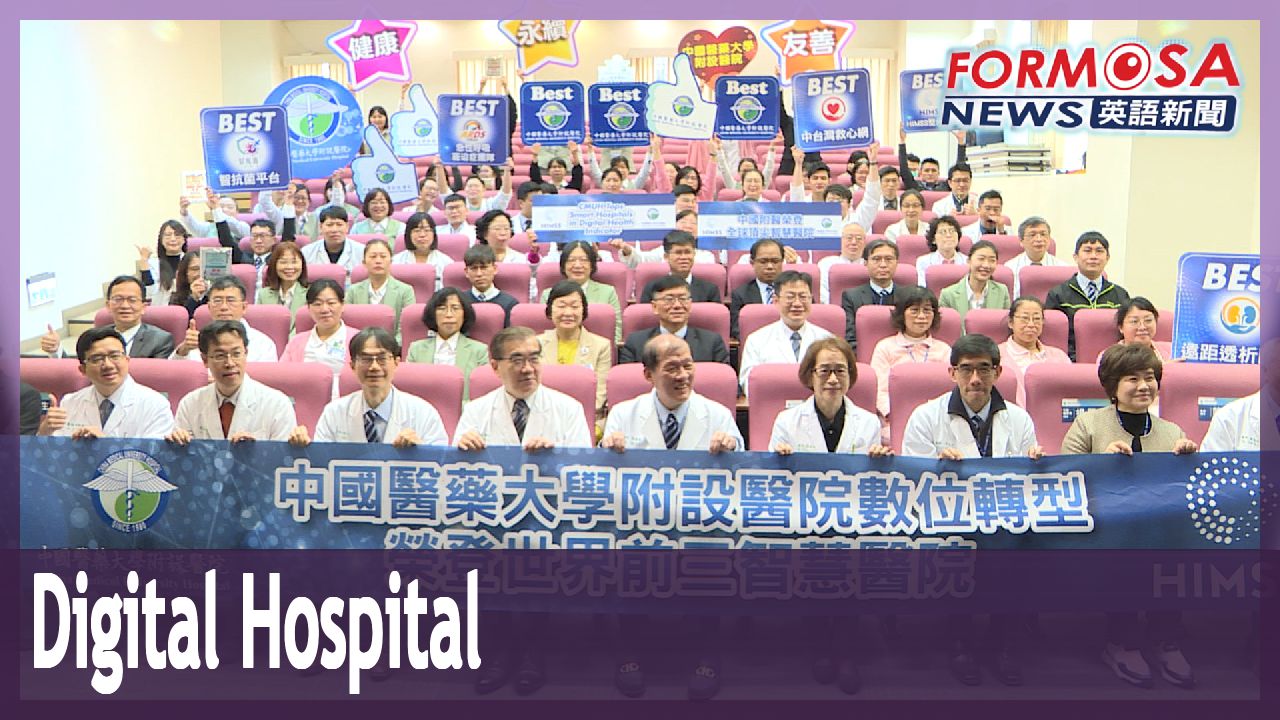
China Medical University Hospital, based in Taichung, was named one of the world’s top three smart hospitals by the HIMSS, a certification body for digital health transformation. Inpatients are given a tablet to check on their physiological data and drug information. They can carry this information with them after leaving the ward, with the hospital’s smartphone app. Another function of the app is that it allows patients to reach out to their doctors remotely.
With a click of a button, the curtains close. The patient doesn’t even have to get out of bed. Now it’s time for treatment. She checks out drug information with a tablet assigned to her.
Patient
Sometimes, after getting my blood pressure taken and after the nursing staff leaves I’d forget the numbers. I can check my physiological data here, such as blood pressure and body temperature. It’s very reassuring.
The China Medical University Hospital, based in Taichung, has been introducing smart, AI-powered solutions into their wards and clinics. In 2023, it was named the third smartest hospital globally by the Healthcare Information and Management Systems Society, a U.S.-based organization that promotes digital health transformation. With these systems in place, the death rate of intensive care patients with acute respiratory distress syndrome fell by an average of 16.7% every year.
Cho Der-yang
China Medical University Hospital superintendent
When an attending physician diagnoses or treats patients, they may only be thinking of one thing at a time. What makes this AI solution different is that from the beginning to the end of the treatment, the physician’s usual process is integrated with the whole system.
Once the patient returns home, they can still update their physiological figures in the hospital’s mobile app. For hemodialysis patients, their doctors can check on them remotely as family members help with treatment at home, saving them commuting time over at least 90 days every year.
Whether it’s dialysis or treating severe diseases, such as myocardial infarction and sepsis, digital systems can improve treatment for over 10,000 patients every month and close the distance between outpatients in remote areas and hospitals.
AI智慧融入病房.門診 中國附醫榮獲世界前三智慧醫院
2023-01-18
中國醫藥大學附設醫院,成功數位轉型,為國爭光,榮登「世界前三智慧醫院」的殊榮,從病房到門診,院方都融入了AI智慧科技,像是住院患者,透過一台平板,躺在床上就能開關燈光、窗簾,出院後還有專屬APP,能夠記錄數據、甚至是線上諮詢,提升診療效能。
按下按鍵,窗簾自動拉上,準備進入診療模式,患者全程躺在床上,不需要走動,靠著小小一台平板,就能查看服用的藥物對應到什麼症狀。
[[病患]]
“有時候量完血壓,護理人員走掉之後,我就會忘記我的血壓怎麼樣了,這裡還有可以看到,我的一些生理數據,比如說血壓,體溫的變化,就很安心”
中國附醫邁向智慧轉型,從病房到門診,結合AI輔助,獲得美國醫療資訊管理協會認證,榮登世界前三智慧醫院,每年更降低16.7%「急性呼吸窘迫症患者」在加護病房的死亡率。
[[中國醫藥大學附設醫院院長 周德陽]]
“一個主治醫師在判斷一個病,在治療的時候,可能腦筋就只有一個答案,這個擬人化(AI)跟一般的不一樣在於說,它從頭到尾,都是把醫生的習慣融入在整個AI裡面”
患者返家後,還能透過院方設計的「中國醫點通APP」記錄血壓等數據。血液透析患者,還有專屬醫師遠距安全監測,透過家屬協助、在家自己洗腎,每年至少節省90天的通勤時間。
無論遠距洗腎、心肌梗塞還是敗血病等重大疾病,AI智慧提升診療效能,每月至少上萬人受惠,也無形縮減偏鄉患者與醫療機構之間的距離。
Related News