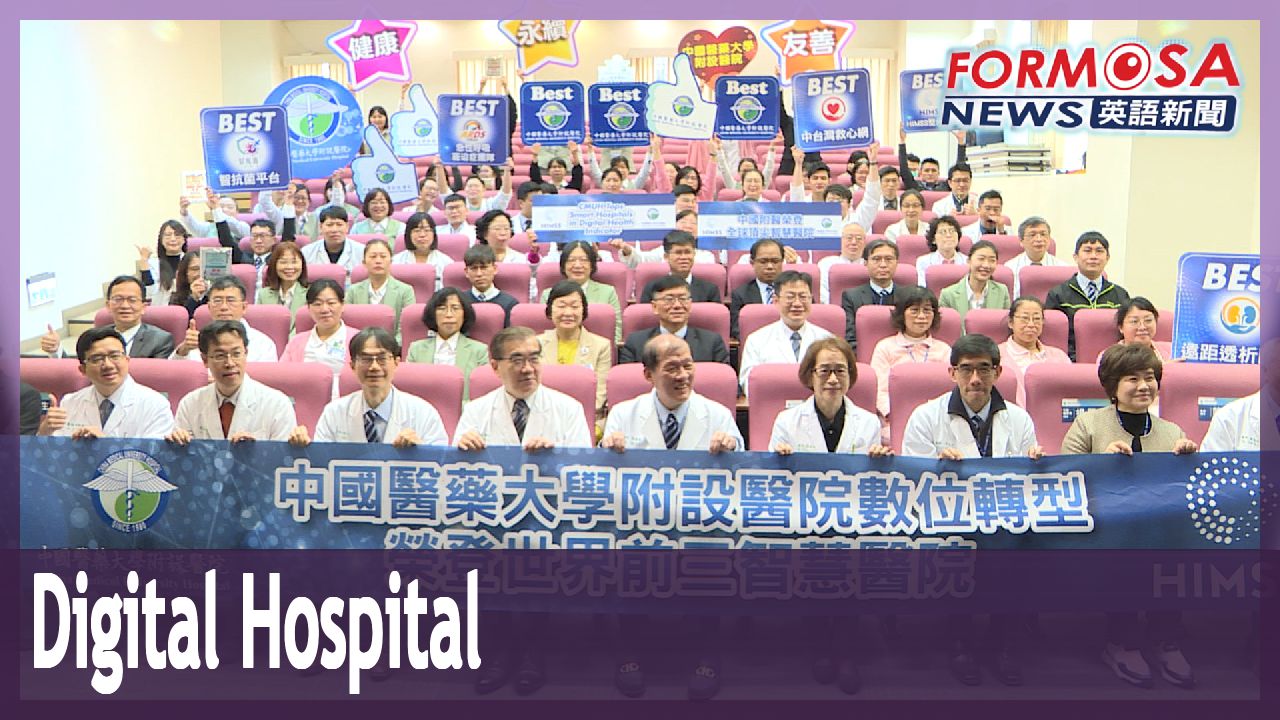
China Medical University Hospital among top smart hospitals by US digital health certification body
China Medical University Hospital, based in Taichung, was named one of the world’s top three smart hospitals by the HIMSS, a certification body for digital health transformation. Inpatients are given a tablet to check on their physiological data and drug information. They can carry this information with them after leaving the ward, with the hospital’s smartphone app. Another function of the app is that it allows patients to reach out to their doctors remotely.
With a click of a button, the curtains close. The patient doesn’t even have to get out of bed. Now it’s time for treatment. She checks out drug information with a tablet assigned to her.
Patient
Sometimes, after getting my blood pressure taken and after the nursing staff leaves I’d forget the numbers. I can check my physiological data here, such as blood pressure and body temperature. It’s very reassuring.
The China Medical University Hospital, based in Taichung, has been introducing smart, AI-powered solutions into their wards and clinics. In 2023, it was named the third smartest hospital globally by the Healthcare Information and Management Systems Society, a U.S.-based organization that promotes digital health transformation. With these systems in place, the death rate of intensive care patients with acute respiratory distress syndrome fell by an average of 16.7% every year.
Cho Der-yang
China Medical University Hospital superintendent
When an attending physician diagnoses or treats patients, they may only be thinking of one thing at a time. What makes this AI solution different is that from the beginning to the end of the treatment, the physician’s usual process is integrated with the whole system.
Once the patient returns home, they can still update their physiological figures in the hospital’s mobile app. For hemodialysis patients, their doctors can check on them remotely as family members help with treatment at home, saving them commuting time over at least 90 days every year.
Whether it’s dialysis or treating severe diseases, such as myocardial infarction and sepsis, digital systems can improve treatment for over 10,000 patients every month and close the distance between outpatients in remote areas and hospitals.
2023-01-18