NATO, Japan and U.S. address security challenges in Indo-Pacific
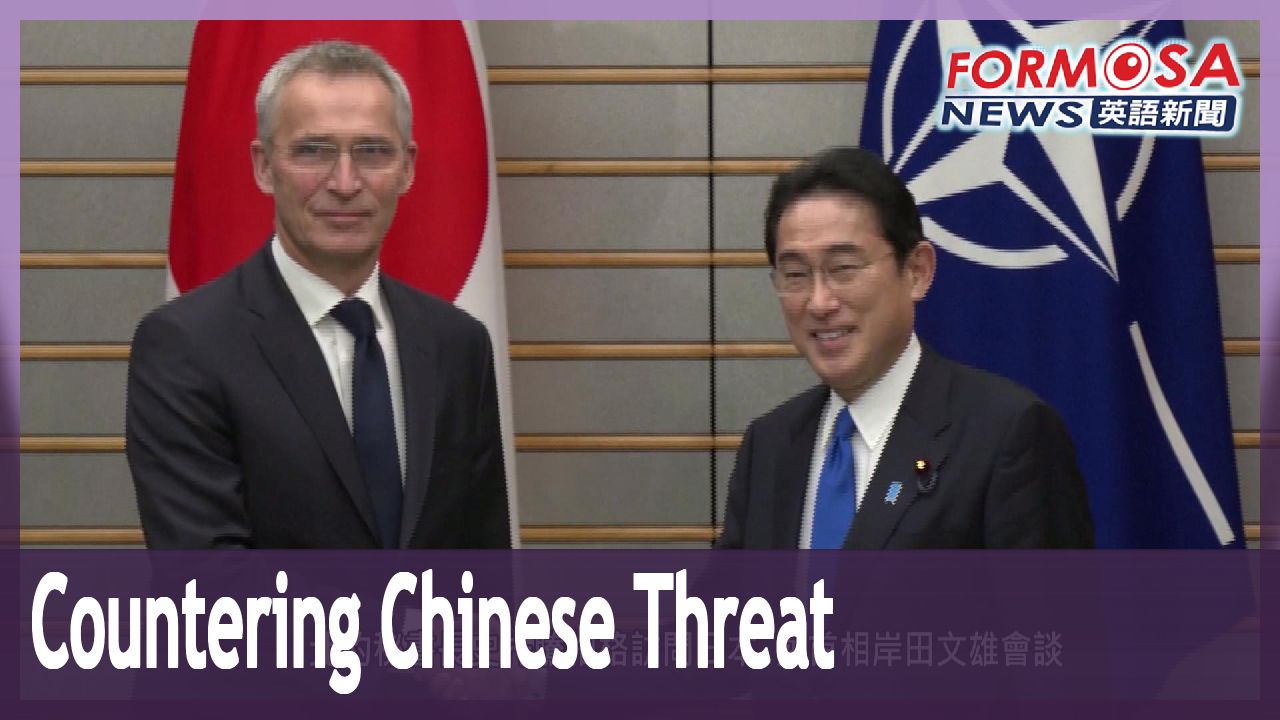
On Tuesday, NATO chief Jens Stoltenberg met with Japanese Prime Minister Kishida Fumio and released a joint statement on Japan-NATO security cooperation. In the statement, and during the talks, the two sides expressed serious concern over China’s military action in the region, including its coercive behavior over Taiwan. Meanwhile, U.S. Secretary of Defense Lloyd Austin arrived in the Philippines on Monday night to seek access to another four Philippine military bases, in case a conflict breaks out in the region.
On Jan. 31, NATO Secretary General Jens Stoltenberg met with Japanese Prime Minister Kishida Fumio in Tokyo. After the meeting, the two sides released a joint statement, in which they expressed concern over reports of militarization, coercion and intimidation in the South China Sea. In his remarks, Stoltenberg criticized China’s behavior, agreeing with Japan that it’s a matter of serious concern.
Jens Stoltenberg (Jan. 31)
NATO secretary general
China is substantially building up its military forces, including nuclear weapons, bullying its neighbors and threatening Taiwan. Beijing is watching closely and learning lessons that may influence its future decisions. What is happening in Europe today could happen in East Asia tomorrow.
Meanwhile, U.S. Secretary of Defense Lloyd Austin, who arrived in the Philippines on Monday night, is slated to meet Philippine President Ferdinand Marcos Jr. on Thursday to discuss expanding U.S. access to another four military bases in the country, to counter China’s growing military action in the region.
According to U.S. newspaper the Wall Street Journal, two of the four sites could be located on Cagayan Province on the northern island of Luzon, and on the Province of Palawan to the east. With only 321 kilometers between Luzon and Taiwan, the U.S. military would be able to respond quickly should a conflict erupt in the South China Sea or the Taiwan Strait.
Shu Hsiao-huang
Institute for National Defense and Security Research
If the Philippines will allow access to these locations, to these bases, allow the U.S. military to effectively interfere… of course whether it’s the Taiwan Strait or the South China Sea, both are important regions, and the Philippines’ location has a great strategic significance. An important aspect of U.S. deployment in the South China Sea is the surveillance of anti-submarine and underwater activity.
The Indo-Pacific Region’s security is high on the agenda of NATO, the U.S. and their allies.
2023-02-01