NT$500 billion “Singles’ Economy” has wide-ranging impacts on consumer trends
NT$500 billion “Singles’ Economy” has wide-ranging impacts on consumer trends
2023-06-12
Life in Taiwan is changing, and one major symbol of social shifts is the rise in number of people who live by themselves. There are now more than 3 million people living alone in Taiwan. That’s just over one third of all Taiwanese households. Today we take a look at how this social change is impacting the consumer economy. Everything from meals to groceries, and even karaoke booths, is changing to meet the rising demand of singles. And of course, the pet industry is booming, as people turn to cats and dogs rather than child raising.
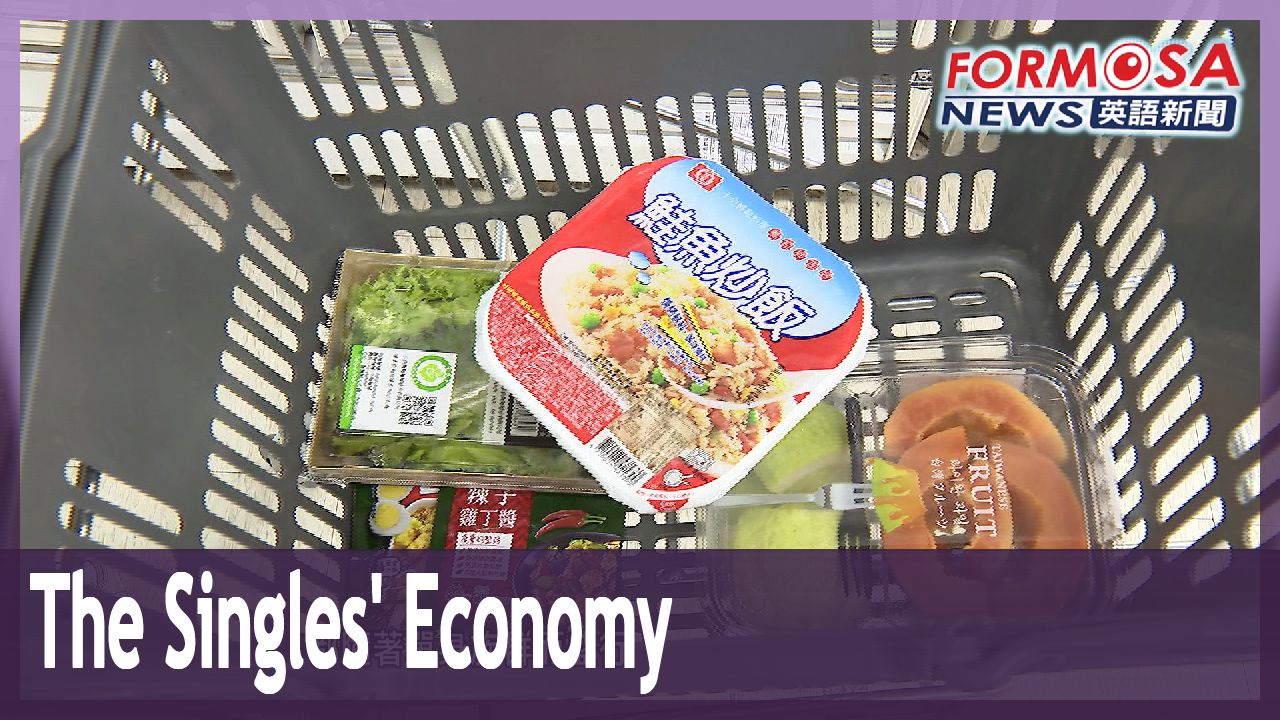
Ms. Chen, in her 50s, is browsing in a supermarket. She chooses a small pack of vegetables, and a single piece of fruit.
Ms. Chen
I choose small packs. It doesn’t matter if the single item is a bit more expensive. I’m used to being single, and I think it’s great – you don’t have to worry about what the other person wants to eat. You just decide for yourself.
Statistics show that more than 3 million people currently live alone in Taiwan. That’s 34% of households – a 2.8% increase from one year ago. Among those who live alone, the proportion who are unmarried people in their 30s has shot up in one year, from 45% to 54% of the total.
This lettuce was originally sold in a big pack. Now there’s also a single portion. Many convenient ready meals are also gaining popularity due to the single market.
And consumers no longer feel embarrassed to sit down to a feast by themselves. Restaurants have installed single-person seating areas for traditional group meals like roast pork or hotpots. You can even buy mini kitchen gadgets designed for the single household.
Jessica
Online retailer PR manager
For example, we have plug-in single hotpots, and mini ovens, as well as small, instant meals that you don’t need to do anything to. They’re all popular products.
If you want to go and sing karaoke alone, you can get a solo booth. The single market is no longer synonymous with “unmarried people,” either. There are lots of people who were married and are divorced, as well older people who live alone and have retired. The “singles’ economy” is now worth over NT$500 billion a year in Taiwan. And another market that benefits from the rise of solo life is the pet industry.
Sun Ming-te
TIER Macroeconomic Forecasting Center
Nobody was paying attention to the pet economy of the single demographic. There are now more pet cats and dogs in Taiwan than children. The money spent on pets is part of the “singles economy.” Single people buy fewer items, but spend more on each item, so manufacturers can think in that direction when they design products for the single demographic.
Taiwanese culture is changing. Small, nuclear families tend to be the center of people’s lives now. And for the many single-person households in Taiwan, convenience and autonomy are priorities shaping new consumer trends.
全台單獨生活戶破300萬 微家電.獨食餐飲夯!
2023-06-12
根據內政部統計,台灣單獨生活戶已經突破300萬戶,占家庭總戶數約34%。而且單身族的每年消費,一年商機就超過五千億元,讓不少超市業者瞄準商機,推出微家電、零食以及小包裝的家庭用品,銷量都翻倍成長,餐飲業者也紛紛推出一人套餐、單人座位區,搶獨食商機。
來到賣場左挑右選,今年50幾歲的陳小姐,蔬菜選擇小包裝的,水果也是挑單顆買。
[[陳小姐]]
"就小包裝的,即使單價貴一點也沒關係,(單身)習慣了,而且我覺得很好,就不用去管對方吃什麼,自己一個決定"
根據統計,台灣單獨生活戶已經突破300萬戶,占家庭總戶數約34%,年增2.8%,其中30至39歲的未婚人口,更是從45%增加到54%,年增將近10%。
原本大盒的生菜,增加一人份包裝,還有各種便利式的即食產品,都隨著單身族群而盛行。
獨自享用山珍海味,也不怕尷尬,餐飲業者主打單人座位區,搶攻獨食商機,除了一人燒肉,一人火鍋,就連生活家電也出現迷你版產品。
[[團購電商公關 Jessica]]
“例如像是即插即用的個人鍋,迷你烤爐,或是小包裝,不沾手的即食品,都是人氣商品 “
想自己唱歌,也有投幣式的KTV,單身族群不只是未婚族、還有離婚單身者、以及退休的獨居長者,在台灣的商機,一年超過5千億元,也帶動寵物市場。
[[台灣經濟研究院景氣預測中心主任 孫明德]]
“單身族群的寵物經濟是大家沒有注意到的,現在在台灣,貓狗寵物的數量比小朋友更多,那在寵物身上花的錢,也是一種單身經濟。(單身族群)他買的東西份量比較小,但單價比較高,所以廠商在針對單身族群設計商品的時候,可以往這一點去考慮”
不同過去,以小家庭為主的生活方式,講求便利以及自主性高的單身族群,成為重要的消費勢力。
Related News