Ceramics repair specialist teaches himself how to do repairs with metal
Ceramics repair specialist teaches himself how to do repairs with metal
2023-07-05
In this age of cheap shopping and disposable goods, repairing broken items is a rare skill. Today we meet one tea shop owner whose mission is to lovingly repair broken ceramics. Ku Yi-ping taught himself how to mend porcelain and pottery with lacquer and metal. After many years of gradually developing his trade, he’s known across Taiwan as one of the best in the industry. Let’s visit his workshop in Hsinchu’s Beipu Township to see how it’s done.
Many people will throw away a porcelain bowl as soon as it’s broken. But for Beipu tea ware expert Ku Yi-ping, it’s the start of a repair job.
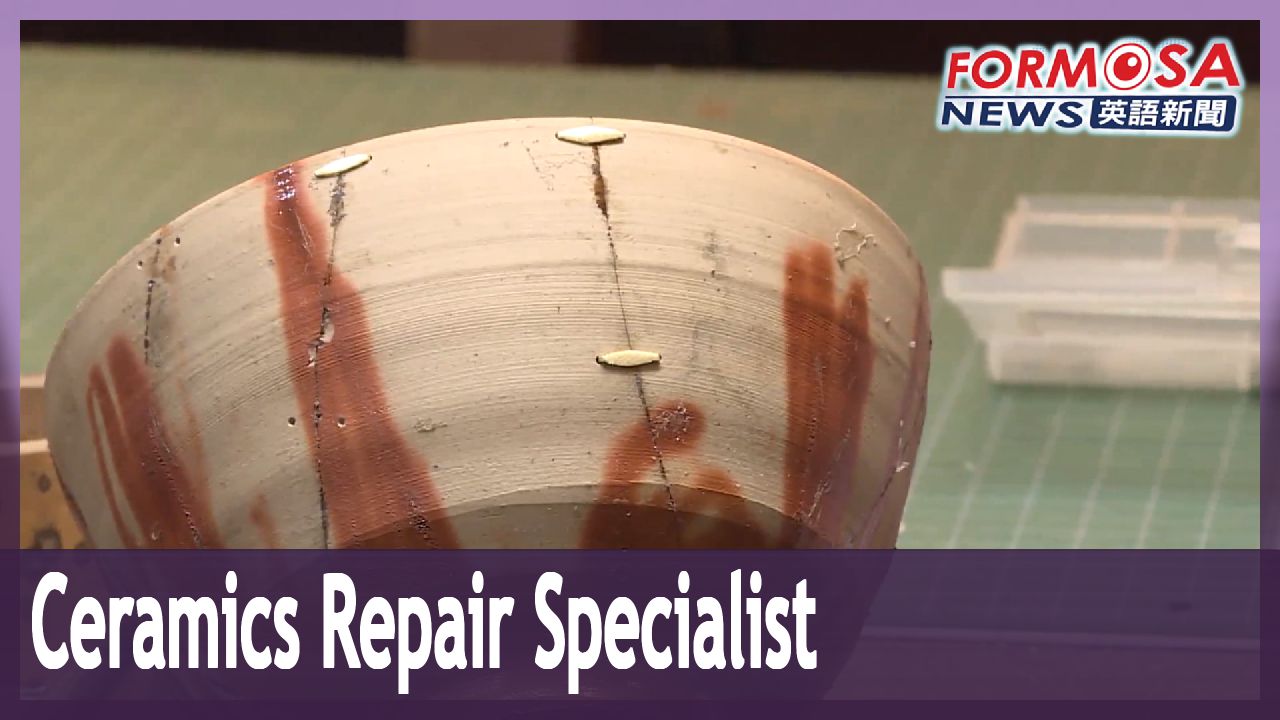
He applies layers of raw lacquer to the crack and then secures the mend with an adhesive tape. When the lacquer is dry, he drills in a nail and files it down. This is how ceramics and pottery are mended with metal.
Ku Yi-ping
Tea ware store owner
It will take about a year to complete this bowl, for instance. This break will need at least 10 layers of lacquer.
The pots and cups in this tea shop are not new. They’re all unique and bear the signs of Ku’s repair work.
Ku Yi-ping
Tea ware store owner
This was cracked by accident. I thought, “How strange, it’s a shame to throw away such a nice bamboo item.”
When materials were scarcer, repair skills were highly valued. But in this era of cheap goods and garbage, the time and expertise it takes to repair items is in short supply. Ku looks up suitable repair materials and methods, investing great time and attention in each job. For him, material goods are something to cherish.
Ku Yi-ping
Tea ware store owner
Our current age is an age of materialism. In ancient times, firing a bowl was an extremely difficult thing.
His rarefied skills attract customers who share his desire to cherish objects fully. But one repair job can take up to a year. Sometimes the customer has forgotten the project by the time their item is returned.
Ku Yi-ping
Tea ware store owner
They’re very shocked when I tell them it’s ready. “Oh, I see! I was getting something repaired!”
The cracks in these goods reveal the history of their use, while Ku’s repair work is an investment in their future and a vote of confidence in the ways they’ll be used again.
修出名堂! 製茶師傅自學"器具修復工藝技法"
2023-07-05
潑出去的水,收不回來,但破掉的碗,竟可以修復。新竹有一名製茶師傅古亦平,自學"器具修復的工藝技法",從上漆固定到補丁加固,都靠自己摸索,一開始只是想把壞掉的茶具修好,沒想到一修,修出名堂,不少人都帶著珍藏的寶貝找上門。
瓷碗摔破了,一般人通常都會丟掉,但北埔茶行的師傅古亦平,要把這破掉的碗修好。
用生漆在接縫處來回刷補,接著貼膠帶固定,等漆乾了之後,再用鑽頭打洞,接著拿銼刀打磨黃銅,把鋦釘鑲在碗上。透過金屬固定,把破裂瓷器和陶器修補完成。
[[埔茶行師傅古亦平]]
“以這個碗來說,完成大概要一年左右,這個缺口就要十道漆以上”
看看茶行裡的茶壺、茶杯,不是新的,但卻獨一無二,每一個都有古亦平修補的痕跡。
[[北埔茶行師傅古亦平]]
“這個茶則不小心裂掉了,想說奇怪,這麼好的竹材,丟掉可惜”
在資源匱乏的年代,修補的技術相當重要,隨著物換星移,耗時費工的修補工作逐漸沒落,但古亦平自己查資料,摸索方法,花大把精神投入修補,是出自一份惜物的初衷。
[[北埔茶行師傅古亦平]]
“現在時代就是物質的時代,早期古時代要燒個碗,其實非常不容易”
他精湛的技術,也吸引惜物之人,只是一修最多長達一年,有時顧客甚至忘了有這一回事。
[[北埔茶行師傅古亦平]]
“一通知他的時候就會很驚訝,原來我還有東西在那邊修”
一道道裂痕記錄著器物的生命軌跡,而茶具上鑲著的補丁,就像是重生的印記。
Related News