Hsinchu chef focuses on nostalgic flavors of Hakka cuisine
Hsinchu chef focuses on nostalgic flavors of Hakka cuisine
2023-07-06
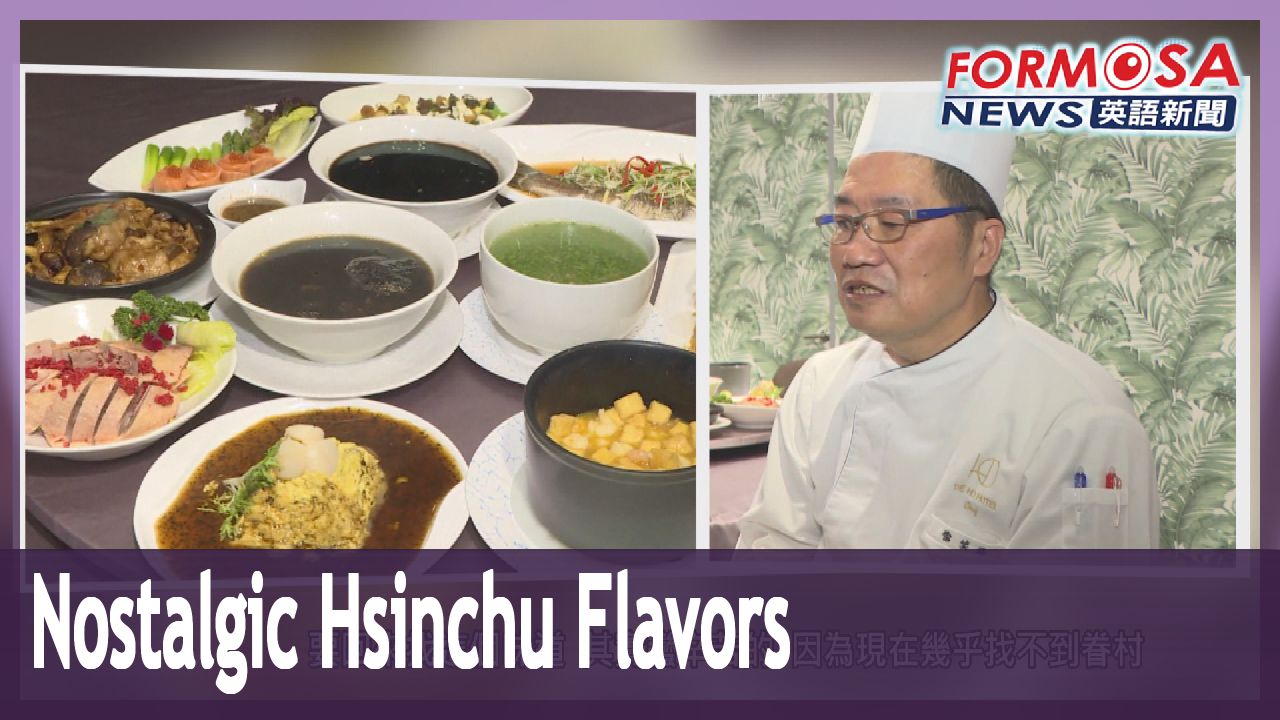
A Michelin-starred chef has opened a new restaurant in Hsinchu, to focus on the nostalgia of a military dependents’ village. After more than 40 years in the kitchen, chef Lei Hsiao-ping is back to the flavors of home. His Hakka menu features grass jelly chicken soup, as well as home-made koji rice. Customers say the natural flavors are just like mom’s cooking.
Glistening leg of duck garnished with house-made red koji rice: a sweet and sour feast.
Lei Hsiao-ping
Chef
We steam a duck, and when it’s cooled off, we bathe it in a fermented red yeast rice sauce. After two days, the flavor of the red yeast rice has seeped in.
The dish is flavored with grass jelly from Hsinchu’s Guanxi Township. Silkie chicken is flash boiled, then red jujubes and goji berries are added. No flavorings except salt go in, creating a fresh, bright and sweet result.
Member of public
It makes me miss my mom, and think of the taste of my childhood. I feel happy and touched, eating this.
Member of public
It feels so natural. Good things taste natural.
The head chef, Lei Hsiao-ping, grew up in a military dependents’ village in Hsinchu. After high school, he went north to work in a Hong Kong style teahouse. He began as a humble kitchen porter, and in six months he was chef’s apprentice. At 26 he was already a sous chef. He moved from restaurants into the hotel industry, and in 2019 he led his hotel kitchen team to win a Michelin star. After 40 years away, he’s finally moved back to Hsinchu to rediscover the flavors of his childhood.
Lei Hsiao-ping
Chef
My roots are in Hsinchu. I was born and bred here. I grew up eating in the military dependents’ village. Coming back to find that flavor has been quite hard, because you can hardly find those villages anymore. I’ve been searching in my memories, adapting them, and even using my imagination. The taste of mom’s cooking is the hardest thing to create.
Lei has retained the classic flavors of his childhood, while bringing in lots of innovative influences from many world cuisines, harvested from his experience working in different establishments for so many years.
Lei Hsiao-ping
Chef
What you eat is so important for your health. I want ingredients that will mean you don’t need to go to the pharmacy, to create better meals.
Lei has spent the better part of his life in the kitchen. His greatest aspiration is to create food that keeps diners healthy. With all the care he puts into ingredients and techniques, customers can enjoy the taste of home.
返鄉尋找記憶中的味道! 米其林主廚端客家好滋味
2023-07-06
米其林一星主廚雷笑屏,在外打拼40年,決心回到故鄉新竹,找尋記憶中的味道!餐廳內每一道菜,都有新竹在地特產或富含客家特色,主打的仙草雞湯以關西知名的仙草入菜,紅糟鴨腿則是主廚自釀紅麴搭上油亮土鴨腿。每一口都讓饕客吃到客家的好滋味。
油亮鴨腿放上主廚自釀紅麴,口感酸甜。
[[主廚 雷笑屏]]
“用一般的土鴨去蒸熟以後,涼了以後,浸泡在發酵好的紅麴醬裡面,泡個兩天,紅麴的香味進去就可以”
以新竹關西知名的仙草入菜,黑骨雞下鍋後川燙,加上紅棗、枸杞,除了鹽巴,捨棄所有調味料,讓湯頭更清爽回甘。
[[民眾]]
“會讓我很想念我的媽媽,想念小時候的味道,吃到了很開心,也很感動”
[[民眾]]
“它就是這麼天然的感覺,好的東西就是原味”
掌廚人雷笑屏從小在新竹眷村長大,高中畢業後,離開新竹北漂追夢,在一間港式茶樓打工,從一名推車小弟,到廚房雜工,半年後升為學徒(apprentice),26歲接任副主廚。從餐廳到飯店,2019年雷笑屏甚至帶領飯店,摘下米其林一星。在外奮鬥40年,他決定回到家鄉,找尋記憶中的味道。
[[主廚 雷笑屏]]
“新竹是根嘛,我是新竹出生新竹長大,從小就在眷村吃,要回來找這個味道, 其實蠻辛苦的,因為現在幾乎找不到眷村,憑記憶去想,去改,甚至去發揮,世界上最難煮的味道,就是媽媽的味道”
在眷村吃遍族群美食,再加上多年輾轉服務於風格不同的餐廳,雷笑屏保留了經典傳承,也融合各族群食材,創新料理。
[[主廚 雷笑屏]]
“吃進去的東西,對身體真的很重要,(找)廚房代替藥房的食材,做一些更好的餐出來“
雷笑屏大半輩子的時間與廚房為伍,最大的目標就是以廚房取代藥房,從食材到烹煮,嚴格把關,讓饕客每一口都能吃到回憶、吃得健康。
Related News