Wu Ming-chang and students revive traditional art of tairyo-bata
Wu Ming-chang and students revive traditional art of tairyo-bata
2023-08-07
Now we have a story of artistic revival. Have you ever seen a photo of a ship covered in exuberant hand-painted flags? If you have, then you’re familiar with the tradition of tairyo-bata. These colorful ship flags are a Japanese custom, brought to Taiwan almost a century ago. Amid changes in the fishing industry and the dominance of the printing press, Wu Ming-chang is one of the last tairyo-bata masters in the country. He thought his art was in terminal decline. But to his surprise, he was approached by some young people with other ideas.
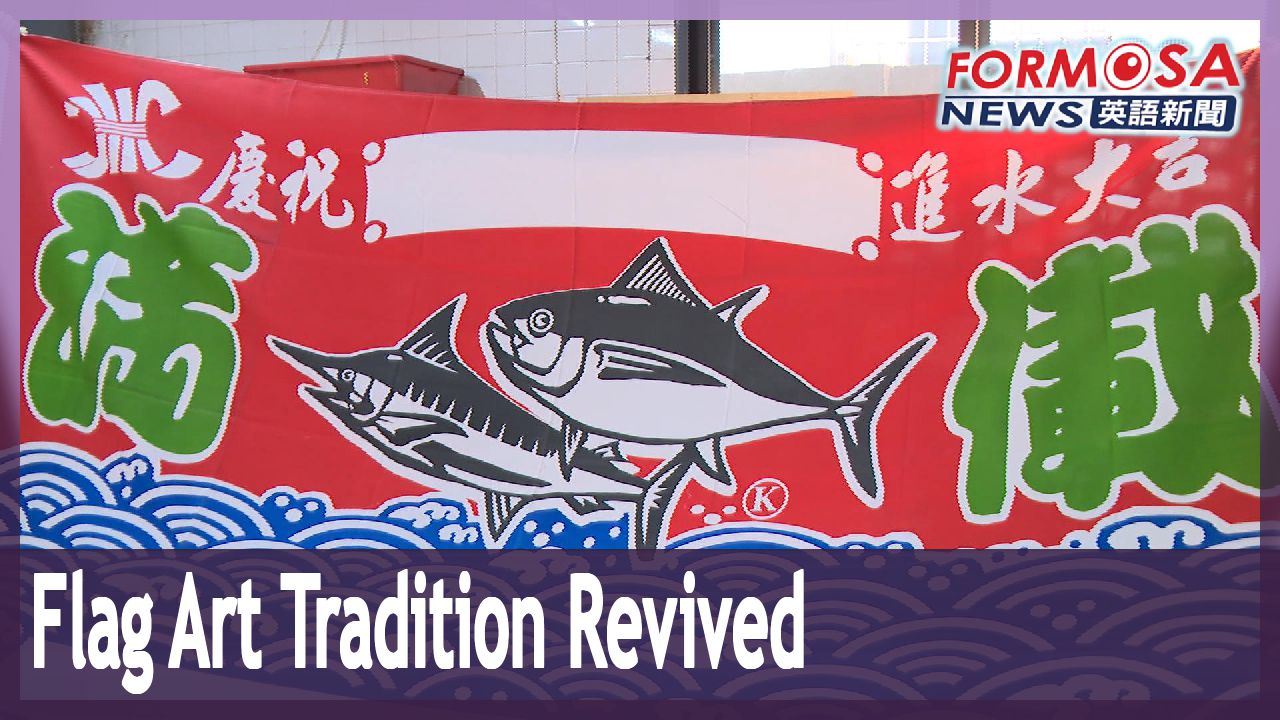
This ceremonial ship launch is a magnificent event. The ship is covered in colorful “tairyo-bata”, or fishermen’s flags. The flags are intended to bring the new ship a big catch.
Wu Ming-chang
Tairyo-bata master
When a new ship is made and launched, you don’t send red packets. You send flags with the ship’s name written on them. When the ship has more flags on it, that means the boss has a lot of connections.
The tairyo-bata tradition was brought to Taiwan from Japan in the 1940s and ‘50s. At first, the flags had to be entirely handmade, and even the paints used were special.
The master paints the lines on the flag with a paste made of sticky rice. It’s all freehand – no preliminary outlines here. Now in his seventies, Wu is one of the last tairyo-bata masters in Taiwan.
Wu Ming-chang
Tairyo-bata master
When you paint the sticky rice paste on, it soaks into the cloth. When you dye the cloth, it doesn’t bleed. Now things have changed and they’re printed with machines – thousands in a single day. This tradition has already disappeared in Taiwan. I’m pretty much the only one left in Taiwan who can still do it.
With the changing times, hand-painted tairyo-bata have gradually been replaced by machine-printed flags. Wu was once resigned to the idea that his skills would fade into history. But then he received a surprising request from some local students who wanted to learn this precious traditional art.
Wu Ming-chang
Tairyo-bata master
I thought they were scammers! I tried to ignore them. But they kept coming back to me again and again. I think they’re very sincere. So I started to teach them.
National Sun Yat-sen University student
We went to pay our respects to the master, and he shut the door on us! Because he didn’t think there was anybody who would want to do such a complicated craft anymore. We are determined to bring this craft back.
The tairyo-bata is an art in danger of extinction, but with these students throwing themselves into learning, there’s hope yet for this beautiful maritime tradition.
保佑新船出航平安豐收 一窺高雄傳統"漁旗工藝"
2023-08-07
高雄早年是造船重鎮,新船下水前都會掛滿畫有魚或吉祥圖樣的漁旗,祝福出航平安、豐收滿儎。而製作大漁旗是3、40年代從日本傳來的工藝,後來逐漸被網版印刷和電腦輸出取代,台灣的漁旗師傅也日漸凋零。今天我們帶您來到高雄,來了解這已經難得一見的漁旗工藝。
進水典禮風光熱鬧,船上掛滿七彩繽紛的大漁旗,祈求新船出港能豐收滿載。
[[大漁旗師傅 吳明昌]]
“造一艘新船要下水的時候,不是送紅包,而是送旗子,上面寫船的名字,旗子掛越多代表這老闆的人面越廣”
大漁旗是民國30至40年代從日本傳進台灣,當年可是需要純手工製作,就連繪畫材料都很特別。
徒手用就能用糯米糊畫上線條,完全不需要打草稿。今年70多歲的吳明昌,正是全台為數不多的大漁旗師傅。
[[大漁旗師傅 吳明昌]]
“糯米糊畫上去後,它會滲入布裡面,塗色的時候它不會暈開,演變到現在已經變成機械印了,一天可以印幾千支,這種東西在我們台灣已經沒落了,現在台灣大概剩下我可以做”
隨著時代變遷,手工漁旗逐漸被電腦輸出取代,吳師傅原本遺憾技藝失傳,卻沒想到會有在地青年三顧茅廬,要將珍貴的傳統技藝傳承下去。
[[大漁旗師傅 吳明昌]]
“我以為是詐騙集團,不想理他們,他們一次又一次找我,我覺得他們很有誠意,後來就教他們”
[[中山大學學生]]
“先去拜訪老師,然後他直接關門,因為他不覺得有人現在還要做這個這麼麻煩的工藝,我們就決心把這個工藝找回來”
原本近乎消失傳統技藝,現在由在地青年致力傳承,以旗津為基地,展現大漁旗的文化美學。
Related News