Fish farmer innovates grouper fishing with new breeds and facilities
Fish farmer innovates grouper fishing with new breeds and facilities
2023-10-23
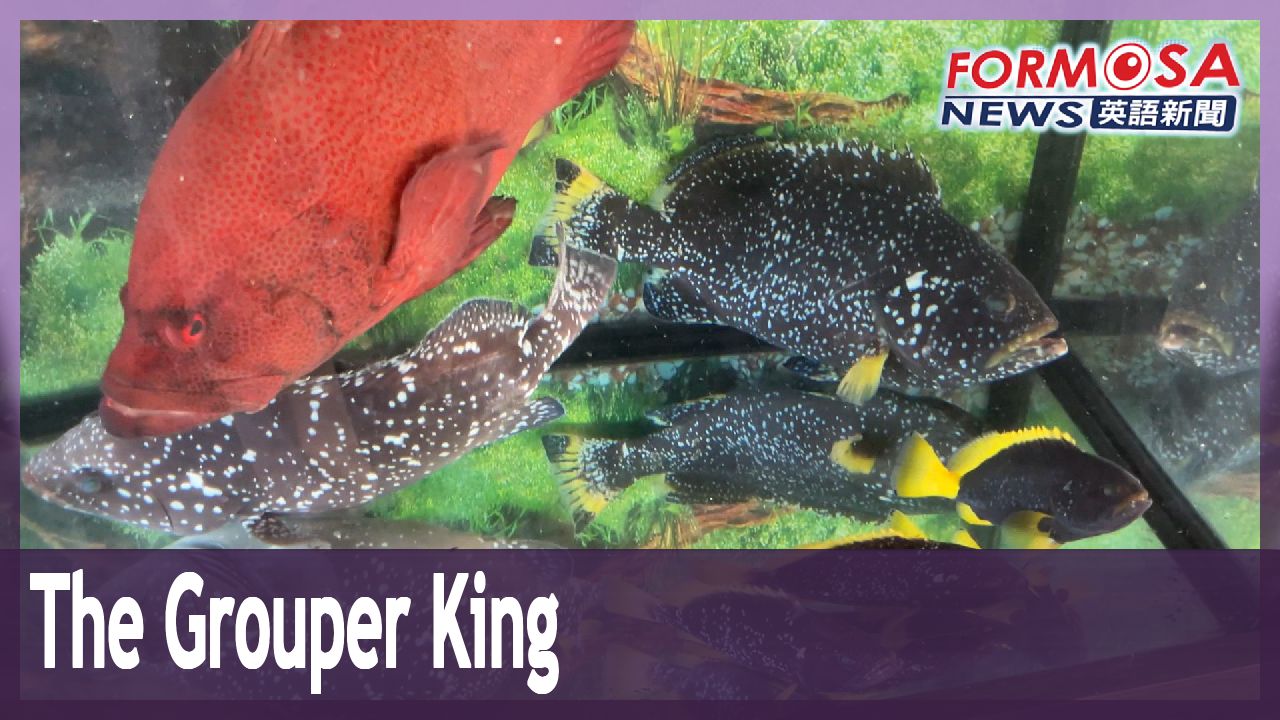
You may remember in 2022 China banned grouper fish imports from Taiwan, in an effort to hit Taiwan economically. Grouper fish are a lucrative industry that once relied on exports to China. But fish farmers have pivoted to new methods to head off the threat. Today we meet one farmer who has innovated so elegantly, his peers call him the “Grouper King.” He actually began to switch his methods six years ago, when he realized that Chinese farms were starting to cultivate the most common grouper breeds. So Tai Kun-tsai found new breeds, to export to countries like Japan and Singapore. And along with his family, he’s embraced cutting edge processes to make sure his business is ahead of the times.
It was six years ago that Tai Kun-tsai, the “Grouper King,” realized Chinese farmers were cultivating large numbers of giant groupers, tiger groupers, and yellow groupers. So he got out of the giant grouper business, and started to develop the speckled blue and cucumber groupers instead, succeeding in artificial breeding programs. And now that China has banned Taiwan grouper, his exports are doing well.
Tai Kun-tsai
Grouper farmer
Right now we sell cucumber grouper live. We can produce cold chain fish. We send them to Japan and Singapore.
Tai’s daughter, Tai Tzu-ying, is taking some grouper fry to the vet for diagnosis. This is the Fish Disease and Aquaculture Safety Testing Center, set up by the company. It applies the maxim “prevention is better than cure” to aquaculture.
Tai Tzu-ying
Daughter of Tai Kun-tsai
We detect health problems in the fish at an early stage. We don’t wait to lose large numbers of fish before we start to put medicine in or start to treat them.
Early testing also helps prevent any traces of medicines being detected when the fish are exported.
Tai Tzu-ying
Daughter of Tai Kun-tsai
For the export fish, we always bring them into the factory first, to clean out any food in their digestive tract. That means less chance they’ll expel foods during transit.
Groupers destined for export are first brought to this preparation pool where they are not fed again. After they’ve passed all the tests they enter the final stage.
The pandemic of the last three years has changed the fish farming industry. Cold chain processing is now of the utmost importance. Tai Kun-tsai visited Japan to learn how it’s done.
Tai Kun-tsai
Grouper farmer
In Japan I observed that after they let the blood of the fish, they don’t cool it down with freshwater. They always use cooled seawater.
Whether developing new fish breeds or introducing the most advanced processing facilities, Tai is determined to stay at the forefront of the grouper business and find the way out of any impasse.
For more Taiwan news, tune in:
Sun to Fri at 9:30 pm on Channel 152
Tue to Sat at 1 am on Channel 53
石斑大王戴昆財養殖新品種石斑魚 不畏中國打壓
2023-10-23
台灣的石斑以養殖龍膽石斑、龍虎斑為主,不過,去年被中國以驗出禁藥為由禁止進口之後,重創國內養殖戶。在屏東,有石斑大王稱號的戴昆財,從六年前開始,就轉型養殖新品種的藍瓜石斑、黃瓜石斑,去年更開發出紅玫瑰石斑,同時還成立魚病檢驗中心和冷鏈工廠,自行把關檢驗,使得他能在這波打壓之中,降低影響,還能持續外銷。
有石斑大王稱號的戴昆財,六年前查覺到中國已經大舉養殖龍膽石斑、龍虎斑和青斑後,毅然退出龍膽石斑的市場,轉型開發藍瓜石斑和黃瓜石斑,成功透過人工培育方式繁殖出來。在中國禁石斑的情況下,他仍然能夠持續外銷。
[[石斑大王 戴昆財]]
“黃瓜石斑目前我們銷活魚。冷鏈的我們做得出來,我們寄到日本、新加坡。”
戴昆財的女兒戴滋瑩,帶著幾隻石斑幼魚來給獸醫師診斷,這裡是公司自行成立的魚病和水產安全檢驗中心,把人類預防勝於治療的觀念運用在養殖上。
[[戴昆財女兒 戴滋瑩]]
“提早去偵測魚的健康問題,不要等到魚大量在損失的時候,才要開始投藥或者才要開始治療。”
事先檢驗,也能避免出口時被驗出藥物殘留。
[[戴昆財女兒 戴滋瑩]]
“外銷的我們都會先進來這個廠區裡面,讓牠把腸道裡面的食物先淨空,(運送)旅途當中比較不會有吐料的狀況。”
等著出貨的石斑魚會被送到這個預備池中,不會再餵食,等到一切都檢驗沒問題之後,進入最後的關卡。
這三年疫情衝擊下,改變了魚貨生態,冷鏈加工成了重中之中,戴昆財還赴日觀摩。
[[石斑大王 戴昆財]]
“在日本觀察到,一尾魚放血之後,它所降溫的水不是用淡水,完全是用冷卻的海水。”
不論是開發新魚種,還是建立新設備,戴昆財總是走在最前面,搶得先機,不斷為自己的事業開創新局。
更多新聞內容,請鎖定:
民視台灣台(152頻道)週日至週五晚上9:30
民視新聞台(53頻道)週二至週六凌晨1:00
Related News