Cheerleaders in stadiums: a home run or bad call?
Cheerleaders in stadiums: a home run or bad call?
2023-12-24
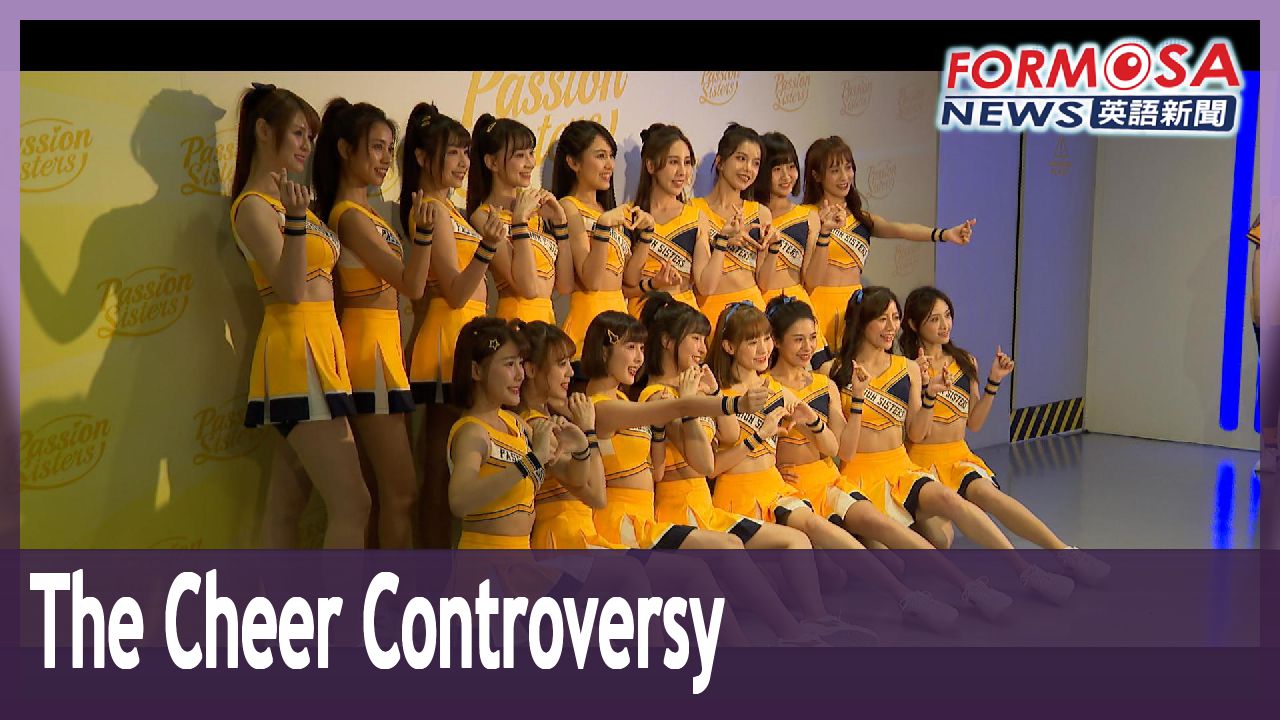
From basketball to baseball, nearly every professional sports team in Taiwan has a cheerleading squad. Fans go to stadiums not just for the games, but also for the animated sideline performances. As cheerleaders soar in popularity, they’ve helped to drive ticket sales and bring international attention to Taiwan. But they’ve also raised some pressing questions. Are they uplifting or undermining women? Are they helping or hindering Taiwan’s sports culture? We dive into the debate in our Sunday special report.
Here at Xinzhuang Baseball Stadium, nearly 10,000 fans wait in the stands to watch the Fubon Guardians play the CTBC Brothers. At the other end of the stadium, there’s a buzz of excitement as cheerleaders stream in.
Established five years ago, the Fubon Angels are Taiwan’s first cheer squad that performs for both baseball and basketball games. The Angels are exclusive to the Fubon franchise.
Anna
Fubon Angels cheerleader
I majored in dance, so I thought if I could combine my passion with my profession, I’d have the world’s best job.
Rain begins to pour in the second inning. The fans bring out their umbrellas as the cheerleaders continue to sing and dance.
Milkshake
Fubon Angels cheerleader
Sometimes it rains in the middle of a game, and it’s not too heavy, so the referee doesn’t call a timeout. So have to keep cheering in the rain, but the ground can be quite slippery.
On this day at Rakuten Taoyuan Baseball Stadium, the home team is scheduled to play the Wei Chuang Dragons. It’s a hot, stifling day. But the Rakuten Girls have arrived on the scene, even earlier than the players.
Behind the glamour of cheerleading is a lot of hard work.
Lan Lan
Rakuten Girls captain
Once we had a doubleheader. We played a game at noon and another at night. I developed heatstroke and felt like I needed to vomit in the middle of a routine.
Besides being able to brave the elements, cheerleaders must have stamina and a strong memory. Every player has a special chant and corresponding moves, and there are opening and half-time shows. Cheerleaders must memorize nearly 50 routines and perform for at least six innings.
Lan Lan
Rakuten Girls captain
This is my seventh year with the squad and a lot has happened over the years. I’ve gotten hit in the head with a dry ice blast. I was watching home plate and our team scored, so of course there was a celebration. The dry ice blaster went off directly into my face, which was a bit scary at the time.
The cheerleaders are popular, not just because of their appearance or dance skills. Their main appeal is how approachable they are, unlike big-name celebrities. Fans interact with the squad during games or promotional events. Thanks to diverse marketing channels, the cheerleaders have tremendous visibility.
Stanley
Rakuten Monkeys marketing manager
We essentially have our own platform. There are 60 home games a year. We have our own stage and run a YouTube channel.
Those who discover the squad on screens have been known to buy tickets to stadiums.
Taiwan baseball’s cheer culture has changed dramatically over the years. In the early days, cheerleaders were a spontaneously arranged group of spectators, not a handpicked squad.
The fans would beat drums, blow air horns, wave flags, and chant simple slogans.
In 2003, the La New Girls were launched by the La New Bears, predecessor to the Rakuten Monkeys. The Girls were the first cheer squad in Taiwan, and there were no permanent members. But ticket sales faltered after 2009 due to match-fixing scandals, remaining poor even when the team won the championship in 2012. That year, each game drew an average of just 2,400 spectators, 600 fewer than the year before. It was a red flag for the franchise.
Pu Wei-ching
Rakuten Monkeys general manager
At the time there were just 2,400 spectators a game. It was already affecting the team, and there were doubts about sustainability. It just so happened that in 2012, we had a chance to go to South Korea. We won the CPBL title and were representing Taiwan in the Asia Series, which was located in Busan. We looked at their ballpark and saw some of the shows staged during the game. We saw the routines of their cheering squad. And we saw that we had a lot to improve on.
In 2013, Pu Wei-ching began the work of bringing South Korea’s cheer culture to Taiwan. Artists were hired to write cheers for the team and every player. New speakers and dedicated DJ booth were installed to support the cheerleaders, amping up the fun in the stadium.
Pu Wei-ching
Rakuten Monkeys general manager
Suddenly your ticket had tons of added value. You didn’t just have a ticket to a baseball game, but also to a show inspired by baseball.
The new cheer culture was copied by other teams, and it succeeded in driving ticket sales. According to Rakuten Monkeys, average attendance per game was 6,900 in 2022. That’s nearly three times the average 10 years ago, when average attendance was just 2,400.
Spectator
I used to just watch baseball games on TV. I think that cheerleaders drew me into the ballpark.
Hsu Yen-hui
Taoyuan sports director
From a political and economic perspective, the squad brings in another stream of advertising revenue for the team. So the squad is backed by this strong ad revenue, making it a force that can’t be ignored.
By industry estimates, CPBL cheerleaders generate more than NT$1.7 billion a year in merchandise sales, live broadcasts, and commercials. Eager to cash in, basketball teams have also embraced cheer culture. One franchise has a department dedicated to cheerleader bookings, endorsements, and merchandise.
Laure Huang
Fubon Guardians entertainment unit director
Actually since last year, there has been growth in Angels merchandise. This year, for instance, if combining the sales of our two teams, we have sold more than 5,000 units of these towels. This figure represents three-fold growth compared to last year.
The cheerleaders’ popularity is clear from their heavy media coverage.
But with so much attention on cheerleaders, there’s less of the limelight for baseball players. The rise of cheer culture has sparked debate.
Chen Zih-syuan
National Taiwan Sport University professor
People only know about how this player had a date with this cheerleader, or how the cheerleaders went overseas again today, things like that. No one notices how pitching speed has declined in the CPBL over the past few years, an issue that’s concerning. I must be frank. When the sport isn’t developing in the ideal way – I would even say if the sport is on the weak side – then what grabs more attention is side attractions like cheerleaders.
For true baseball lovers, going to a game is about watching the players, not the cheerleaders. For them, music in the stadium is an unwelcome distraction.
Chen Zih-syuan
National Taiwan Sport University professor
Some fans might want to hear the sound of a player hitting a ball, they want to hear that “thwack.” But this sound would be completely drowned out in a stadium. The franchise also decides the camera angles of baseball broadcasts. For example, ball fans might really want to see the players interacting after a nice play, or a pitcher reacting after being swapped out for a poor showing. But those moments might be replaced by scenes of cheerleaders dancing.
Chang Yin-huei is the editor-in-chief of a feminist digital magazine. She says that cheerleaders have turned stadiums into sites of female objectification.
Chang Yin-huei
Savoir editor-in-chief
In contrast, there isn’t such a strong cheer culture in Europe. How did we come to rely on cheerleaders? Is it because when we embrace popular culture from abroad, we tend to focus on American pop culture? We tend to forget that there are many other countries in this world. There are cultures that are more tasteful and less demeaning to women and their bodies.
Cheerleading was born in the 19th century on an American college campus. At the time, cheerleading was only for men. It wasn’t until 1929 that women were allowed. When World War II began and men were sent to the front lines, cheerleading began to be dominated by women.
Chang Yin-huei
Savoir editor-in-chief
But ever since then, cheerleading has evolved from an honorable role to a showcase of sexual objectification. When they started out, female cheerleaders dressed very tastefully – you can Google this and find historical images on Wikipedia. Their outfits got skimpier and skimpier over time, becoming what we see today. Cheerleading has gone from dignified to sexy. Of course, it’s not necessarily a bad thing to be sexy. The problem is, when the sexiness is disproportionately represented by one sex, we start to question whether this is a kind of sexism.
Some scholars question the message cheerleading sends, that men play and women cheer. It reinforces harmful stereotypes about division of labor, they warn. But others say that’s taking cheerleading far too seriously.
Spectator
I feel that cheerleaders bring more visibility and energy. There are more positives than negatives.
The debate on cheerleading is long from settled. Both sides say the point is to improve Taiwan’s sports culture. At the end of it all, perhaps women will play and men cheer, in professional leagues stronger than ever before, turning a new chapter for Taiwan sports and gender equality.
For more Taiwan news, tune in:
Sun to Fri at 9:30 pm on Channel 152
Tue to Sat at 1 am on Channel 53
啦啦隊女神化 安打嗎
2023-12-24
現在台灣從職棒到職籃,幾乎每支球隊都打造出專屬的「啦啦隊女孩」,民眾買票進場除了看比賽,也有不少人是為了這些亮眼的場邊「嬌點」。職棒樂天球團直言,跟10年前相比,現在進場觀賽人數成長3倍之多。但球員們的球技和努力,會被女孩們的光芒掩蓋、反而喧賓奪主嗎?引發了正反論戰。
這天,新莊棒球場內擠滿近萬名球迷,準備觀賞富邦悍將對上中信兄弟的精彩賽事。而另一頭,粉絲爭相目睹的,是將進場的啦啦隊女孩。
成軍五年的富邦Angels,是國內第一支橫跨棒球與籃球,專屬於球團的啦啦隊。
[[富邦育樂啦啦隊Fubon Angels 安娜]]
“本身也是舞蹈系畢業的,想說如果興趣跟工作可以結合在一起,應該就是一個世界上最夢想的工作。”
不料,才第二局就下起大雨,球迷紛紛拿起雨傘,但敬業的啦啦隊員繼續唱跳。
[[富邦育樂啦啦隊Fubon Angels 奶昔]]
“有時候打到一半才下雨,可能又沒有到真的暴雨,所以裁判可能還不會喊停的時候,你真的要在上面淋雨跳,還有地上可能會很滑。”
賽事隔天,在桃園棒球場,舉行樂天桃猿對上味全龍的球賽,氣候酷熱難耐,但樂天啦啦隊女孩比球員還早到場。
光鮮亮麗的外表下,其實是無數汗水累積而成。
[[樂天女孩隊長 籃籃]]
“因為我們之前有雙重賽,我們中午打一場,晚上再打一場,那時候就有點中暑,我跳一半就很想吐。”
他們不僅要克服天氣,也要有絕佳的記性與體力,由於每位球員,都有專屬的應援歌曲與動作,加上開場、中場舞蹈等,多達近五十首曲目都得記熟,比賽開始後至少要跳六局。
[[樂天女孩隊長 籃籃]]
“我今年在啦啦隊第七年,中間發生的事情非常多,我曾經被乾冰噴到爆頭過。有一次是為了看本壘,那一球是得分的,所以當然慶祝,然後乾冰一噴,就直接往我的臉上這樣噴上去,當場就有點嚇到。”
啦啦隊竄紅,除了姣好的面容身材與舞技外,最關鍵的或許是他們不像大牌藝人難以親近,而且粉絲只要到球場或是品牌活動現場,都能與她們接觸互動。行銷管道多元,也讓啦啦隊女孩大幅度曝光。
[[樂天桃猿隊行銷部經理 Stanley]]
“我們其實自己也等於是有一個自有平台,一年六十場的主場球賽,我們有固定的公演舞臺,也有YouTube的頻道在經營。”
觀眾也一路從電視、網路世界,追到了現實中的球場。
實際上,現在的球場應援文化跟過去截然不同,早期的啦啦隊是由熱情的觀眾自發性組成,而非球團精心挑選後的特定成員。
早年球迷們是在場邊敲鑼打鼓、吹小號,搖旗吶喊著簡單的口號。
到了2003年,桃猿隊前身La New熊隊率先創立La New Girls,但當時沒有固定成員。2009年後受到假球案影響,即使2012年他們奪冠,票房卻相對慘澹,平均單日進場觀眾僅2400人,還比前一年少了600人,這對球團來說是項警訊。
[[樂天桃猿棒球隊領隊 浦韋青]]
“當時2400人,已經有影響到球隊,還有沒有機會繼續營運的考慮。剛好有2012年在韓國看到的契機,當時我們拿到中華職棒的總冠軍,代表中華職棒去參加亞洲職棒大賽,當時亞洲職棒大賽的地點其實是在釜山,看他們(韓國)的球場,看他們比賽的一些場中節目,還有看他們整體啦啦隊的應援,我們發現其實我們有滿多不足之處。”
於是2013年,浦韋青將韓國的啦啦隊應援文化帶進台灣,找來團隊製作球隊及球員的加油曲,球場內架設新的音響以及專屬DJ台,配合啦啦隊唱跳,讓球場娛樂性十足。
[[樂天桃猿棒球隊領隊 浦韋青]]
“你手上這張門票的附加價值變得非常高,它不只是一場棒球賽,它其實是一場以棒球為名的SHOW。”
這樣的應援方式成為各隊仿效的對象,也有效提升進場人數。樂天球團表示,2022年他們隊的平均觀賽人數約6900人,比起2012年的2400人,10年間已經成長近三倍。
[[球迷]]
“我以前就有在看球,但都是透過電視上看,有啦啦隊的話,我想會吸引我進場看球。”
[[桃園市體育局長 許彥輝]]
“政治經濟觀點的話,它的確為球團帶來另外一股廣告收入,所以他們在後面所支撐的,是這一股強大的廣告收入,讓整個球團不能夠忽視這一股力量。”
外界估算,從各球團啦啦隊的周邊商品,延伸的直播產業,業配廣告等效益加總,每年可創造超過十七億的產值,如此龐大的商機,讓啦啦隊應援風潮也吹進職籃,有球團甚至成立「演藝事業部」,替啦啦隊員規劃通告、代言與周邊商品。
[[富邦育樂演藝事業部部長 黃姿毓]]
“其實我們從去年到今年,我們Angels商品的成長。像我們今年的毛巾,就是我們兩支球隊加起來,銷售已經破了5000條,所以這個數字,相較去年來比是成長三倍。”
啦啦隊的高人氣,從鋪天蓋地的報導中,也能明顯感受。
當外界關注在啦啦隊員身上,可能相對忽略了球賽中的主角,啦啦隊的崛起,出現正反兩派論戰。
[[國立體育大學體育研究所教授 陳子軒]]
“大家都只知道哪個球員跟哪個啦啦隊約會了,或者是今天啦啦隊又出國了,還是怎麼樣,沒有人注意到說,我們這幾年中華職棒的投手們,球速整體下降是非常令人擔憂的。必須要說一句比較殘酷的現實,當你職業運動發展可能不是那麼理想,甚至本質稍微比較虛的時候,你的啦啦隊這種場邊花絮,才會更受到關注。”
對於被稱為「本質迷」的觀眾而言,他們想看的是球員的專業,而不是「看妹」,尤其他們更不想被球場上的電音所擾。
[[國立體育大學體育研究所教授 陳子軒]]
“如果說一些球迷想聽到,這個球員打擊出去,所謂「敲」的那種擊球力道的時候,是被完全蓋過的。他們(球團)也主導了轉播視角的選擇,例如說像球迷很想要看剛剛那個Nice Play之後,球員在休息室裡面的互動,或是投手投得不好被打爆,換下場之後的這些畫面,可能可以帶那些鏡頭的時間,都被啦啦隊的跳舞給取代掉。”
而長年研究女性主義的網站總編輯張茵惠則認為,啦啦隊的存在,讓球場與一般展場沒有太大區別。
[[Savoir影樂書年代誌總編輯 張茵惠]]
“歐洲相對來說,並沒有發展出這麼強烈的啦啦隊文化,為什麼我們會變成需要啦啦隊,是不是我們接收流行文化來源的時候,只偏重於美國,而忘記世界上還有很多別的國家,他們有一些比較得體,而且比較不會損害女性的尊嚴跟身體的文化。”
啦啦隊的誕生,源自於十九世紀末的美國大學校園,當時的隊員清一色都是男性。直至1929年,女性才被允許成為隊員,到了二次世界大戰開打,男性被派去前線,啦啦隊才開始以女性為大宗。
[[Savoir影樂書年代誌總編輯 張茵惠]]
“但從那之後,這件事情就從榮譽,變成了所謂的「性物化的歷史」,因為他們一開始的時候,女性啦啦隊員,如果你去Google維基百科的歷史照片,她們都穿得很得體。從那之後,啦啦隊員穿得越來越少,就變成現在我們看到的樣子,他(啦啦隊)就變成從莊嚴跟莊重,變成了性感,當然性感不見得是一件壞事,但問題是,當這種性感不成比例,而是由某一個性別來承擔的時候,我們就會疑問,這是不是一種性別歧視。”
有學者也質疑,男生打球、女生加油的文化,儼然成為球場上「性別分工」的刻板印象,但另一派觀眾則認為,別那麼嚴肅看待。
[[球迷]]
“我覺得會增加曝光率、增加聲勢,正面大於負面。”
正反意見持續論戰中,然而長遠來看,這兩種聲音,都是為台灣的運動發展好,如果運動本質能提升,或是哪一天能做到,女生打球,男生加油,台灣的運動發展與性別平權,就能邁進一大步。
更多新聞內容,請鎖定:
民視台灣台(152頻道)週日至週五晚上9:30
民視新聞台(53頻道)週二至週六凌晨1:00
Related News