Regulatory matters: Who’s responsible for keeping pets safe from toxic kibble?
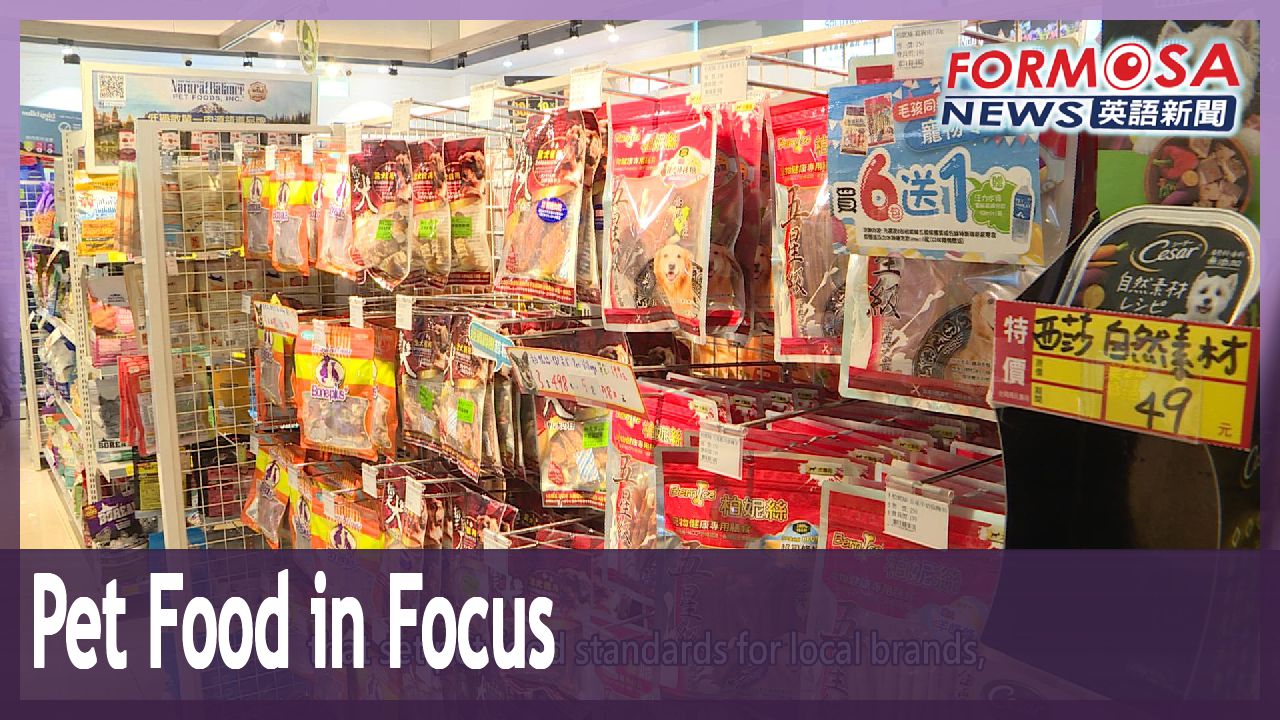
Taiwan is seeing a demographic shift, with people choosing to have fewer children and more pets. With animal lovers on the rise, there’s an increasing demand for pet food transparency and safety. Although pet food is covered under the Animal Protection Act, safety incidents have persisted. Experts are calling for a national certification system for safe pet food practices. Today in our Sunday special report, we take a look at existing laws on pet food and the growing call for stricter regulations.
Chang Cheng-hua has four Pomeranians and a Chihuahua. They’re her treasured “fur babies,” and she feeds them three fresh meals a day to ease their skin allergies and joint pain.
Chang Cheng-hua
Pet owner
As far as pet food is concerned, kibble does have all the nutrition a dog needs. But I think that high-temperature processing and the conditions of storage can lead to nutrient loss. So I like to prepare fresh food myself, offering something different every day and even adding nutritional supplements.
Chang dotes on her dogs. As she shares her experiences with unsafe pet food, she becomes visibly upset.
Chang Cheng-hua
Pet owner
I went to a pet hotel once and they had quinoa in their fresh food. Generally speaking, quinoa is in fact good for dogs, but something went wrong during food preparation. This one, Oreo, had an extremely bad reaction after eating it, throwing up a puddle of blood.
Naturally, the quality of food varies from pet hotel to pet hotel. But even commercial pet snacks can be problematic.
Chang Cheng-hua
Pet owner
Once time, I saw Sesame chewing on a snack for 15 minutes, as if it were chewing gum. I found something stuck on the meat – what looked like a large piece of plastic from the wrapper. It must have melted on during packaging. It would have been quite dreadful if Sesame had eaten it.
Pet food is less regulated than human-grade food. Even pet foods made by global brands have been linked to pet deaths, due to improper food storage or toxic contaminants like melamine. In 2015, Taiwan added pet food provisions to its Animal Protection Act, requiring commercial pet food to be clearly labeled with their main ingredients and expiry date. The law also states that pet food products must not be unsafe to consume.
Chen Chung-hsing
Agriculture ministry official
Human feelings or attitudes toward pets have changed. Pets are now part of the family. I believe that in the future, as pet owners experience more problems concerning these family members, they will make more and more demands on the government.
We’re here at a factory that makes non-toxic pet food. The 4,000-square-meter facility just opened in 2022. Before entering, we undergo a series of disinfection procedures.
Sun Zong-de
Wet pet food brand founder
We have higher standards than ordinary pet food factories do. We see pet food not just as pet food, but as baby food. So our rules and regulations are aimed at exceeding expectations.
At the first stop of the production line, workers inspect chicken breast piece by piece.
Sun Zong-de
Wet pet food brand founder
The meat will occasionally contain plastic or bits of wood. It’s inevitable. We make hundreds of thousands of cans a day. The rate of contamination is 1 in 100,000 or 1 in 200,000. But for the customer who receives that contaminated can, the experience is 100% negative.
A rinse under water doesn’t always remove traces of wood, insects, or plastic in the meat. That has to be achieved by hand. Once the meat clears manual inspection, it’s sent off to the next station, where it’s ground up, mashed into a puree, and canned. But that’s not the last step in the production line.
Sun Zong-de
Wet pet food brand founder
The top of each can is labeled with the manufacturing date and expiration date, as well as this code 112240, which means that it was made at 11:22 and 40 seconds. If there’s a problem with the product, you can pull up the surveillance footage since you know when it was made.
Stringent production standards and cold chain regulation ensure a quality product. Each can is also marked with a unique code for traceability.
These are just some of the measures in place at Taiwan’s newer pet food factories, which aspire to go above and beyond. But as food safety crises evolve, ensuring pet safety remains a challenge.
Hsieh Chang-chi
Pet nutrition and food association
For example, the past few years there have been vitamin D overdose incidents. Too much vitamin D is harmful to dogs and cats, although appropriate amounts are good for bone health.
Currently, there’s no law that requires pet food makers to specify the amount of trace nutrients in their products.
Hsieh Chang-chi
Pet nutrition and food association
Of course, for pet food makers, such a labeling requirement would be a massive blow. Because there are many manufacturers that don’t fully know what’s in the raw ingredients they use, so it would be very hard to spell everything out on the label.
Wayne Huang
Animal hospital founder
I think that labels should do more than provide percentages. Ideally, they should identify the grade of food that’s used in the product. That would give consumers greater freedom of choice.
Mandating full disclosure on pet food labels does ensure consumers’ right to know exactly what they’re buying. But the effect on pet safety would be limited, a pet shop manager says.
Chen Ping-chun
Pet shop manager
Customers may not even look at all the ingredients, so the main advice we give to customers is to at least look at the first four or five ingredients. Because the first four or five ingredients make up 70% of the product.
Over the years, pet store manager Chen Ping-chun has seen changes in customer habits. Nowadays shoppers don’t simply compare prices, but also look at nutrition profiles. But even so, very few people read every detail on the labels.
Chen Ping-chun
Pet shop manager
Internationally, in the U.S. and EU, there are quite a few organizations, for example the Association of American Feed Control Officials or the European Food Safety Authority. Those are the organizations that are most likely to be referenced on packaging.
In Taiwan, there are no organizations that set pet food standards for local brands, which make up 30% of the market. Taiwanese brands can only send their products to the Swiss quality assurance provider SGS for analysis, or to other private groups for toxin testing.
Hsieh Chang-chi
Pet nutrition and food association
There are a lot of issues with SNQ testing. For example, manufacturers will state that a certain toxin was not detected, and I’ll reject that claim, because what they mean is that the testing instrument used was not capable of detecting the trace quantity. That’s why the toxin was not detected.
Professor Hsieh Chang-chi says there should be a domestic safety certification system for pet food, based on guidelines set by experts, academics, and government officials. But for now, such a system is not on the government’s agenda. With exports dominating the domestic market, officials say there isn’t a pressing need for domestic safety certification. The agriculture ministry says that in 2024, its priorities will be to strengthen pet food inspections, and to mandate the disclosure of pet food ingredients that can cause allergies or other reactions.
Chen Chung-hsing
Agriculture ministry official
And in our latest amendment to the Animal Protection Act, we have a provision that allows future announcements of ingredients that we want to ban in pet food.
The official emphasizes that since the Animal Protection Act was passed in 1998, it has been amended 16 times. Its latest revisions crack down on misleading claims on pet food labels. Meanwhile, Taiwan universities are starting to offer training for pet nutritionists, who will join veterinarians in safeguarding pet food safety. Pet food regulation isn’t as strict as human food regulation, but it’s making advances all the time, the official says.
Chang Cheng-hua
Pet owner
I hope the government comes up with a regulatory system. The most important thing is that penalties are spelled out. Our pets are our children. It’s extremely saddening and distressing when anything happens to them.
In Taiwan, one in every eight people owns a cat or a dog. Many see their pets as family, sparing no effort or expense on care. They’re calling on the government to do more for food safety, to give companion animals the best chance at a long, happy life.
For more Taiwan news, tune in:
Sun to Fri at 9:30 pm on Channel 152
Tue to Sat at 1 am on Channel 53
2024-01-07