Second-generation musician introduces Taiwan to therapeutic handpanmusic
Second-generation musician introduces Taiwan to therapeutic handpanmusic
2024-05-16
Mehta Manav Singh was born and raised in Taiwan, becoming the first Indian person to go through the nation’s compulsory education system. After decades of grappling with his identity, four years ago, he opened a restaurant to provide a space for multilingual and multicultural exchange. He also plays the handpan, and hopes to introduce others to its charms.
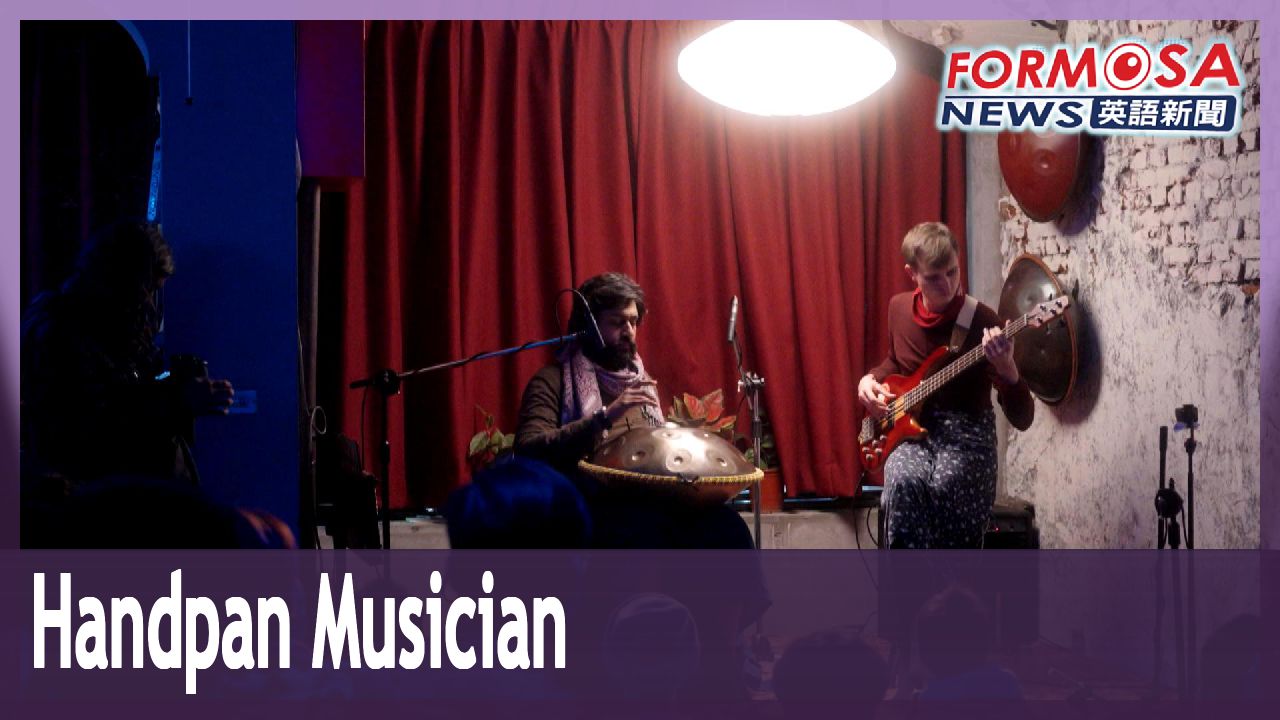
The ethereal sound of handpan mingles with bass guitar, soothing the audience. Unlike other percussion instruments, handpan music flows unbroken as a stream as the musician meditatively trades his right hand for left.
Mehta Manav Singh
Handpan musician
You really become addicted to handpan. It doesn’t matter if you play music, you’ll like it since it’s like any kind of drum. You can rely on your intuition to express yourself directly.
Mehta Manav Singh, a second-generation immigrant from India, is a handpan musician. It didn’t take long for him to fall head over heels. Now he’s an avid evangelist for the instrument, organizing one or two performances every month.
Mehta Manav Singh
Handpan musician
If the album my friends and I are releasing allows us some opportunities, then we could go perform at all types of venues and collaborate with all kinds of musicians.
Singh’s parents came to Taiwan from India for workin 1986. Although he was born and raised here, he always thought of himself as a foreigner because of how he looked.
Mehta Manav Singh
Handpan musician
I often talk with people about whether I’m Indian or Taiwanese, or which I feel like. Honestly, this is a huge topic. It doesn’t have a direct answer, because it depends on what you consider to be Taiwanese.
The greatest thing that helped Singh grapple with issues of identity was opening a business in 2020. His restaurant provides a space where everyone embraces and listens to one another.
Mehta Manav Singh
Handpan musician
We support a kind of culture, the culture of listening. No matter where you’re from or what you say, you have a space to share where others will hear you.
Singh is working hard to realize the utopia of a home that celebrates art without borders, bit by bit making it a reality.
For more Taiwan news, tune in:
Sun to Fri at 9:30 pm on Channel 152
Tue to Sat at 1 am on Channel 53
推廣世上最療癒樂器"手碟" 印度阿曼辦演奏會
2024-05-16
印度新二代阿曼,其實是土生土長的台灣人,他也是國內第一位從小接受國民義務教育的印度人。從小積極尋找身分認同的阿曼,四年前他決定創業開設餐酒館,希望提供一個跨語言、跨文化交流的空間,而且他也是一名打擊樂器「手碟」樂手,希望讓更多人認識手碟的美妙。
手碟和貝斯搭配,空靈的聲音,撫慰台下觀眾。相較一般打擊樂器,手碟聲音如流水通透,僅靠左右手交錯敲奏。
[[印度新二代 阿曼]]
“你碰到一顆手碟,真的會上癮,不管你有沒有玩音樂,你都會喜歡,因為它就像各種鼓類,靠直覺可以表達自己或發揮”
印度新二代阿曼,是一名手碟樂手,受到這樂器的吸引,便一頭栽進去,他積極推廣手碟,甚至每月舉辦一到兩次演奏會。
[[印度新二代 阿曼]]
“跟我朋友一起要出的專輯,如果這專輯會允許我接到各種機會,那我們也可以在各種場地去分享去表演,也可以跟各種樂手合作”
阿曼父母都是印度人,因為工作關係,1986年搬到臺灣定居,阿曼在臺灣出生成長,但卻因為外表差異,讓他從小覺得自己是外國人。
[[印度新二代 阿曼]]
“我常常會聊到個話題,我是不是印度人,我是不是臺灣人,或是去問我的感覺怎麼樣,我認為我是哪個人。誠實說,這個問題很廣的,不是可以直接回答的,因為就看你怎麼算臺灣人”
走過身分認同的困惑,最大原因就是,2020年阿曼創業,開餐酒館要打造一個空間,每個人在這裡都能包容彼此,相互聆聽。
[[印度新二代 阿曼]]
“我們支持一種文化,那個文化就是聆聽的文化,所以不管你從哪裡來,你講甚麼語言,你都有空間可以一起去分享,彼此了解一下”
阿曼努力實踐,無國界的藝文家園,心目中的烏托邦,也逐漸落實。
更多新聞內容,請鎖定:
民視台灣台(152頻道)週日至週五晚上9:30
民視新聞台(53頻道)週二至週六凌晨1:00
Related News