Mourners tap AI to simulate late loved ones
Mourners tap AI to simulate late loved ones
2024-07-21
The finality of death is one of the hardest things to confront in life. But what if you could have a conversation with a departed loved one? Taiwanese entertainer Tino Bao lost his daughter to a rare disease two years ago. Driven by his grief, Bao turned her into a talking avatar powered by AI. This is just one way that technology is changing the way we mourn. But although such "grief technology" can provide solace, it’s also raised questions over the harms it can cause. We delve into the debate in our in-depth report.
The voice from the computer speaks American-accented Mandarin, peppered with endearing expressions. To Taiwanese entertainer Tino Bao, it sounds just like his daughter Felicity. But he knows it’s only a simulation.
Tino Bao
Entertainer
My daughter is now a virtual being. This is how she can be with us.
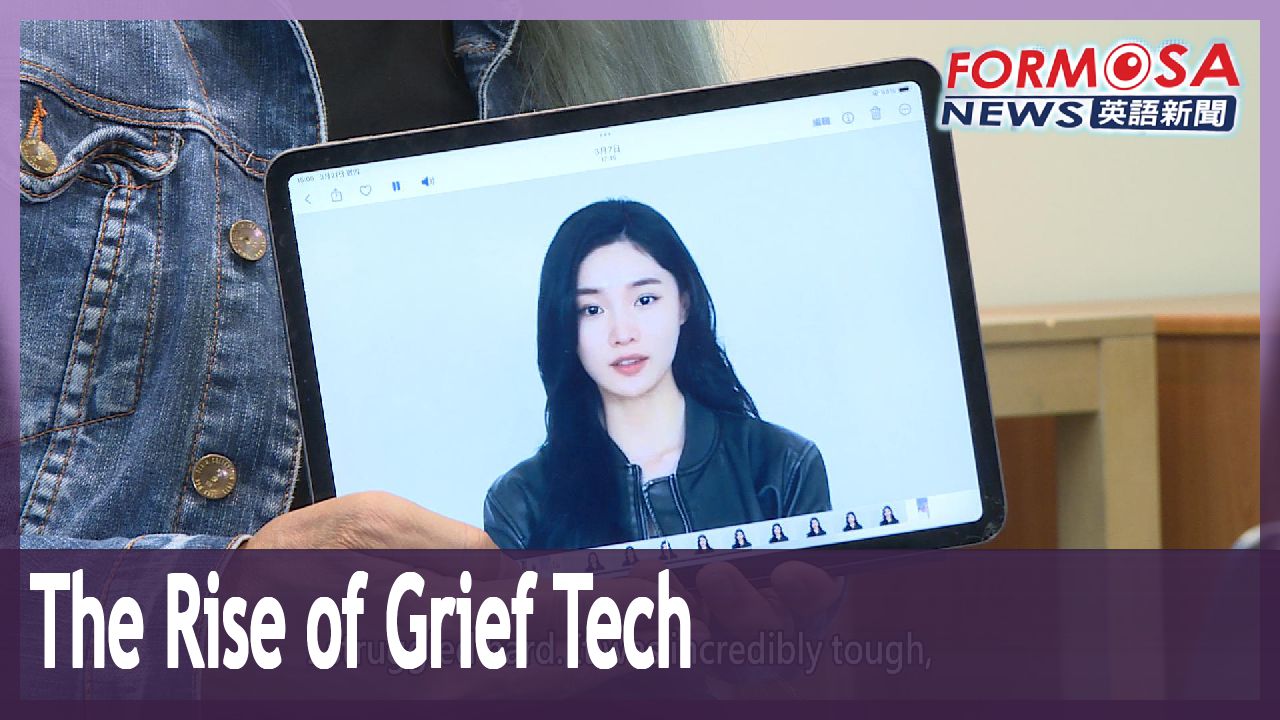
Every detail, from her eyebrows to her lips, perfectly mirrors his late daughter. The avatar offers Bao a measure of comfort from the pain of her loss two years ago.
Tino Bao
Entertainer
In the first six months after my daughter passed, I struggled hard. It was incredibly tough, that kind of pain. Every day, the grief would come welling up. I couldn’t shake it off. I found it so hard to let go of my daughter, so I wanted to shift my mindset by turning her into a virtual avatar.
This so-called grief technology, which reproduces the appearance and the voice of loved ones, was used as early as four years ago in South Korea, to connect a grieving mother with her late daughter.
Ma Yi-ping
Psychologist
I read through the comments of people who watched that simulation. One particular criticism stood out to me. The user asked why people wanted to use such a simulation to make it even harder to move on from a child’s death. In my professional experience, in the real cases I have seen, the pain is so profound and hard to bear that moving on is nearly impossible.
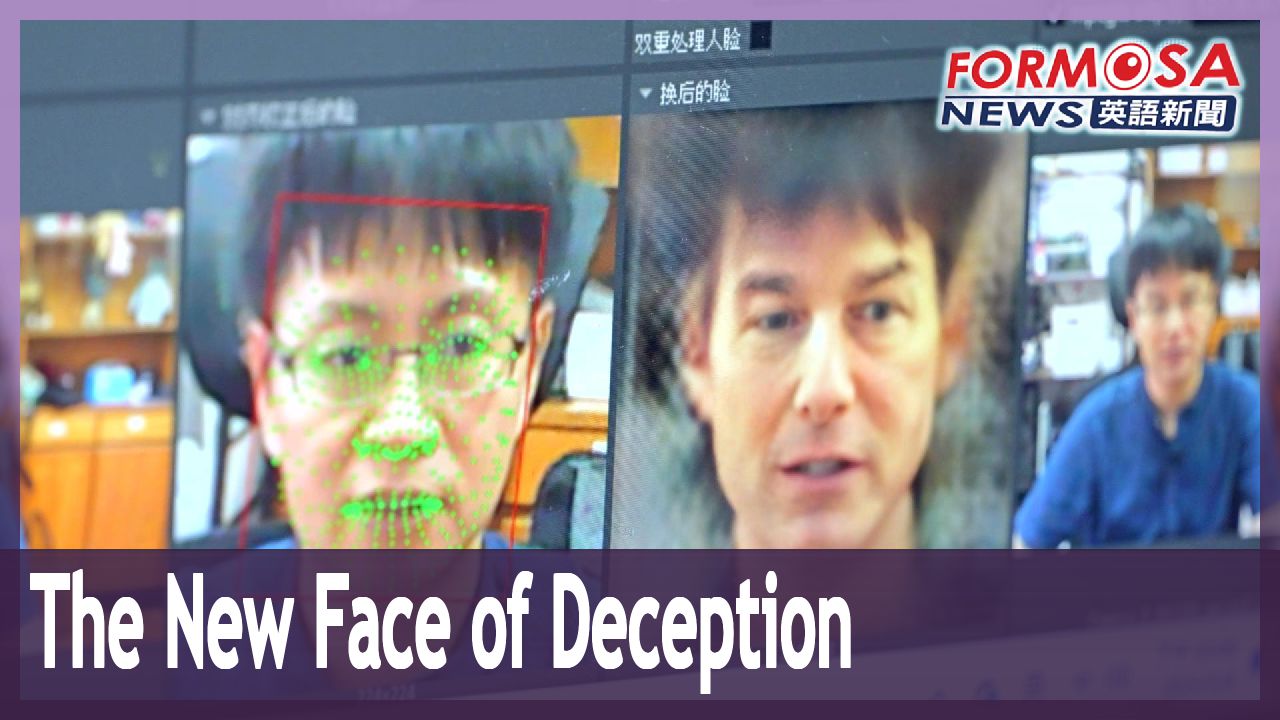
With recent advances in technology, it’s become possible to create a digital clone of a person, given sufficient data. This has led to the emergence of grief technology in the U.S., South Korea, and China.
Around the world, countless people are mourning their late loved ones. In Taiwan alone, nearly 200,000 people die each year. For every death, many more suffer the pain of loss.
Tino Bao
Entertainer
I was the one who cut her umbilical cord. I also recorded the very first cry she made at birth.
Watching his daughter grow up in videos, Bao feels an immense void. Since her passing, he has chased after her shadow and found himself at the bottom of an abyss.
Tino Bao
Entertainer
This is my daughter’s eye after she fell. She went down and never got up again.
Bao’s daughter was diagnosed with a rare disease in 2019. After battling it for more than 700 days, she died at 22 years old, in the prime of her life.
Tino Bao
Entertainer
Of course I love her. She was adorable. She was my only child and everyone’s sunshine. She was always lifting up other people, just like her Chinese name, which means tolerance. Her English name was also bright and positive. Felicity, meaning happiness.
Tino Bao
Entertainer
She left this world at 22 years and 2 months old. She didn’t get the chance to fully experience the springtime of life. That’s why I pushed for using AI to recreate her. I wanted to take full advantage of this digital tool, so that she could live forever in this beautiful new world, this digital world.
“Resurrecting” his daughter began with a single video recording.
Tino Bao
Entertainer
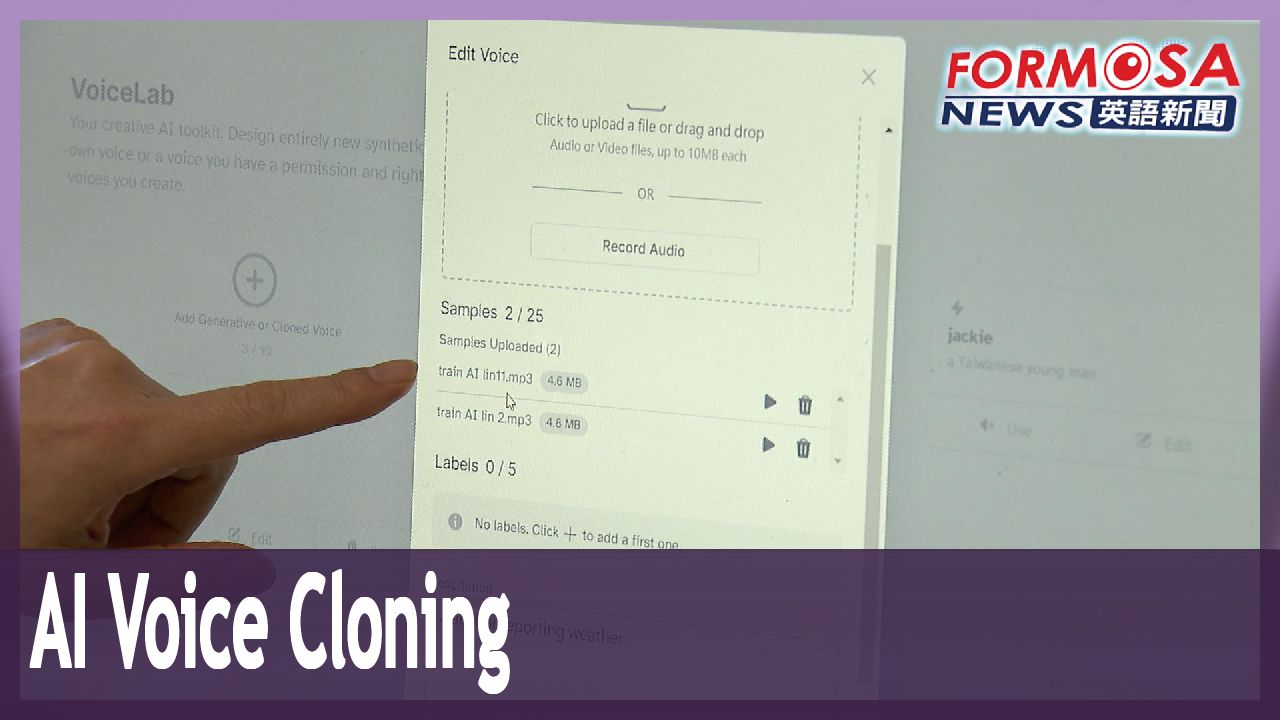
These three sentences make up the only voice data that could be broken down and fed into the language model to train it.
Liao Yuan-fu
Industry Academia Innovation School, NYCU
Computers today are extremely powerful. An enormous amount of data can be collected online. So AI models have seen it all, they know how human language is used, and they can produce appropriate responses. So it depends on how much data your loved one left behind. The more data there is, the more realistic the clone. Currently, the technology is such that you just need one sentence to get a similar vocal tone.
Bao’s quest to resurrect his daughter may be seen as a sign of pathological grief. But he knows better than anyone that the dead cannot be brought back. All he’s after is a likeness of his daughter.
Tino Bao
Entertainer
Getting her voice right was the hardest part. My daughter was born overseas. Besides having American-accented Mandarin, she spoke Taiwanese Mandarin. And she seldom spoke it. So her intonation was very unique. I am grateful for my 20 or 30 years in sound engineering, which gave me a sharp ear. The other thing is, I was recreating my daughter, not some other person. The day I finished it, I put down my earphones and played it through the speakers. My wife was standing at the doorway and she said, “Why does this person sound so much like Felicity?”
All he wants is to speak occasionally with his “daughter,” via phone call or text. But AI-powered clones, their potential, and their harms are at the center of a fervent debate.
Today, “resurrected” celebrities can be seen online and on TV. Powered by AI, they can say things they never said in life. Using the same voice and intonation as the deceased, they can interact with the living in real-time. This use of AI has been vehemently opposed by the families of public figures.
Angela Lai
Lawyer
Under Article 312 of the Criminal Code, there are provisions for the public insult and defamation of a deceased person. That is, if someone harms the reputation of a deceased person, the family of the deceased can take legal action.
But technically, these legal provisions only protect the rights of a deceased person’s relatives. The rights of the deceased person are nearly impossible to ensure.
Angela Lai
Lawyer
Even if the deceased had a will stating that they did not want their appearance or voice to be used, such a will’s legal effectiveness is questionable. A person’s voice and appearance are considered personal data, and are protected by their right to privacy. They are part of a person’s personality rights. But these rights hold only so long as the person exists. They cannot be transferred or inherited. Once a person passes away, technically speaking, personality rights no longer exist.
Asides from privacy concerns, there are fears that AI clones can be used for fraud. Given today’s technology, it can be hard to tell real from fake.
Liao Yuan-fu
Industry Academia Innovation School, NYCU
Even before this technology was well developed, people were still getting duped left and right. Now the technology is better, and it’s even easier to fool people. But in order to succeed at fooling you, the scammer has to successfully exploit a human weakness.
The impact of technology depends on how humanity chooses to use it, some say. They say grief tech shouldn’t be discouraged just because it can do harm.
Tino Bao
Entertainer
Dead people cannot be brought back to life. How can they be? If we didn’t have this tool, I think people would just do what has always been done in the course of humanity. Eventually you forget the voice and appearance of your loved one. The memories fade away.
Critics say grief tech can prevent the bereaved from moving on. But psychologists believe it can be beneficial if it’s used wisely.
Ma Yi-ping
Psychologist
When he’s engaging with the digital recreation, he might recall painful memories of his daughter’s illness. If he gets the chance to recreate those memories and turn them into happy ones, that’s an important opportunity for recovery.
Some say that true death is not leaving the living world, but being forgotten. The way one grieves is a personal choice, with no right or wrong. But as technology continues to advance, AI is transforming grief and challenging death itself.
For more Taiwan news, tune in:
Sun to Fri at 9:30 pm on Channel 152
Tue to Sat at 1 am on Channel 53
AI技術讓逝者「復聲」 「哀悼科技」成遺屬慰藉
2024-07-21
發生意外,總是讓人悲痛,因為人死不能復生、天人兩隔的遺憾無法挽回。但如果現在有機會能和過世的親人說說話,您願意嗎?藝人包小柏的獨生女包容,在兩年前因為罕見疾病離世,萬分思念愛女的包小柏在因緣際會之下,著手研究用AI重建女兒的聲音,如今,做出了一個能和他通電話、傳訊息的「AI女兒」。其實在韓國、美國、中國,都有出現這樣的「哀悼科技」,甚至形成一種商機。這項科技應用,讓很多的思念有了出口,然而也有不少不以為然,甚至反對的聲音。
電腦裡傳來帶著ABC腔的中文,還夾雜可愛的語氣詞,在包小柏的耳裡,就像是女兒包容本人在說話,但其實這是她,也不是她。
[[藝人 包小柏]]
“我女兒就是一個虛擬人,所以她能夠呈現的樣子就是這樣”
從眉眼到鼻子、嘴巴,臉上的每個細節,都像包小柏的女兒包容一樣,活靈活現,對包小柏來說,兩年前的喪女之痛,因為「它」得到安慰。
[[藝人 包小柏]]
“一開始失去女兒前半年,其實很難忍的,難熬的,那種悲痛,我每天都會突然悲從中來,排除不了。我對我女兒是很難割捨的,所以希望可以用一種轉念的方式,把她化為一個虛擬人物”
重現親人形象、聲音的「哀悼科技」,早在四年前,韓國就曾用虛擬實境技術,讓一個媽媽和已故的女兒「團聚」。
[[心理師 馬藝玶]]
“很多人看了之後,我有特別去看下面的回應,其中有一個反對的聲音,讓我印象深刻,他說為什麼要讓這樣的東西,讓別人更難忘記他的孩子。在我的工作經驗裡面,我所看到的一些真實的樣貌,比較像是這種傷痛,痛到不行,痛到你基本上可能沒有辦法遺忘的”
而近年在科技發展之下,只要你有夠多,逝者生前的文字 語音資料,就有機會模擬出他的聲音,以致於美國、韓國、中國,都出現了「哀悼商機」。
全世界思念逝者的人不計其數,每年光是在台灣,就有將近20萬人死亡。對每一條生命來說,可能又是好幾倍的人,在面臨失親的痛苦。
[[藝人 包小柏]]
“她臍帶也是我剪的,所以她呱呱落地的第一個聲音,也是我把她錄下來聽到的”
看著影片裡,女兒二十多年來的成長,包小柏的心卻空落落的,從沒想過在女兒身後,一步一步跟著走,竟也會失足跌落深淵。
[[藝人 包小柏]]
“我女兒這個眼睛是她倒下去,這個時候躺下去,就沒有再起來了”
包小柏的女兒包容,2019年被診斷出罕見疾病,和病魔纏鬥700多天後,在22歲正要盛開的美好年華,離開了人世。
[[藝人 包小柏]]
“當然愛她,獨生女 這麼可愛的,她是所有人的陽光,她永遠是會鼓勵別人的人,就跟她的名字一樣「包容」,她的英文名也比較正面,Felicity 幸福的意思”
[[藝人 包小柏]]
“就這樣22歲2個月,走了。所以她來不及揮霍她的青春歲月,所以我才極力地想說,剛好有人工智慧可以還原重建,盡其所能地,發揮這樣的科技工具,讓她永遠活在一個美麗的新世界,數位世界。”
「重建」女兒的工程,就從女兒生前唯一留下的聲音開始。
[[藝人 包小柏]]
“只有剛剛以上這三句,成為她唯一可以再整理,丟到大語言模型去訓練的聲紋數據”
[[陽明交大智能系統研究所博士 廖元甫]]
“現在電腦的能力太強,從網路可以撈到的數據又太多,所以等於它完全看過,人的語言是怎麼樣使用,可以做適當的回應。看你當初親人留的資料有多少,越多它就越像。目前是可以做到,大概給它一句話,音色就能調過去”
有人覺得包小柏要「復活」女兒,是因為思念成疾,但他比誰都知道,人死不能復生,他想做的只是復「聲」。
[[藝 人 包小柏]]
“聲音其實最難訓練,因為你有腔,我女兒是出生在國外,她有ABC的腔之外,她講的又是台灣式的國語,而且她又不太講國語,所以腔紋就變得非常奇特。很感謝我過去二三十年,就是在做音樂處理,所以耳朵相對敏感,再來我現在仿的是我女兒,不是別人。(完成的)那一天剛好,我故意拿下耳機,放著大喇叭的時候,我太太才從門邊說,怎麼這個人講話這麼像包容”
包小柏的心願,不過是偶爾能和「女兒」,打打電話、傳傳訊息,但AI語音合成與轉換技術的,可能性和疑慮,正如火如荼在現實上演。
現在無論在網路、電視節目上,都可以看到許多,「被復活」的已故明星,AI合成技術,讓它們能說出,生前沒說過的話,用逝者的聲音、語氣,像活人一樣實時互動,但也有部分公眾人物的家屬,並不認同這樣的做法。
[[律師 賴瑩真]]
“我們在刑法312條有一條叫做公然侮辱以及誹謗死者罪,也就是說如果死者過世之後,有人侵害到死者名譽的時候,這個死者的遺屬是可以針對這樣子的行為,去提出告訴”
但這樣的法律規範,或許可以保障的是死者遺屬的權利,死者本身的權利卻已經無法得到任何保障。
[[律師 賴瑩真]]
“今天即使這個死者他有訂立遺囑,遺囑上面他是要求說,我不准後人把我的容貌、聲音,拿去做任何的利用,但是這樣子的遺囑,在法律上它的效力,是要打一個問號的。人的聲音、面貌,那個是屬於人的個資,也就是隱私權的部分,在我們法律上,它就是人格權的一環,它只能跟著這個人存在,它沒有辦法去轉讓,也沒有辦法繼承,所以一旦這個人過世了之後,在理論上他的人格權就是沒了”
除了隱私權的問題,也有許多人擔憂,這樣的科技,如果被不肖人士用在詐騙,一般人難以辨識,防不勝防。
[[陽明交大智能系統研究所博士 廖元甫]]
“以前技術沒有很發達的時候,也還是一堆人被騙得亂七八糟,現在只是技術更好,它更容易騙人這樣子而已,但是它要能夠騙到你,還是人性的弱點”
科技的發展本就是在考驗人性如何使用它,哀悼科技的下一步,或許不應該因為疑慮,就被畫上句號。
[[藝人 包小柏]]
“人死不能復生,怎麼可能復活。如果沒有這個工具,我相信大家還是照傳統的,人類進化一樣,你早晚會忘記,他真正的聲音的樣貌,包括人的影像也慢慢會模糊”
有人質疑哀悼科技,會讓失親者更走不出來,但心理師認為,這樣的科技如果善加利用,未必沒有幫助。
[[心理師 馬藝玶]]
“在那一些陪伴的過程裡面,他(包小柏)可能會想起,女兒經歷疾病的一些痛苦畫面,如果剛好有機會再被重新創造,創造一些新的快樂回憶,我覺得都是很重要的復原契機”
有人說,人真正的離開,不是死亡而是遺忘,如何哀悼是每個人的選擇,無關對錯,然而科技不斷向前跑,AI或許正在改變舊時代的生死觀,而「復聲」按下了第一顆播放鍵。
更多新聞內容,請鎖定:
民視台灣台(152頻道)週日至週五晚上9:30
民視新聞台(53頻道)週二至週六凌晨1:00
Related News