Mourners tap AI to simulate late loved ones
The finality of death is one of the hardest things to confront in life. But what if you could have a conversation with a departed loved one? Taiwanese entertainer Tino Bao lost his daughter to a rare disease two years ago. Driven by his grief, Bao turned her into a talking avatar powered by AI. This is just one way that technology is changing the way we mourn. But although such "grief technology" can provide solace, it’s also raised questions over the harms it can cause. We delve into the debate in our in-depth report.
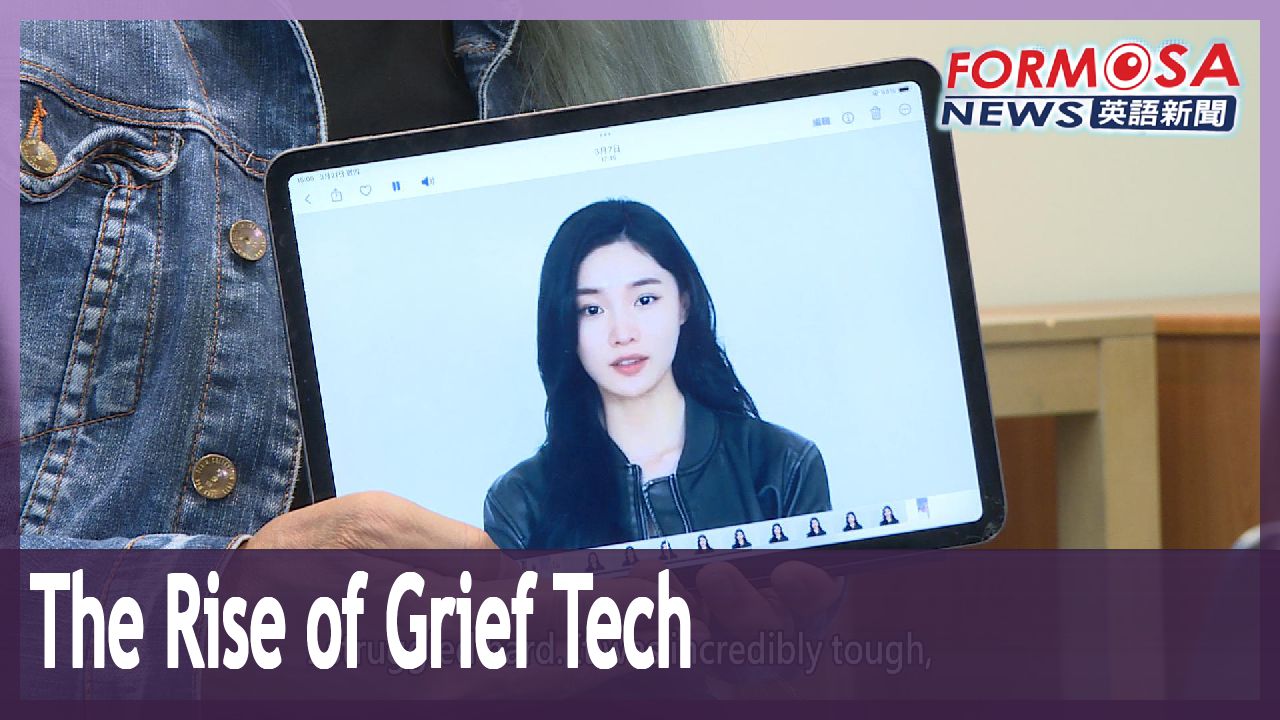
The voice from the computer speaks American-accented Mandarin, peppered with endearing expressions. To Taiwanese entertainer Tino Bao, it sounds just like his daughter Felicity. But he knows it’s only a simulation.
Tino Bao
Entertainer
My daughter is now a virtual being. This is how she can be with us.
Every detail, from her eyebrows to her lips, perfectly mirrors his late daughter. The avatar offers Bao a measure of comfort from the pain of her loss two years ago.
Tino Bao
Entertainer
In the first six months after my daughter passed, I struggled hard. It was incredibly tough, that kind of pain. Every day, the grief would come welling up. I couldn’t shake it off. I found it so hard to let go of my daughter, so I wanted to shift my mindset by turning her into a virtual avatar.
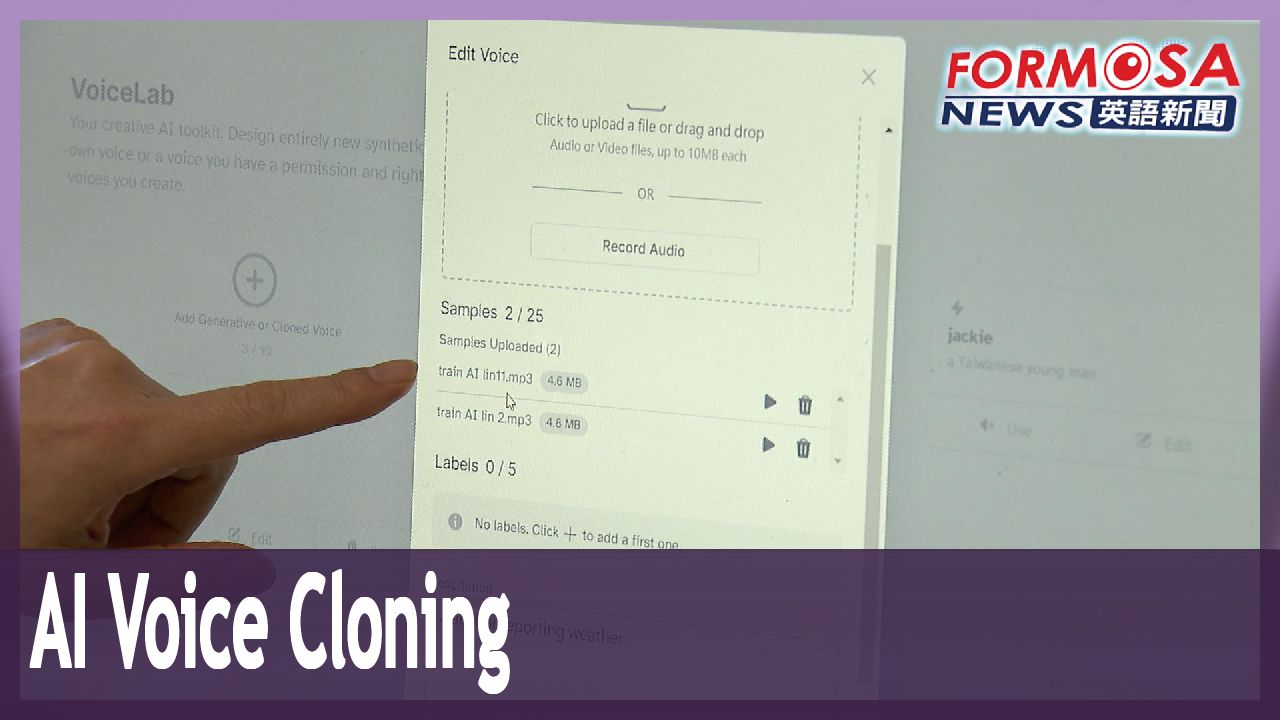
This so-called grief technology, which reproduces the appearance and the voice of loved ones, was used as early as four years ago in South Korea, to connect a grieving mother with her late daughter.
Ma Yi-ping
Psychologist
I read through the comments of people who watched that simulation. One particular criticism stood out to me. The user asked why people wanted to use such a simulation to make it even harder to move on from a child’s death. In my professional experience, in the real cases I have seen, the pain is so profound and hard to bear that moving on is nearly impossible.
With recent advances in technology, it’s become possible to create a digital clone of a person, given sufficient data. This has led to the emergence of grief technology in the U.S., South Korea, and China.
Around the world, countless people are mourning their late loved ones. In Taiwan alone, nearly 200,000 people die each year. For every death, many more suffer the pain of loss.
Tino Bao
Entertainer
I was the one who cut her umbilical cord. I also recorded the very first cry she made at birth.
Watching his daughter grow up in videos, Bao feels an immense void. Since her passing, he has chased after her shadow and found himself at the bottom of an abyss.
Tino Bao
Entertainer
This is my daughter’s eye after she fell. She went down and never got up again.
Bao’s daughter was diagnosed with a rare disease in 2019. After battling it for more than 700 days, she died at 22 years old, in the prime of her life.
Tino Bao
Entertainer
Of course I love her. She was adorable. She was my only child and everyone’s sunshine. She was always lifting up other people, just like her Chinese name, which means tolerance. Her English name was also bright and positive. Felicity, meaning happiness.
Tino Bao
Entertainer
She left this world at 22 years and 2 months old. She didn’t get the chance to fully experience the springtime of life. That’s why I pushed for using AI to recreate her. I wanted to take full advantage of this digital tool, so that she could live forever in this beautiful new world, this digital world.
“Resurrecting” his daughter began with a single video recording.
Tino Bao
Entertainer
These three sentences make up the only voice data that could be broken down and fed into the language model to train it.
Liao Yuan-fu
Industry Academia Innovation School, NYCU
Computers today are extremely powerful. An enormous amount of data can be collected online. So AI models have seen it all, they know how human language is used, and they can produce appropriate responses. So it depends on how much data your loved one left behind. The more data there is, the more realistic the clone. Currently, the technology is such that you just need one sentence to get a similar vocal tone.
Bao’s quest to resurrect his daughter may be seen as a sign of pathological grief. But he knows better than anyone that the dead cannot be brought back. All he’s after is a likeness of his daughter.
Tino Bao
Entertainer
Getting her voice right was the hardest part. My daughter was born overseas. Besides having American-accented Mandarin, she spoke Taiwanese Mandarin. And she seldom spoke it. So her intonation was very unique. I am grateful for my 20 or 30 years in sound engineering, which gave me a sharp ear. The other thing is, I was recreating my daughter, not some other person. The day I finished it, I put down my earphones and played it through the speakers. My wife was standing at the doorway and she said, “Why does this person sound so much like Felicity?”
All he wants is to speak occasionally with his “daughter,” via phone call or text. But AI-powered clones, their potential, and their harms are at the center of a fervent debate.
Today, “resurrected” celebrities can be seen online and on TV. Powered by AI, they can say things they never said in life. Using the same voice and intonation as the deceased, they can interact with the living in real-time. This use of AI has been vehemently opposed by the families of public figures.
Angela Lai
Lawyer
Under Article 312 of the Criminal Code, there are provisions for the public insult and defamation of a deceased person. That is, if someone harms the reputation of a deceased person, the family of the deceased can take legal action.
But technically, these legal provisions only protect the rights of a deceased person’s relatives. The rights of the deceased person are nearly impossible to ensure.
Angela Lai
Lawyer
Even if the deceased had a will stating that they did not want their appearance or voice to be used, such a will’s legal effectiveness is questionable. A person’s voice and appearance are considered personal data, and are protected by their right to privacy. They are part of a person’s personality rights. But these rights hold only so long as the person exists. They cannot be transferred or inherited. Once a person passes away, technically speaking, personality rights no longer exist.
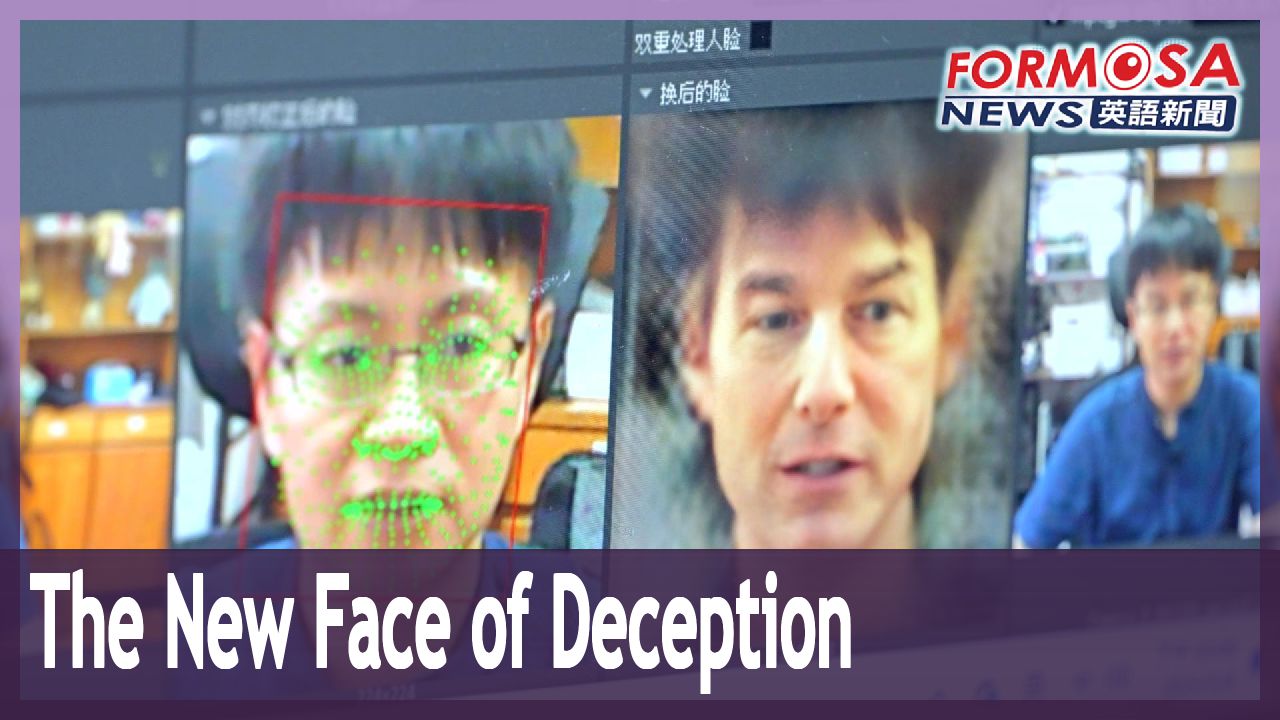
Asides from privacy concerns, there are fears that AI clones can be used for fraud. Given today’s technology, it can be hard to tell real from fake.
Liao Yuan-fu
Industry Academia Innovation School, NYCU
Even before this technology was well developed, people were still getting duped left and right. Now the technology is better, and it’s even easier to fool people. But in order to succeed at fooling you, the scammer has to successfully exploit a human weakness.
The impact of technology depends on how humanity chooses to use it, some say. They say grief tech shouldn’t be discouraged just because it can do harm.
Tino Bao
Entertainer
Dead people cannot be brought back to life. How can they be? If we didn’t have this tool, I think people would just do what has always been done in the course of humanity. Eventually you forget the voice and appearance of your loved one. The memories fade away.
Critics say grief tech can prevent the bereaved from moving on. But psychologists believe it can be beneficial if it’s used wisely.
Ma Yi-ping
Psychologist
When he’s engaging with the digital recreation, he might recall painful memories of his daughter’s illness. If he gets the chance to recreate those memories and turn them into happy ones, that’s an important opportunity for recovery.
Some say that true death is not leaving the living world, but being forgotten. The way one grieves is a personal choice, with no right or wrong. But as technology continues to advance, AI is transforming grief and challenging death itself.
For more Taiwan news, tune in:
Sun to Fri at 9:30 pm on Channel 152
Tue to Sat at 1 am on Channel 53
2024-07-21