Top-tiered hospitals to see less outpatients
Top-tiered hospitals to see less outpatients
2025-02-21
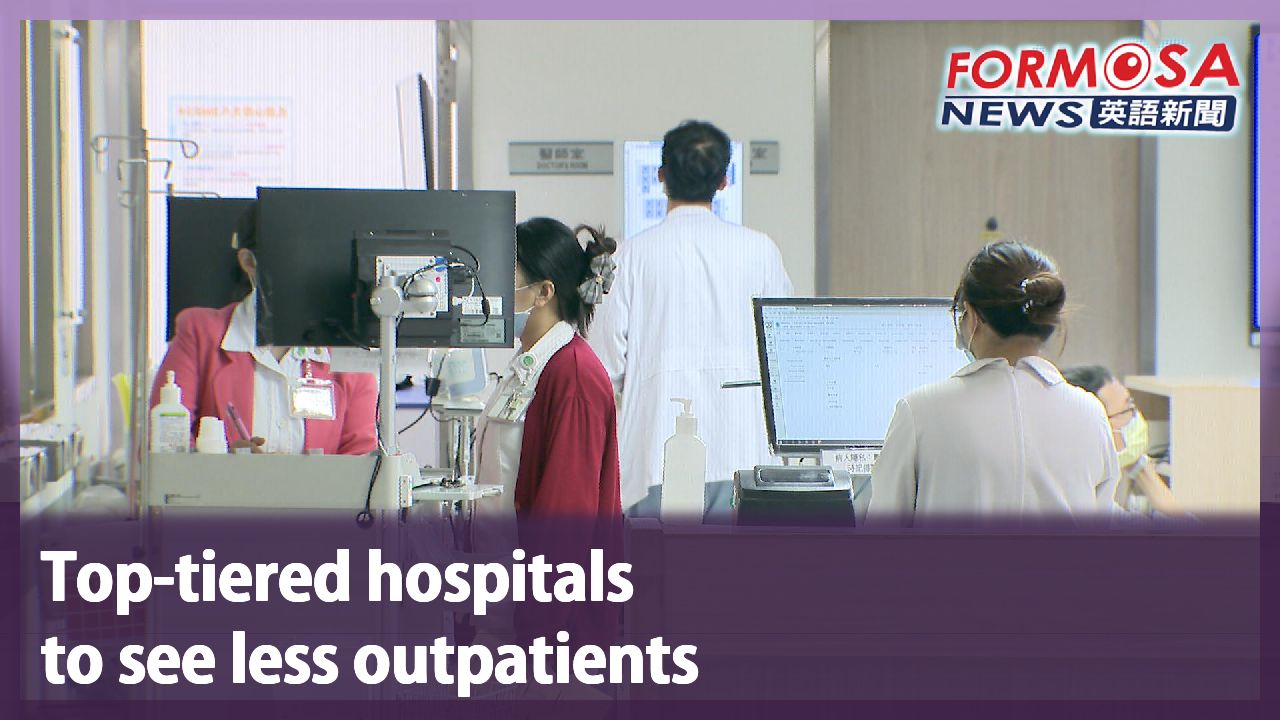
This year the National Health Insurance system adopted new measures for various hospitals, including a requirement that outpatient services in medical centers, which are Taiwan’s top-tiered hospitals, to be beneath 55% of total services offered. There are worries in the public this will cause sick people to be unable to see a doctor when they need to. In response, Minister of Health and Welfare Chiu Tai-yuan says the role of medical centers is focusing on emergency care and acute illnesses. The government will implement a grading system for hospitals, so patients can go to lower-ranked hospitals for minor complaints. Outpatient services in medical centers will also have supporting measures in place so no one who is ill will be out of the loop.
President Lai Ching-te attends a seminar discussing the sustainability of the National Health Insurance system ahead of its 30th anniversary in March. He stresses the importance of universal health insurance coverage to protect the health of the nation’s people.
This year new systems were introduced in various hospitals, requiring the proportion of outpatient services in medical centers to be less than 55%. This has caused the public to worry that sick people won’t be able to get doctor’s appointments like they used to.
Chiu Tai-yuan
Minister of Health and Welfare
The role of a medical center, in theory, should be focusing on emergencies, acute illnesses and hospitalization. Controlling the outpatient volume of a medical center is also a direction we’ll take, but we will also propose appropriate supporting measures.
Shih Chung-liang
National Health Insurance Administration
The total amounts for individual hospitals are calculated on a quarterly basis, not a yearly basis. In the southern regions, in Kaohsiung and Pingtung, and even in the northern regions, these measures have been implemented one after the other, and no such incidents have occurred.
Currently, among the 22 medical centers in Taiwan, 9 have outpatient service ratios that exceed the standard. Many people still go to large hospitals for treatment of minor illnesses.
Hung Tzu-jen
Shin Kong Wu Ho Su Memorial Hospital
The calculations for the total amount in individual hospitals include outpatient surgeries. These should be excluded. Currently outpatient surgeries are recorded as being in the outpatient services volume. However, this is unreasonable because if outpatient services volumes increase, your outpatient proportion in total number of cases will very quickly exceed 55%.
As the new system is being implemented, the medical community hopes that the Ministry of Health and Welfare will make rolling adjustments. When it implements a tiered system for hospitals, the government has always seen it as imperative to focus the capacity of medical centers on emergency and critical care.
For more Taiwan news, tune in:
Sun to Fri at 9:30 pm on Channel 152
Tue to Sat at 1 am on Channel 53
醫學中心門診設限55%年底不能生病? 衛福部:有配套
2025-02-21
今年健保實施個別醫院總額新制,要求醫學中心的門診占比必須低於55% ,外界擔憂造成"患者掛不到號"的排擠現象。衛福部長邱泰源表示,醫學中心聚焦急重症照護,落實分級醫療,門診也有相關的配套措施,絕對不會讓患者變成醫療人球。
總統賴清德出席健保30周年永續研討會,強調全民健保守護國人健康的重要性。
今年個別醫院總額新制上路,醫學中心的門診占比必須低於55%,外界擔憂,恐怕造成"患者掛不到號"的排擠現象。
[[衛福部長 邱泰源]]
“醫學中心它的角色,理論上是應該著重在急重症跟住院。醫學中心的門診量做一個控制,也是一個方向,但是我們也會提出適當的一個配套措施。”
[[健保署長 石崇良]]
“我們的個別醫院總額計算,都是以季作單位去分配,並不是一年分配下去,像在南區,在高屏區,甚至在北區,這幾個都陸續已經實施了,並沒有(看不到病)這樣的事情發生。”
目前全台22家醫學中心,9家門診占比超標,不少民眾,小病仍跑到大醫院看診。
[[新光醫院副院長 洪子仁]]
“(個別醫院總額)包含門診手術,應該要排除,因為目前門診手術,也是記錄在門診的服務量裡面,但是這是不合理的,因為你把門診服務量衝高,等於你的門診營收就會超過55%。
隨著新制上路,醫界盼望衛福部滾動式調整,為落實分級醫療制度,要將醫學中心的量能集中在急重症照護,依舊勢在必行。
更多新聞內容,請鎖定:
民視台灣台(152頻道)週日至週五晚上9:30
民視新聞台(53頻道)週二至週六凌晨1:00
Related News