Wasabi farming resumes in Alishan
Wasabi farming resumes in Alishan
2025-06-09
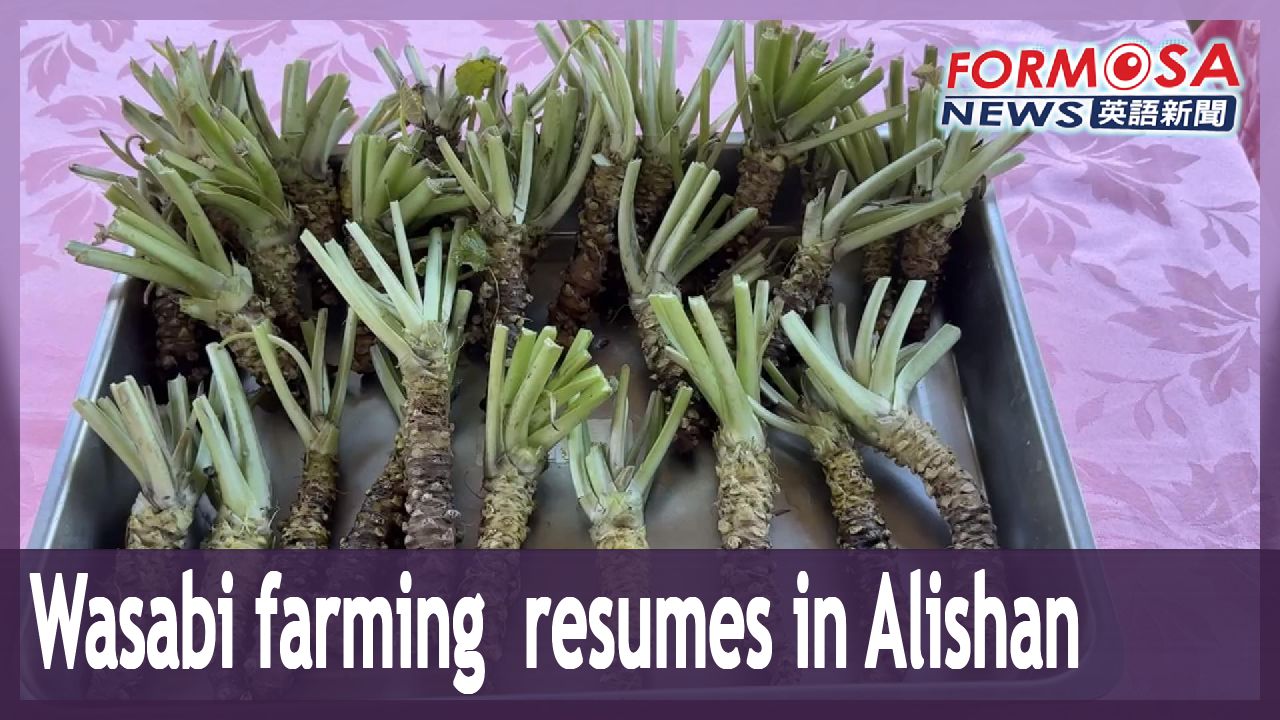
Wasabi was once grown in the scenic mountains of Alishan at a high altitude and was a local specialty loved by Japanese and Taiwanese people alike. In 2017 its cultivation was banned in the interests of soil and water conservation. Then, three years ago, the local Indigenous people found a way to get around the strict regulations. Under the guidance of the county and central governments, they’ve moved wasabi cultivation to mid-altitude areas inside specialized greenhouses. As a result, it’s now expected to become the next local money spinner after high mountain tea and coffee.
Freshly ground wasabi is an indispensable side dish when you eat sashimi, but do you know how expensive this small piece of wasabi is?
Liao Hui-fen
National Chiayi University professor
You most commonly see a price of NT$15 per gram. The piece I’m holding in my hand is 30 grams, so it’s around NT$500.
As the adage goes, the rarer something is the greater its value. Over the past three years, wasabi cultivation in Alishan has resumed. Indigenous peoples have set up a co-op with the support of the Chiayi County Government and the Agriculture and Food Agency. They’ve built smart greenhouses that allow wasabi, which originally thrived on mountain tops more than 2,000 meters high, to grow at a medium altitude. It takes at least two years from seed planting to harvesting.
An Shu-mei
Co-op chair
It’s really not easy because we had to move crops from a very high altitude to a place about 1,000 meters lower down, so managing this involves preventing plant disease and pests. It was really an unimaginable hardship.
National Chiayi University assistant professor
Suitable planting temperatures should be between 13 and 18 degrees. When it drops to mid-altitude, the temperature rises and the temperature range is different. The pest and disease issues during the process of cultivation are very different from those in the original cultivation areas.
In fact, wasabi crops had been cultivated in Alishan earlier than high mountain tea and coffee. However, in 2017 it was branded a crop that harms soil and water conservation and its planting was banned. Alishan wasabi then disappeared from the market overnight.
Weng Chang-liang
Chiayi County Commissioner
Before there was coffee, wasabi from Alishan was a high-value crop and was mainly exported to Japan.
Wasabi cultivation has returned to Alishan. These Indigenous people have found a way to get around legal restrictions relating to land conservation and find a balance between making a living for themselves and the area’s natural ecology. It’s expected to become the next money spinner, after high mountain tea and coffee.
For more Taiwan news, tune in:
Mon to Fri at 9:30 pm on Channel 152
Tue to Sat at 1 am on Channel 53
#agriculture #taiwan #alishan #wasabi #sashimi #yum
嘉義阿里山山葵"復育成功" 原住民兼顧生計生態平衡
2025-06-09
山葵是嘉義縣阿里山鄉的特有作物,但2017年因為水土保持的關係,遭到全面禁種,逐漸消失。近三年來,部落居民在縣府和農糧署的輔導之下,在中海拔地區打造溫室,成功復育山葵,在族人生計和自然生態找到平衡點。
新鮮現磨的山葵,是吃生魚片不可或缺的配角,但這一小根山葵,你知道有多貴嗎?
[[嘉義大學教授 廖慧芬]]
"1公克15元的價位是最常見的,那像我手上的這一株大概是30公克,也就是說大概500塊錢左右"
正所謂物以稀為貴,因為阿里山山葵這三年才開始復育,部落居民成立山葵合作社,在縣府和農糧署的支援下,打造智能溫室,將原本生長在兩千多公尺高山上的山葵,移植到中海拔的溫室,從種苗到收成最少要花兩年的時間。
[[阿里山山葵合作社主席 安淑美]]
“非常不容易,因為是從很高海拔的作物,要移到差不多低1000公尺的地方,所以管理起來就是病蟲害防治等等,真的是很難想像到的辛苦”
[[嘉義大學助理教授]]
“適合的栽種溫度應該是在13到18度之間,那這樣隨著它降到中海拔之後,這個氣溫的提高,還有那個溫差的改變,栽培過程中病蟲害問題,會跟它在原始栽培的地方的那個病蟲害有很大的不同”
其實山葵是比高山茶、咖啡還要早就在阿里山種植的作物,但2017年,被冠上破壞水土保持的惡名,遭到全面禁種,阿里山山葵一夕之間消失在市場之中。
[[嘉義縣長 翁章梁]]
“在沒有咖啡之前,阿里山的山葵就是高經濟作物,當時主要都是外銷日本”
山葵重返阿里山,突破國土保育法規的限制,在族人生計和自然生態找到平衡點,可望成為高山茶和咖啡之外,另一個綠金經濟。
更多新聞內容,請鎖定:
民視台灣台(152頻道)週一至週五晚上9:30
民視新聞台(53頻道)週二至週六凌晨1:00
Related News