Former WWII air-raid shelters see the light again
Former WWII air-raid shelters see the light again
2025-08-22
In the later years of WWII, Taiwan, then a Japanese colony, experienced frequent bombings by the US. As a result, many air-raid shelters were built all over the island. Keelung has the highest number of air-raid shelters from that era in Taiwan, thanks to its unique land formation. However, the shelters have become redundant following the war, and even with an ever-present risk of a cross-strait conflict, the old shelters are now useless against present-day arms. Now, Keelung has given new life to some of these once-abandoned spaces. Our weekly special report.
Sirens go off during an air raid drill. People take shelter where appropriate, which is usually the basement of a building. What would’ve been a routine exercise now appears more realistic than ever.
In the past, there weren’t any spacious basements for people to hide in, but tiny and dark tunnels and trenches. Larger ones can accommodate a few hundred individuals, but smaller ones only three to four.
At Keelung’s Heping Borough, entrances to these air-raid shelters can be seen along the hillside. But most are padlocked. We gained access through the borough’s community development organization who helped borrow the keys from the Maritime and Port Bureau, which oversees the shelters’ management.
We did not expect the shelter to be almost an entire story high. At the entrance, eroded signboards hint at age of these shelters. We also did not expect to see this: another shelter within a shelter.
It feels like an adventure entering the tunnel. There’s nothing but darkness ahead.
Hung Shun-fa
Heping Borough community development organization former head
This is what people refer to when they say it’s a different world entirely inside a cave. It does feel more comfortable and secure in this space.
The shelters were dug by coal miners in the past, and excavation marks can still be seen along the hillside. Although it’s pitch dark inside the cave, to keep those hiding safe, there are ditches to drain water from the mountain wall. It’s also very well-ventilated. Even though it’s over 35 degrees outside, the inside of the shelter feels air-conditioned and very comfortable.
Hung Shun-fa
Heping Borough community development organization former head
We’re taking the route at the back. There’s another at the front that takes you directly to the exit.
Taiwan’s air-raid shelters can be traced back to 1944, when Taiwan got involved in WWII during the Japanese colonial period. Many shelters were dug along the hillside to provide a hideout from US bombings. Because Keelung is a hilly area on relatively durable Daliao rock formation, the shelters can survive bombing. According to the city’s yearbook, there were more than 600 air-raid shelters at the time, the highest number in Taiwan.
Hung Shun-fa
Heping Borough community development organization former head
When the US war planes approached from Wanli, they began mass firing. The munitions hit the walls but nothing terrible happened.
Lee Cheng-jen
Keelung Community University lecturer
Being a harbor city at the frontline of war, we must dig many tunnels for hiding. Because of high population density, the bombing was more frequent. That’s why there are so many tunnels.
The end of WWII restored peace and the air-raid shelters eventually lost their purpose and became neglected. Today only the part used as a commanding center during the war is still in use by the police, as the city’s Civil Defense Center. Six officers work at the center, taking turns in shifts round-the-clock to take orders from the National Police Agency to practice issuing air-raid or tsunami alerts.
Peng Feng-chin
Keelung police Civil Defense Center
At specific times they call upon us and we respond. There are also two irregular calls that we must answer in addition.
Ho Tien-fu
Keelung police Civil Defense Center head
Normally officers are on duty here round-the-clock. They hold drills on issuing and transmitting alerts every day.
A community learning center lecturer gives us a guided tour at the historic air-raid shelter under the Khóo Tsú-song old house, the residence of a Japanese-era local governor, equivalent to a modern-day Keelung mayor. Due to his official standing, the air-raid shelter was built for his safety. From the material used—red bricks covered in plaster—it’s noticeably grander than most other shelters from that period.
Lee Cheng-jen
Keelung Community University lecturer
We want kids to learn about wartime history, not to encourage them to go to war, but to avoid war. Not everything must be resolved with war. It’s a kind of education.
To reconnect the city with the shelters, a student at National Taiwan University’s Graduate Institute of Building and Planning conducted field studies on historical air-raid shelters in Keelung, and even built this true-to-size model of the shelter under the Khóo Tsú-song old house at a scale of 1:100.
Lee Cheng-jen
Keelung Community University lecturer
We entered from here, from this entrance. You can see after you enter, that this tunnel is connected to one, two, three, four, five, five other entrances. The older generation, the grandmas nearby say that it can shelter 300 people at most.
Lee Lung-ching
Wen’an Bourough chief
We shouldn’t abandon them and have them become a safety and environmental blind spot. They should be revitalized and turned into educational venues for promoting local culture.
This is a century-old air-raid shelter in Wen’an Borough. The borough chief revitalized this space stretching 100m, paving the pathway with cement and installing light fixures. It used to be unbearably filthy and an infamous hideout for drug users. But now it’s an exhibition corridor with noticeable foot traffic in the local community.
Lee Lung-ching
Wen’an Bourough chief
After we started doing this, many schools would have kids come visit and allow schoolkids to learn about the local culture. If we can truly pass it on to the next generation, it would be a boon for society.
Many Keelung residences along the hillside have an air-raid shelter hidden behind them. The Wen’an borough chief is also a historian. He gave us a tour at a residential air-raid shelter.
Lee Lung-ching
Wen’an Bourough chief
I was born and raised here. When I was young, we would run around and play here. There are many air raid shelters here. Back in the days, the kids all played hide-and-seek here.
It takes considerable building material and labor to refill the redundant shelters. What’s more, present-day armaments are now more destructive and precise than before.
Hung Shun-fa
Heping Borough community development organization former head
These air raid shelters are effective against bombs and gun munitions, because the explosions weren’t so powerful then. But they’re no use against missiles or anything of the sort.
What if the unimaginable really happens? Will the old air-raid shelters be designated for wartime use?
Ho Tien-fu
Keelung police Civil Defense Center head
Because the air raid shelters have all exceeded the 30-year safe-use limit for brick structures, it’s unlikely they’ll be designated for wartime use.
Lee Lung-ching
Wen’an Bourough chief
They still function as shelters. We didn’t cause damage to them. The structure is still intact. We only cleaned them up a little, no damages.
The numerous early air-raid shelters of the past no longer have any function and require considerable manpower and funds to manage. Therefore, in 2019, the Ministry of the Interior delisted the air-raid shelters and gradually returned them to the land owners. Most of them were fenced off and padlocked, and the memory of war gets locked away too in darkness.
Lee Lung-ching
Wen’an Bourough chief
To be frank, the homeless will eventually cause damage to the shelters and they also hide inside to live. That may actually lead to more societal problems.
Lee Cheng-jen
Keelung Community University lecturer
The decision rests upon the local community. The local community does whatever the budget allows. If there isn’t enough budget, we can submit a proposal for a community design or cultural development project, and then the government can finance the project in part or entirely, and we’ll make the best-managed use of the site.
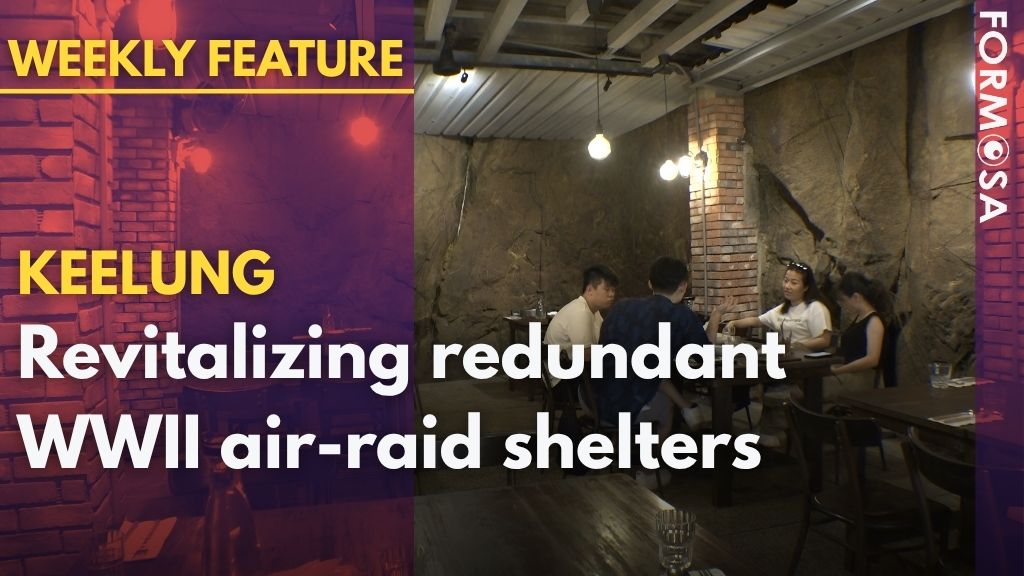
Some are already taking steps in revitalizing these spaces. In this former shelter, halogen lamps fixed upon the pillars cast a warm glow on foreign cuisine on offer.
Miao Hsu-ching
Restaurant owner
I didn’t renovate the space much, because the original state is part of the charm. We’ve only reinforced leaky spots.
The restaurant owner, Miao Hsu-ching was born in 1988, long after the war has ended. She wasn’t particularly fond of the air-raid shelters. As a child, her impression was that it’s where water snakes and other frightening creatures dwell. She was worried that her restaurant would have spiders, frogs or insects pop up here and there. And there are, but her customers don’t seem to mind.
Miao Hsu-ching
Restaurant owner
My customers are quite adorable. They’d say to us, “Look, there’s an adorable critter over there, should we go catch it?” Before we revamped this space, there were cascades from the mountains, well, waterfalls. Whenever it rains heavily, the water will enter from there and cause flooding.
Only simple waterproofing is done to retain the original state. But when it rains heavily, there will still be leakage, and the restaurant will be forced to close. Now that she’s gained experience revitalizing an old air-raid shelter, she knows what to look out for.
Miao Hsu-ching
Restaurant owner
If you want to set up a restaurant or a creative space, humidity is a great challenge. Artworks and handicrafts could get damaged.
Once locked away in darkness, these air-raid shelters are seeing the light again in a whole new way.
For more Taiwan news, tune in:
Mon to Fri at 9:30 pm on Channel 152
Tue to Sat at 1 am on Channel 53
#taiwan #keelun #WWII #WWIIhistory #history
賦予嶄新面貌 避難防空洞轉型展場.餐廳
2025-08-22
台灣在日治時期,1940年代,曾歷經二戰戰火,當時為了躲避美軍轟炸,全台各地興建了許多防空洞,其中,基隆由於是丘陵地形,而且是堅硬的大寮層地質,建造的防空洞不易被炸毀,因此數量是全台之冠,據載有超過600多座。然而,隨著時代變遷,這些防空洞早已超過安全年限,失去原有防衛功能,多數也已解除列管,只是,這些防空洞因為長期閒置荒廢,有些甚至也成為治安死角。不過,這幾年,有些人將它活化再利用,搖身一變成為獨特的展覽場地,或是特色餐廳,讓昔日冰冷老舊的防空洞,重新被賦予嶄新面貌。
萬安演習警報響起,民眾躲進防空疏散避難設施,也就是大樓內的地下室。看似例行性的演習,現在卻增加不少危機感。
早期民眾聽到空襲警報,不像現在有寬敞的地下室可躲,而是要躲進又小又暗的防空洞,大一點的可以擠上百人,小一點的只能躲三四人。
來到基隆市和平里,山邊就可以看到許多防空洞,不過幾乎都被鐵柵欄封住,和平里社區發展協會,向防空洞所屬單位航港局,借來鑰匙,帶著異言堂採訪團隊,進到洞裡一探究竟。
沒想到,這座防空洞有一層樓高,掛在門口的防空洞守則,則因風化有些字體已難以辨識,顯見防空洞的悠久歷史。原本只是帶我們晃一圈,沒想到防空洞裡,還有一個洞。
就像探險一樣,只不過,迎來的是無盡的黑暗。
[[基隆和平里社區發展協會前理事長 洪順發]]
“這就是人家講的別有洞天,這空間比較舒適安穩一點。”
防空洞過去是由煤炭工人開鑿,山壁還留有一條一條開挖的痕跡,洞內雖然伸手不見五指,但為了讓人躲得安穩,有水溝讓山壁滲水可以流出,且極度通風,外頭動輒35度以上的高溫,洞裡卻像有天然冷氣 相當舒適。
[[基隆和平里社區發展協會前理事長 洪順發]]
“這是我們走後線,前面還有一線,直接出去了”
台灣防空洞的歷史,可追溯到1944年,日治時代的二戰時期,為了躲避美軍轟炸,不少防空洞沿著山壁開鑿,尤其基隆地形屬於丘陵地,地質是較為堅硬的大寮層,因此防空洞不會被炸毀。而根據基隆市年鑑記載,當時有超過600個防空洞,數量居全台之冠。
[[基隆和平里社區發展協會前理事長 洪順發]]
“(美國軍機)萬里那邊飛過來的時候,剛剛好機槍掃射,掃在牆壁上,結果都沒有怎麼樣。”
[[基隆社區大學老師 李正仁]]
“烽火港都就要挖很多洞來躲,因為人口的聚集,轟炸的特別頻繁,所以就有山洞特別多。”
隨著二戰結束,迎來多年和平的日子,防空洞逐漸失去功能,也不再被重視,只有當時用做指揮中心的防空洞,仍被警察局做為民防管制中心,編制六人全天候值勤,接收警政署的訊號,以及發布像是空襲或是海嘯警報。
[[基隆民防管制中心管制員 彭逢金]]
“有固定的時間會呼叫我們,然後我們回答,另外有兩次抽呼,我們要回答。”
[[基隆市警局民防中心主任 何添福]]
“平時值勤人員均24小時輪服守候,第一時間傳遞警報,每日傳遞及發布警報演練。”
社區大學老師,帶著我們走進基隆知名歷史建築,許梓桑古厝下方的防空洞。日治時期,許梓桑擔任台北廳基隆區長,相當於現在的基隆市長,因此會開鑿防空洞,保護他的人身安全,但這裡牆面平整,斑駁水泥隱約透出紅磚,呈現出防空洞不凡的等級。
[[基隆社區大學老師 李正仁]]
“讓他們(小孩子)知道戰爭的歷史,不是希望他們參加戰爭,而是希望能避開戰爭,不要什麼事情都靠戰爭解決,這是一種教育。”
為了讓防空洞與社區有連結,當時有台大城鄉所的研究生,到基隆探訪防空洞的前世今生,還做了1:100的許梓桑防空洞,解剖構造,大為驚奇。
[[基隆社區大學老師 李正仁]]
“我們剛剛就是從這裡進來,從這個洞口進來,進來就可以看到,裡面的洞長這樣,進來一個,兩個,三個,四個,五個,五個之後有個彎路都通。附近老一輩的阿嬤有在講,這裡面最多可以躲三百人。”
[[基隆市文安里里長 李隆進]]
“不要讓它荒廢在那個地方,變成一個治安死角,環境的死角,應該讓它活化,變成在地文化推廣的教育場域”
這裡是文安里的百年防空洞,當時里長為了活化,這不到一百公尺的距離,把走道鋪上水泥,架起燈光,讓原本髒亂不堪,甚至是吸毒天堂的空間,變成社區居民往來頻繁的歷史廊道。
[[基隆市文安里里長 李隆進]]
“我們做了這個以後,很多學校的學生都來這邊上課,也讓學生知道在地的文化,真正的可以深耕到下一代,對整個社會來講是加分的。”
其實只要位在基隆山邊的住家,後方通常都隱藏著防空洞,文安里長也是文史工作者,帶著異言堂採訪團隊,獨家走訪民宅後的防空洞。
[[基隆市文安里里長 李隆進]]
“我這邊土生土長的,所以小時候都會亂跑亂玩。這很多防空洞,小時候都在大的防空洞裡面玩,最喜歡嚇鬼,嚇人家說鬼來了”
防空洞用不著,想要填補起來,也需要大量土方甚至人力,因此拆除效益不大,且現在武器精良,破壞力強,命中率相當高。
[[基隆和平里社區發展協會前理事長 洪順發]]
“炸彈跟槍砲這些防空洞有用,因為它的爆炸威力沒那麼強,假如現在都是飛彈或是怎麼樣的”
若真有一天 戰爭來臨,老舊的防空洞還能徵用嗎?
[[基隆市警局民防中心主任 何添福]]
“因為防空洞都超過磚造物三十年的安全年限,所以徵用機率不高。”
[[基隆市文安里里長 李隆進]]
“還是可以避難,這個我們沒有破壞,整個結構都沒有破壞,只是把它粉刷一下而已,也沒有破壞它。”
早期防空洞功能不再且數量龐大,管理上需要相當的人力與經費,因此內政部於2019年,就將防空洞解除列管,陸續交還給土地所有權人,只是大多都圍起柵欄,上了鎖,將烽火記憶鎖進黑暗中。
[[基隆市文安里里長 李隆進]]
“憑良心講,那些遊民,自然而然就會去破壞它,也躲到裡面去生活,所以反而會造成更多的,對社會不利的事件發生。”
[[基隆社區大學老師 李正仁]]
“回歸到社區,社區的經費允許怎麼做就做,社區如果說它經費不足的話,社區可以提計畫,放在社造計畫或是文化的計畫,由政府出資一部分或全部,然後把它有效管理使用。”
其實已經有人,把防空洞重新利用,柱子掛上復古的鎢絲壁燈,昏黃的燈光下,防空洞裡賣起異國料理。
[[餐廳業者 苗詡靚]]
“我就沒有特別的裝潢,因為其實就是它的特色。我們就是加強它漏水的地方”
77年次的苗詡靚,對於防空洞沒有特別的感情,反而是小學裡防空洞裡的水蛇,讓她印象極差,原本擔心餐廳會有蜘蛛,或是青蛙等昆蟲突然冒出來的困擾,但客人的反應,讓她安心不少。
[[餐廳業者 苗詡靚]]
“有時客人還滿可愛的,就還會跟我們一起說那邊有小寵物,然後會跟我們一起,要不要一起抓牠。之前還沒整理的時候,這邊會有山瀑布,就是會有瀑布。大雨的時候會從這邊淹起來,就是淹水。”
為了保留原始樣貌,餐廳僅做簡單的防水,但若遇到大雨,店裡也會下起小雨,有時還得被迫休息。有活化防空洞的經驗,對於如何利用洞裡空間,苗詡靚提出她的觀點。
[[餐廳業者 苗詡靚]]
“如果你要進駐餐廳,或是你要做文創類的話,其實都會怕潮濕,那些作品怕會被破壞。”
早期被塵封的防空洞,透過年輕一代的文創理念,不但可以活化重生,也能讓人看見防空洞,不空洞的新面貌。
更多新聞內容,請鎖定:
民視台灣台(152頻道)週一至週五晚上9:30
民視新聞台(53頻道)週二至週六凌晨1:00
Related News