Orchid exhibition on show at the National Museum of History
Orchid exhibition on show at the National Museum of History
2025-08-29
Taiwan is renowned in the world as the “Island of Orchids,” acknowledged for its diverse and beautiful specimens. Today, we take you to an exhibit centered on Taiwan’s orchids. The exhibit is a collaboration between Taiwan’s National Museum of History and the University Museum of the University of Tokyo, showcasing over 200 works. FTV reporter Stephany Yang takes us in for a look!
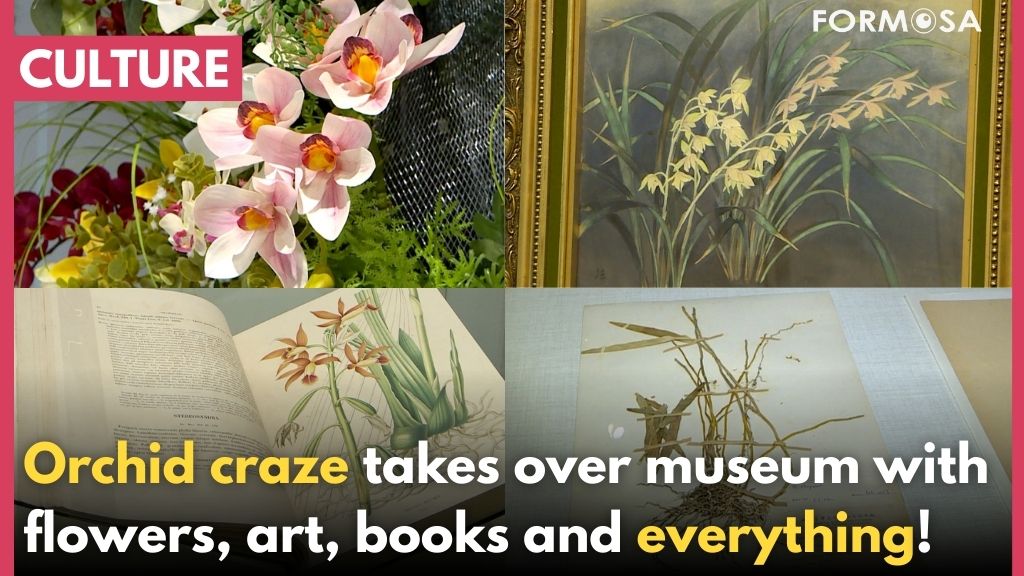
Orchids hold a deeply symbolic place in Taiwanese art, especially during the post-war era. After 1949, as many artists and intellectuals relocated from mainland China to Taiwan, traditional ink painting flourished. Other styles include western sketching, Japanese gouache paintings, and Western-style watercolors and oil paintings. The National Museum of History houses a wide collection of orchid paintings from post-war Taiwan. Among the standout pieces are works by Taiwanese artist Chen Chin.
Chen Yi-an
Curator
Through the Japanese influence of discovering different kinds of orchids and the publications spread of the cultural land image, the Taiwanese society actually has a very unique understanding of orchids which is demonstrated in the post-war artworks. In our collection, we not only have Literati orchids, we also have orchid expressions that are deeply affected by Japanese education and the Western art education. This work by Chen Chin is a great demonstration of that kind of cultural exchange and mixture and the demonstration of orchid images.
This room showcases rare orchid specimens and glass plate negatives from Taiwan’s Japanese colonial period. The specimens are from the University of Tokyo’s museum, and many are exhibited for the first time. There are also photography and documentaries talking about the Tsou’s sacred orchids that are used during ceremonies.
Chen Yi-an
Curator
This collaboration is actually with the University of Tokyo’s Museum. They have a lot of scientific specimens. They have a lot of materials that brings us to Taiwan’s history before the Japanese colonial period and also how they explored Taiwan on our specialty orchids. Also, the Tsou people have an important ritual called mayasvi. They use a very particular orchid called Fiteu that has been discovered by Japanese scientists but also is deeply involved in their ritual, and we actually produced a documentary to showcase how this plant is deeply integrated in the Tsou culture.
Scientific illustrations on Taiwan’s flowers flourished in the 20th century. The exhibit also showcases delicate scientific paintings of orchids by Japanese botanical illustrators from the Meiji and Taishō period. In addition, Taiwan’s first-generation botanical painter Wang Jen-li are also on display.
Chen Yi-an
Curator
When people do research or publish new species on orchids, apart from the scientific specimens, they also need some illustrations to demonstrate how the plants actually look like. In this room, we have Japanese scientific paintings from the Meiji period to the Taishō to the post-war. Also, we have one scientific painter that is Taiwanese, called Wang Jen-li. He actually had training from the Japanese and worked at the scientific painting from the Japanese period later to post-war period in Taiwan. He had a very delicate series of works that we are exhibiting.
The Formosa Orchids Blossom exhibition is jointly organized by Taiwan’s National Museum of History and the University Museum of the University of Tokyo. Featuring over 200 works, it offers a rich journey through Taiwan’s orchid legacy from the 17th century to now—blending scientific inquiry with artistic expression.
Chen Yi-an
Curator
In Taiwan, we have very specific, special geographical features. We are an island, but we also have very high mountains. We have plants and we have geographic features that is near the sea. Also, we are next to a huge piece of land and also to the southeast, there are oceanic islands that are really close to Taiwan. There is a specialty in orchid seeds so they are very small. They can be carried by the air. In Taiwan, it actually gathers lots of orchid species, not only from the mainland, but also from the sea area and because of our special geography, we have such a variety of orchids so from the Japanese scientists they could actually discover all kinds of orchids that they couldn’t find in Japan. During the 50 years of Japanese rule, the Japanese scientists get to discover all kinds of different orchids and through their scientific painting and specimen collecting, they actually documented all kinds of orchids.
The exhibition showcases groundbreaking research and insights from renowned experts in orchid biology and the arts. The exhibition will be held at the National Museum of History in Taipei until Sept. 7.
For more Taiwan news, tune in:
Mon to Fri at 9:30 pm on Channel 152
Tue to Sat at 1 am on Channel 53
#orchid #蘭花 #flowers #beautiful #FormosaOrchidsBlossomExhibition #exhibit #events #UniversityMuseumoftheUniversityofTokyo #UniversityofTokyo
台日合作 「台灣蘭花百姿」展於國立歷史博物館展出
2025-08-29
台灣被譽為「蘭花之島」,以多樣且美麗的蘭花品種聞名。國立歷史博物館與日本東京大學綜合研究博物館共同策劃了「台灣蘭花百姿」展,展出超過200件件文物。
蘭花在台灣藝術中具有深刻的象徵意義,尤其是在戰後時期。1949年後,許多藝術家與知識分子自中國大陸遷至台灣,使得傳統水墨畫蓬勃發展。其他藝術風格則包括西方素描、日本式水粉畫,以及西洋水彩與油畫。國立歷史博物館收藏了大量戰後台灣的蘭花主題畫作,其中有台灣藝術家陳進的作品。
[[策展人 陳奕安]]
"透過日本在台灣發現各種蘭花的影響,以及相關出版品所傳播的文化地景意象,台灣社會逐漸形成了對蘭花獨特的理解,這一點在戰後的藝術作品中展現得淋漓盡致。在我們的收藏中,不僅有文人筆下的蘭花,也有深受日本教育與西方藝術教育影響的蘭花表現。陳進的這件作品正是一個絕佳的例子,展現了文化交流與融合的成果,以及蘭花意象的多元呈現。"
此展區展示了來自日治時期的珍稀蘭花標本與玻璃底片,標本來自東京大學博物館,許多為首次公開展出。此外,展覽也包含攝影作品與紀錄片,介紹鄒族在儀式中所使用的蘭花,呈現其文化與精神意涵。
[[策展人 陳奕安]]
"這次的合作其實是與東京大學的博物館進行的。他們擁有大量的科學標本,也收藏了許多與台灣在日本殖民時期之前的歷史相關的資料,並展示了日本人如何探索台灣的特色蘭花。此外,鄒族有一個重要的儀式叫做「mayasvi」,他們會使用一種非常特殊的蘭花,叫做「Fiteu」。這種蘭花是由日本科學家發現的,但同時也深深融入鄒族的儀式之中。我們實際上製作了一部紀錄片,展示這種植物如何深度地融入鄒族的文化與土地。"
以台灣植物為主題的科學繪圖,直至20世紀初期才開始豐富起來。展覽同時呈現了來自明治與大正時代的日本植物畫家的精緻蘭花科學繪圖。此外,台灣第一代植物畫家王仁禮的作品也展出。
[[策展人 陳奕安]]
"當研究蘭花或發表新物種時,除了科學標本之外,也需要一些插圖來展示植物的實際樣貌。在這個展間中,我們展出從明治時期、大正時期到戰後的日本科學繪圖作品。此外,我們也展出了一位台灣的科學繪圖師王仁禮。他曾接受日本的繪圖訓練,並在日本統治時期,及戰後的台灣持續從事科學繪圖工作。他創作了一系列非常精緻的作品,這次展覽呈現他細膩的藝術作品。"
「台灣蘭花百姿」展由國立歷史博物館,與日本東京大學綜合研究博物館合作。展出逾200件作品,帶領觀眾深入探索台灣蘭花的文化傳承,從十七世紀至今 ,融合科學研究與藝術美學。
[[策展人 陳奕安]]
"台灣擁有非常特殊且多樣的地理特徵,我們是一座島嶼,但同時也有高聳的山脈。我們的植物生長在靠近海洋的地形中。此外,台灣鄰近一大片陸地,東南方還有許多海洋島嶼與台灣距離非常近。蘭花的種子有一個特性,就是非常細小,因此可以透過空氣飄散。台灣因為地理位置特殊,不僅匯聚了來自中國的蘭花品種,也吸引了來自海洋地區的種類。這樣的地理條件造就了台灣蘭花的多樣性。對日本科學家而言,台灣成為他們發現各種在日本無法見到的蘭花的寶庫。在日本統治台灣的五十年間,日本科學家得以深入探索台灣的蘭花世界,透過科學繪圖與標本採集,他們記錄了各式各樣的蘭花種類。"
展覽呈現蘭花生物學與藝術領域,創新研究成果與深刻見解,呈現蘭花世界的多重面貌。展覽於國立歷史博物館展出至9月7日。
更多新聞內容,請鎖定:
民視台灣台(152頻道)週一至週五晚上9:30
民視新聞台(53頻道)週二至週六凌晨1:00
Related News