Healthcare is out of reach for most people in Madagascar
Healthcare is out of reach for most people in Madagascar
2025-09-05
Many people in Taiwan and other developed nations take healthcare for granted. But what about those living in poverty-stricken countries? In Madagascar, an African island nation, 80% of the population lives below the poverty line, with an income of less than US$2 a day. When even putting food on the table is a struggle, basic healthcare becomes a luxury. Our weekly special feature.
Randi
Interpreter
This is the Moramanga market. It’s Sunday, which is a holiday in Madagascar. Everyone’s out on Sunday morning, to shop at the market. Shortly after, it will be very, very quiet in the afternoon.
On the streets of Moramanga, pedestrians walk alongside tricycles, taxis, cars and motorbikes. A dazzling array of stalls on both sides of the road embellishes the landscape. Shoppers crowd in to do their weekend shopping.
Randi
Interpreter
This is our staple food in Madagascar, cassava leaves.
The vendor crushes the leaves to form a paste, which is then cooked with pork. This is a dish often enjoyed by locals. But outsiders may be hesitant to try it, because of this extra topping.
Swarms of flies dart from one dish to another, but locals don’t seem to be too bothered.
Apart from the flies everywhere, another thing that seems particular to markets here caught our eye.
There’s a stall selling medicine every few steps. Why?
Randi
Interpreter
It’s because there aren’t so many pharmacies here. It’s more convenient to buy medicine at the market.
It’s also more affordable to get them at the market. But whether the vendors are operating legally and whether the medications are authentic are a cause for concern.
According to the United Nations Development Program, the primary school dropout rate in Madagascar is as high as 64.9%. With a lack of basic education, sanitation and adequate healthcare, children spend their days selling small goods and even begging from foreigners on the streets.
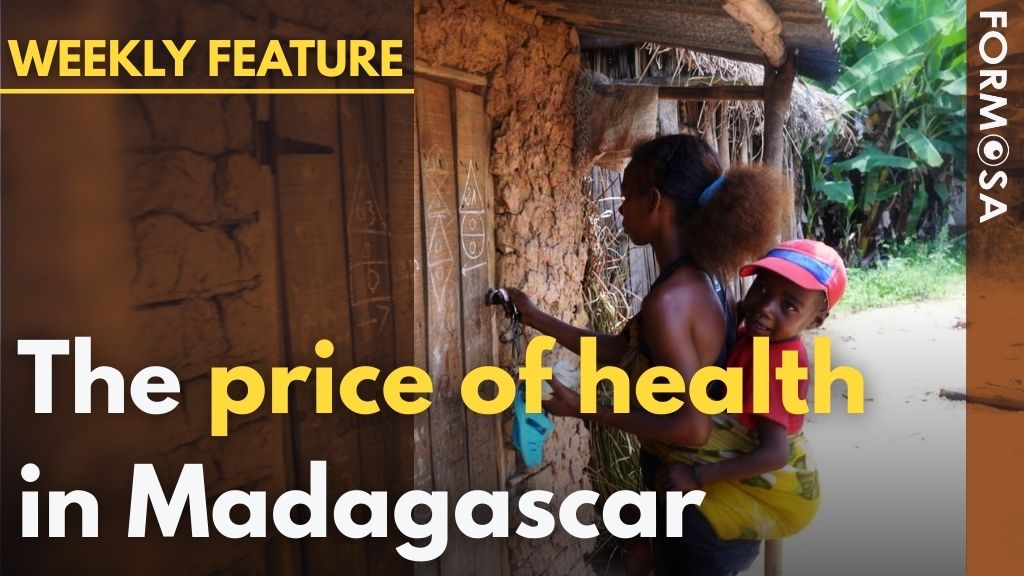
In the 35-degree heat, a 29-year-old woman named Linda carries her 6-year-old son on her back.
This is the only national highway in the east-west direction in Madagascar.
It takes more than an hour for them to reach a pit stop. She buys a drink and bread as refreshment. Before they leave, the store owner asks her why she’s carrying the boy. She says it’s because he can’t walk.
This house built with clay, twigs, wooden planks and hay is their home. Looking around, there seems to be a lack of running water, electricity and gas. Only a single light bulb dangles in a corner.
But they still try to make themselves comfortable. The bed the family shares has a lace-trimmed mosquito cover.
She sets up a fire on the ground, then places the pot on top. A plate of rice and some dried fish, that’s their lunch.
Linda
Local resident
My husband is a carpenter. He goes out to work every day. I take care of our kid. We do struggle. We can’t afford to go to the doctor in the city, unless seriously ill. We’re used to how our son can’t walk. The doctors here can’t do much anyway.
The boy only eats rice on most days. An unbalanced diet has affected his development in such a way that he still can’t walk at six years old.
According to the United Nations International Children’s Emergency Fund, more than 60% of Madagascans cannot afford to eat meat. Most people only eat rice on a daily basis, leading to malnutrition. The village head told us that most families in the village live like Linda’s.
Sean
Village head
Most people live in villages and grow rice, bananas and cassava, or do woodwork. Their daily wage is between 6,000 and 7,000 ariary, less than US$2.
Even though the economy relies on agriculture, extreme weather events of drought and storms are destroying crops and holding back incomes, making Madagascar one of the poorest countries in the world. As many as 80% of the population live below the poverty line. Healthcare is a luxury in this country.
Sean
Village head
Our incomes are really low. If we get sick, we just grit our teeth and try to get over it. Instead of going to the doctor’s, we use traditional remedies, like banana leaves, which are crushed and applied as a paste or ingested.
The village, which is 160km away from Antananarivo, the capital has a population of around 2,000 but not a single clinic. Healthcare is inaccessible in distance and cost.
But it’s not just inaccessible for the underprivileged. It’s also expensive for the middle class.
We’re now at a middle-class neighborhood in the northwest of Antananarivo. The weather’s good, and a 52-year-old woman named Shirley had taken the bus to visit the local market. Around half a year ago, she noticed that her stomach has become more and more bloated, which made her lose her appetite for food and even water.
Their two-storey house is painted an eye-catching shade of turquoise. Inside, it has an attic and the walls are painted terracotta brown. Very few locals live so comfortably.
Rick
Shirley’s brother-in-law
I am a tour guide living in the northwest of Antananarivo. I live quite comfortably. My wife runs a bed and breakfast and a restaurant. Business is very good during peak holiday season, so we have the means to take care of Shirley.
To treat her condition, Shirley has to travel 6 to 7 hours every week from her home to a hospital downtown to get paracentisis. This costs 40,000 ariary every month, which is around half that of locals’ monthly wage. Without help from family, she might not be able to afford treatment.
Shirley
Local resident
I don’t have an income. I can’t carry heavy things. I can’t really take care of myself. I’m so grateful of my sister and her husband for their help.
Rick
Shirley’s brother-in-law
It’s true that it costs us a lot and the hospital’s really far away. Sometimes we struggle too. But we’re family, so we’re happy to help.
But not everyone’s so fortunate.
Most people live like Linda, in places without running water or stable electricity. Even in cities and in hotels, power could go out any time.
Lai Kuan-yu
FTV reporter
I’m now at Moramanga, Madagascar. You can see that it’s raining heavily outside, and there’s even thunder. Why is it pitch black? It’s because it’s now 9:30 p.m. but there’s a blackout. Actually, since we got here, there may be three to four blackouts every day. This shows us just how unstable electricity supply is.
Inadequate infrastructure and poor sanitary conditions led to widespread infectious diseases such as malaria and plague. On top of food shortage and hunger, locals often have to endure severe illness.
To get a better understanding of local healthcare, we traveled to a village four hours away from the city center to see the only clinic there.
The clinic is nestled in the neighborhood in a private residence. The signage appears weathered. The doctor comes out to greet us and leads us inside.
Donarivelo
Physician
If we need an enclosed space, for example, for antenatal checks, surgeries, injections, we do it here in this room. We have running water here. This is the room for inpatient care. All the beds are here.
Four beds are placed inside this six-ping room. Patients that may require very different treatments all have to stay in the same space. The doctor says malaria is quite rampant in the country.
Donarivelo
Physician
Sometimes I just don’t have enough beds. Malaria peaks between March and May every year. It’s really quite rampant in Madagascar. I may have more inpatients, and may have to hang mosquito nets around the beds.
It’s also quite expensive to get treated for malaria.
Donarivelo
Physician
For example, if someone gets malaria, each treatment will cost 40,000 ariary. It’ll take at least three treatments and three days inpatient. Most people coming to get treated may only have 2,000 to 3,000 ariary on them, so they’ll ask me if I can just give them medication. I don’t know what to say.
Infectious diseases such as malaria plague the local population. But because it’s quite expensive for them to get treated, many don’t and some even lose their lives.
Donarivelo
Physician
Many people don’t know how dangerous malaria is. They may even believe in the rumor that getting an injection at a clinic leads to death, so they don’t seek timely treatment. When they come here with their face discolored yellow or red, it’s already so severe it could be life-threatening.
Even though the doctor seems to be proud of his facilities, it comes nothing close to what most people can easily access in Taiwan. The same can be said in other local townships.
We’re now on the other side of the hill, visiting another village and clinic. Like the previous one, it only has basic facilities.
Lesna
Nurse
The bigger problem is the lack of imported medication and medical equipment, as well as the shortage of hospital beds. For example, there are some basic testing apparatus that we don’t have. Consultations also cost money, and we’ll only give advice and treatment when we get paid. If you don’t have money, the government won’t pay for you. You may have to wait until family and friends are willing to pitch in, or have charities help you pay.
The quality of healthcare aside, what’s more pressing is how unaffordable it is. We interviewed a young couple at the hospital: 30-year-old Pasida and his wife, who caught malaria.
Pasida
Local resident
My wife and I make charcoal. I borrowed money from our boss. I’m afraid of losing her.
Pasida looks utterly defeated in tattered clothes, but he must hang on, difficult as life is.
This is what healthcare looks like in a poverty-stricken nation.
For more Taiwan news, tune in:
Mon to Fri at 9:30 pm on Channel 152
Tue to Sat at 1 am on Channel 53
#Madagascar #healthcare #Africa #charity #TaiwanCanHelp
世界最貧窮國家之一 傳染病肆虐 醫療匱乏 聽當地人民的呼喚
2025-09-05
位於非洲東南部印度洋上的國家「馬達加斯加」,以獨特的生態環境聞名全球,島上高達九成的野生動植物是世界獨有,宛如一座生態天堂。然而,美麗的土地,卻也隱藏著讓人難以想像的貧困,因為馬達加斯加也是世界上最貧窮的國家之一,有八成的勞動人口生活在貧窮線下,每天收入不到兩塊美元。而國家基礎建設長年匱乏,導致缺水、缺電、缺糧等問題,嚴重影響人民的健康和生活。民視記者飛往馬達加斯加中部,採訪當地人民在貧困中掙扎的真實樣貌,他們也跟隨村民,在烈日下徒步六公里,走進居民家中,記錄他們的生活情形。一同傾聽來自馬達加斯加的呼喚。
[[翻譯員 Randi]]
“這邊是穆拉曼加市場,今天是禮拜天,在馬達加斯加是休息的,但是大家禮拜天上午都出來了,去市場那邊買菜的,等一會兒,下午這邊會非常非常安靜”
走在穆拉曼加狹窄的街道上,三輪車、計程車、汽車、機車,與行人相互爭道,馬路兩旁琳瑯滿目的攤販,妝點城市景觀,假日菜市場,湧現一波波人潮。
[[翻譯員 Randi]]
“這是我們馬達加斯加的主食,這個叫木薯葉子”
老闆娘把木薯葉攪成泥,這一大坨翠綠葉泥,加入豬肉烹煮,就成了當地人最愛吃的美食,只是眼尖的你可能會發現,木薯泥還多了一味,蒼蠅。
隨處可見的蒼蠅到處飛竄,與各種生熟食交疊,這樣的場景,在馬達加斯加人眼裡,早已習以為常。
除了個人習慣,與環境衛生不佳之外,異言堂採訪團隊還發現,菜市場裡有另一個奇特景象。
走不到幾步路,就會看到有人擺攤賣藥。
[[翻譯員 Randi]]
“因為村落藥局不多,民眾比較方便在菜市場買藥”
在菜市場買藥,價格相對便宜,只是擺攤賣藥是否違法,藥品是真或假,這樣的用藥環境,不禁讓人懷疑,安全嗎?
聯合國開發計畫署統計,馬達加斯加小學輟學率高達64.9%,生活在缺乏基礎教育,衛教知識,以及醫療服務不足的環境裡,輟學的孩童,整天在街上撿破爛,兜售商品,甚至向外國人討錢。
頂著35度的高溫,29歲的琳達揹著6歲兒子,徒步往前走。
這條國道二號,是貫穿馬達加斯加東西向的唯一道路。
琳達停在路旁的雜貨店休息時,已經是走了一個多小時後的事了,買了飲料和麵包充飢,離去前,老闆娘問琳達,孩子怎麼了,琳達告訴她,因為兒子不會走路,每次出門只能揹著。
這間用紅土、樹枝、木板、乾草搭建的矮房,就是琳達的家,環顧四周,屋裡沒有水電,也沒有可供燒飯的瓦斯管線,更沒有任何現代化的痕跡。
唯一fashion的是,那張掛在木板床上,鑲著紫色蕾絲邊的蚊帳,那也是琳達一家大小,安睡的地方。
用樹枝在地上生火,再把鍋子放在上面,一盤米飯配半尾魚乾,這是琳達與兒子的午餐。
[[當地居民 Linda]]
“我先生做木工,他每天出門工作,我負責照顧小孩,我們生活困難,沒辦法去城市看醫生,除非生重病,我跟先生已經習慣兒子不會走路,馬國醫生也沒辦法改變什麼”
因為只吃米飯,只攝取澱粉的飲食,讓琳達的孩子發育不良,6歲還不會走路。
聯合國兒童基金會統計,馬達加斯加有六成以上的人民,連肉都買不起,大多數只吃大米,其結果是營養失調,迪克麗麗那村長告訴我們,像琳達這樣的家庭,在馬達加斯加並非少數。
[[迪克麗麗那村村長 Sean]]
“大部分是農村人,種稻米、香蕉、木薯或做木工,一個人一天工錢,是六到七千阿里亞里,不到兩美金”
然而,這個以農為本的國家,卻又因為乾旱、暴雨等極端氣候影響,導致收成有限,收入更有限,也因此,馬達加斯加,成了全球最貧困的國家之一,八成人民生活在貧窮線下,當三餐溫飽都成問題,更別說身心健康。
[[迪克麗麗那村村長 Sean]]
“我們收入非常低,生病就忍耐,不會去看醫生,通常會用傳統方法治病,例如摘香蕉葉,跟植物來塗抹,吃一吃”
距離首都塔那大約160公里外的迪克麗麗那村落,人口約兩千人,卻連一間診所都沒有,住在這裡的村民一旦生病,多半只能靠自己。
而在馬達加斯加,不只窮人沒錢看病,就連中產階級也可能看不起病。
我們來到安塔西北的一處富人區,這裡普遍住著經濟條件比較好的中產階級,52歲的雪莉趁著天空放晴,一個人搭公車外出逛市集,半年前,雪莉發現她的肚子愈腫愈大,不僅沒食慾,連喝水都困難。
雙層樓房緊鄰馬路邊,青綠色外觀相當醒目,法式閣樓、粉色裝潢,這樣的有錢人家,在馬達加斯加是極少數。
[[Shirley的妹夫 Rick]]
“我的工作是導遊,在馬達加斯加安塔西北,我的收入算高,非常好,我老婆是經營民宿和餐廳,旅遊旺季生意很好,因此我們的經濟條件,可以協助照顧姐姐”
為了減輕身體的不適,雪莉每個禮拜,必須從安塔西北搭6至7個小時的車,到首都塔那的醫院抽腹水,一個禮拜抽一次,一個月得支付四萬元阿里,相當於當地人半個月薪水,龐大醫療費,加上舟車勞頓,若沒親友幫忙,雪莉根本無能為力。
[[當地居民 Shirley]]
“我沒收入,沒辦法搬東西,生活沒辦法自理,多虧妹妹,妹夫的幫助,很謝謝他們”
[[Shirley的妹夫 Rick]]
“的確,我跟太太的經濟負擔很大,這裡去醫院路途遙遠,有時候我們也有困難,但是親情讓我們願意互相幫助”
在馬達加斯加,像雪莉這樣幸運的人並不多。
大部分的人,依然過著跟琳達一樣的生活,許多地區仍舊沒有自來水,也沒有足夠電力,城市,鄉下都一樣,即使是給外國遊客住的旅館,也不例外。
[[民視記者 賴冠諭]]
“記者目前所在的位置,是在馬達加斯加的穆拉曼加,這邊大家可以看到,下著傾盆大雨,還打著閃雷,為什麼後面會一片漆黑呢,是因為現在是當地的晚上9點半,現在是停電的狀況,其實在記者入住的當下,一天可能會遇到三,四次停電狀況,這可以說明,馬達加斯加其實是一個,供電非常不穩的地區”
基礎建設不足與衛生條件不佳,讓瘧疾、鼠疫等傳染病橫行,這裡的人民,不光要抵抗糧食短缺與飢餓,還要忍受病毒的折磨。
為了實際了解,馬達加斯加的醫療現況,民視採訪團隊,驅車前往距離市中心大約四小時車程的,范德拉薩那村,探訪村裡唯一的診所。
診所藏身在村莊民宅裡,高掛的招牌斑駁老舊,督那醫生見到我們,立即前來握手致意,隨即帶我們參觀診所內部。
[[范德拉薩那村診所醫師 Donarivelo]]
“如果是隱密性檢查,例如孕婦、手術、注射等等,就在這間診間做檢查,我們是有自來水的診所,這間是病房,所有的病床都在這裡”
六坪大的空間,擺著四張病床,村民不管生什麼病,都擠在這間病房,督那醫生談起,當地流行的傳染病,瘧疾。
[[范德拉薩那村診所醫師 Donarivelo]]
“病床不夠用也沒辦法,就像每年三月到五月,是瘧疾高峰期,瘧疾在馬達加斯加非常嚴重,住院人數可能增加,而且就連病床都必須掛上蚊帳”
一旦民眾感染瘧疾接受治療,花費則相當昂貴。
[[范德拉薩那村診所醫師 Donarivelo]]
“舉例來說,如果居民感染惡性瘧疾,一次的療程需要四萬元阿里,至少要三次療程,要住院三天。大多民眾來,身上只有兩千、三千元阿里,錢不夠,叫我拿藥給他們吃就好,我也哭笑不得,很無奈”
缺乏教育與衛生觀念,導致瘧疾等傳染病廣泛流行,看病價格昂貴,讓許多病人無法獲得醫治,甚至有病人因此喪命。
[[范德拉薩那村診所醫師 Donarivelo]]
“很多居民因為不曉得,瘧疾的嚴重性,通常還會誤信謠言,以為來診所打針就會死掉,因此常常延誤就醫,等到臉變黃變紅,來這裡都已經很嚴重了,最後可能致命”
採訪過程中,即使督那醫生盡可能的介紹,診所裡可供拍攝的醫療器材,簡陋又缺乏資源的醫療環境,對比在台灣垂手可得的就醫服務,在這裡近乎是不可能擁有,而這樣的醫療困境,不只發生在范德拉薩那區。
我們決定前往山的另一頭,法曼吉亞納村落,採訪另外一間診所,這裡如同范德拉薩那的診所,除了簡單的藥品,藥劑與病房,其餘什麼也沒有。
[[法曼吉亞納村護理師 Lesna]]
“比較大的問題,應該是進口藥品缺少,還有醫療設備不夠,病房也不夠,例如一些基本的疾病檢測儀器,我們沒有,看病必須付錢,付錢我們才會解說治療,如果沒有錢,政府也不會幫你付,要不然就是等家人或朋友幫忙付,或是善心團體幫忙付”
即使醫療品質堪憂,但這並不是首要問題,有沒有錢才最重要。我們採訪了病房裡一對年輕夫妻,30歲的帕西達,帶著感染惡性瘧疾的妻子來就醫。
[[當地居民 Parsida]]
“我們夫妻做木炭工作,我先向老闆借錢,我怕太太死掉”
面對生活的苦澀與無奈,帕西達似乎也感到無能為力,只能戴著外國人捐的舊帽子與舊衣服,低頭不語。
貧窮國度人民的無聲呼喚,有誰得聽到。
更多新聞內容,請鎖定:
民視台灣台(152頻道)週一至週五晚上9:30
民視新聞台(53頻道)週二至週六凌晨1:00
Related News