Despite labor shortages, older adults find it hard to get jobs
Despite labor shortages, older adults find it hard to get jobs
2026-03-24
Taiwan is now officially a super-aged society but are workplaces truly prepared? Even though there are labor shortages across various industries, a recent survey found that 60% of middle aged and older worker have experienced ageism. Today we talk to talented retirees about their difficulties in returning to the workforce.
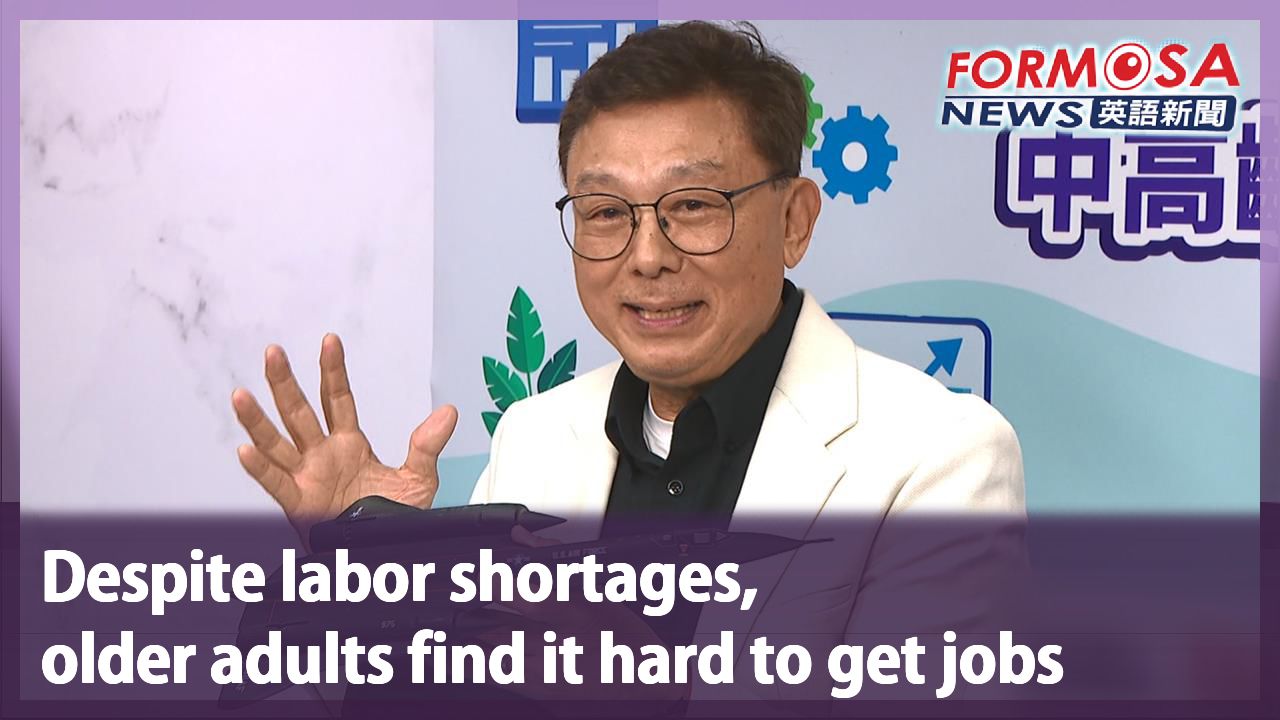
Holding a model airplane, Eade, 73, holds dual bachelor’s degrees from Stanford University and the University of Arizona. He speaks eloquently about the plane’s structure and design. Eade retired from a well-known tech company at the age of 68. He wants to return to the workforce and utilize his talents, but he never thought he’d encounter constant obstacles.
Eade
Retired CEO of Tech Factory
Since we’ve reached retirement age, salary and material things aren’t our biggest concerns. So we maintain a degree of flexibility. But your expertise definitely has its inherent value and I see it as a sign of respect. However, the other party might see it as an issue. On the one hand, they might feel sorry for you; on the other hand, they could hire more people for the same amount of money.
Ms. Chiu used to earn a six-figure monthly income in a traditional industry. She wants to find employment again after retiring but says the job openings available are completely unrelated to her professional background.
Ms. Chiu
Representative of older job seekers
I chose to retire relatively early, but I didn’t mean to stop working entirely. I can find some assistant jobs. Many people think that older people may not be able to humble themselves. Employers might feel that since you’ve held such high-level positions before, it could be difficult for you to take on sales or other lower-level tasks afterwards—they worry you might not be able to handle them.
Tseng Chung-wei
Jobseekers’ website spokesperson
Returning to the workforce is particularly challenging for middle-aged and older people. The top concern is age discrimination, which leads to difficulty finding work. In addition, their roles may be replaced by younger employees, they may lack some of the necessary skills for certain positions, and their employment options are more limited.
When middle-aged and older people return to the workforce, their supervisors may even be younger than they are. Companies also need to consider management and salary issues, as well as the structure of the labor force. There is still considerable room for improvement in how these challenges can be balanced within an aging, low-birthrate society.
For more Taiwan news, tune in:
Mon to Fri at 9:30 pm on Channel 152
Tue to Sat at 1 am on Channel 53
#ageism #job #jobmarket #taiwan #society #employment
人力銀行調查 6成中高齡上班族曾遇"年齡歧視"
2026-03-24
台灣步入高齡化社會,但職場環境真的準備好了嗎?明明各行各業缺工,政府也經常舉辦中高齡就業博覽會,媒合、幫助退休族二度就業。但人力銀行最新調查發現,六成中高齡上班族曾遇過年齡歧視。如何在產業缺工與中高齡人才再利用之間取得平衡,成為當前勞動力結構轉型的最大課題。
拿著飛機模型,針對構造和設計講的頭頭是道,73歲的Eade,擁有史丹佛和亞利桑那大學雙學士學位,68歲從知名科技大廠退休,想再重返職場發揮長才,沒想到頻頻卡關。
[[退休科技廠執行長 Eade]]
“既然到了退休的年齡,其實薪水薪資,物質上的東西,不是我們最大的考量,所以其實我們是保持一種彈性,但是你的專業的確有它,本來就專業該有的價值,我把它當作是一種尊敬,但是對方可能認為是個問題,因為好的方面來講,他會覺得對不起你,另外一個角度來講,他用同樣的錢他可以請到更多的人”
曾在傳產,月入達6位數的邱小姐,退休後要再就業,但能挑的職缺,跟專業背景,根本對不上。
[[中高齡就業代表 邱小姐]]
“我會選擇比較早退休,但是我並沒有想要說停止工作,我可以找一些助理的工作,很多人會覺得高齡的人,可能放不下身段,(企業主)他會覺得說,你可能之前做了這麼高的職務了,那之後來叫你做業務,做一些比較低階的工作,他們會擔心你可能沒有辦法勝任”
[[人力銀行發言人 曾仲葳]]
“重返職場,其實中高齡認為是蠻有困難度的,排名第一是年齡歧視找不到工作,接下來職務可能會被年輕人給取代,同時職能可能會不足,工作的選擇也會變少”
中高齡重返職場,主管甚至比你還年輕,企業也得考量管理、薪資問題,勞動力結構,如何與高齡化、少子化社會,取得平衡,還有很大進步空間。
更多新聞內容,請鎖定:
民視台灣台(152頻道)週一至週五晚上9:30
民視新聞台(53頻道)週二至週六凌晨1:00
Related News