Hotels hire foreign students as quasi migrant workers
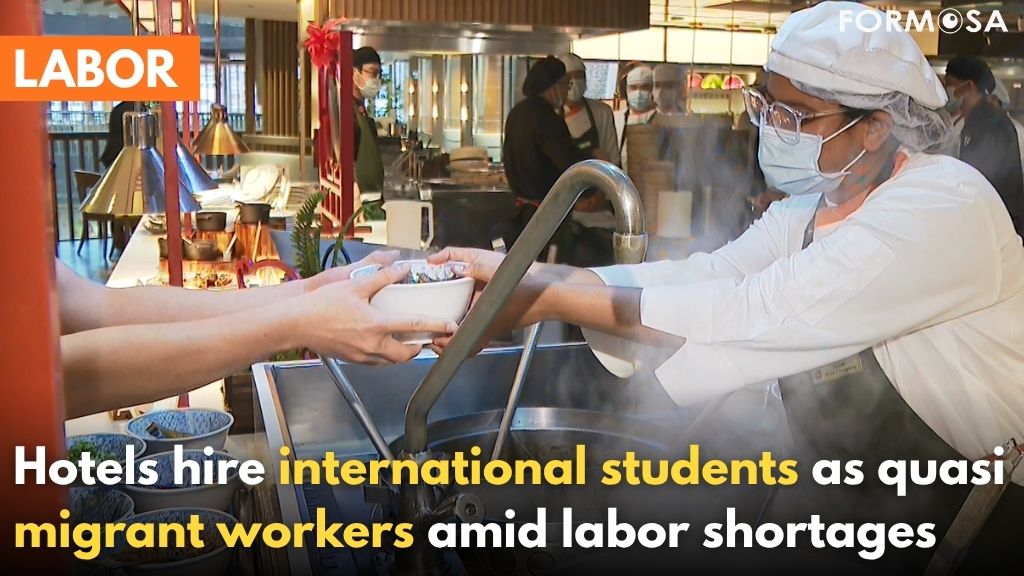
Hotels hire foreign students as quasi migrant workers
2026-04-16
Taiwan’s migrant worker population continues to grow, amid a looming labor shortage in many so-called “unskilled” positions. Companies in manufacturing have long employed cheap labor from Southeast Asian countries, and many caregivers are foreign workers. As of February this year, Taiwan had 860,000 migrant workers, more than 70% of whom are Indonesian or Vietnamese. In recent years, even the hospitality sector has been employing international students through vocational programs and university courses, blurring the line between students and migrant workers.
This busboy replenishing the plates at this restaurant in a 5-star hotel is a university student from Indonesia.
The chef making beef noodles fresh to order is also foreign.
Chen Han-yu
Training manager at hotel
Nowadays, many vocational colleges and universities have courses to attract students from Southeast Asia, so there are a lot of international students. As part of the courses, they visit the hotel and have a look around. We also get interns from vocational schools abroad that we have partnerships with.
The hospitality industry and educational institutions have rolled out programs that bring foreign students to work at hotels as quasi migrant workers. These students can be considered part of Taiwan’s migrant worker population, which has grown significantly amid severe labor shortages.
Taiwan had 860,000 migrant workers in February this year, according to the Ministry of Labor. They are mainly from Indonesia, Vietnam, the Philippines and Thailand. Taiwan ranks third in Asia for total numbers, behind Japan with 2.57 million migrant workers and South Korea with 1.1 million.
Wu Yu-hsun
Eastern Union Interactive
Indonesian migrant workers are mainly employed in nursing and home care. Vietnamese workers mostly work in the manufacturing sector, in production. For migrant workers from the Philippines, it’s the electronics sector, and those from Thailand are mostly in heavy industry and construction.
Businesses rely on migrant workers as a way to cheaply fill in labor gaps in industries from manufacturing to care giving. Now, even the hospitality industry has access to this foreign workforce through educational institutions.
For more Taiwan news, tune in:
Mon to Fri at 9:30 pm on Channel 152
Tue to Sat at 1 am on Channel 53
#taiwan #migrantworkers #labor #international #新南向
台灣移工人數突破86萬 產業依賴度升高"亞洲僅次日韓"
2026-04-16
隨著台灣人力短缺,不只工廠、家庭看護,現在包括五星級飯店餐廳,也看得到外籍員工身影,根據統計,全台移工人數已經突破86萬人,其中,印尼籍和越南籍移工占比超過七成,還有菲律賓以及泰國移工,都是在製造業第一線最多。
一疊疊乾淨餐盤整齊排好,五星級飯店餐廳裡,忙著整理的這位,是來台念大學的印尼籍學生。
另一頭,現點現煮牛肉麵,掌勺的同樣也是外籍移工。
[[飯店訓練部經理 陳漢禹]]
“現在大專院校有很多的這種南向班,所以其實他們的外籍生是滿多,讓他們有機會可以來飯店參訪,或者來走走看看。海外有些固定配合的大專院校,我們也還是會有就是固定的實習生會從那邊進來。”
飯店業透過建教合作,讓移工走進五星級飯店服務,台灣出生率雪崩式滑落,反映在就業市場,人力嚴重不足,都是靠外籍移工來補足缺口。
根據勞動部統計,截至今年2月,全台移工人數超過86萬人,主要來自印尼、越南、菲律賓和泰國,比起日本的移工人數約257萬人,韓國約110萬人,台灣居亞洲第三大。
[[東聯互動創辦人 吳侑勳]]
“台灣目前的印尼在台工作者主要從事看護或者居家照護。那麼越南主要以製造業、生產為主,菲律賓著重在電子業,泰國主要是重工業和基礎的營造、營建等等。”
企業仰賴移工補位,從製造業、家庭看護到服務業,在在都凸顯了這批外來人力,影響層面越來越大。
更多新聞內容,請鎖定:
民視台灣台(152頻道)週一至週五晚上9:30
民視新聞台(53頻道)週二至週六凌晨1:00
Related News