Hualien develops AI tech to determine watermelon ripeness
Hualien develops AI tech to determine watermelon ripeness
2026-05-12
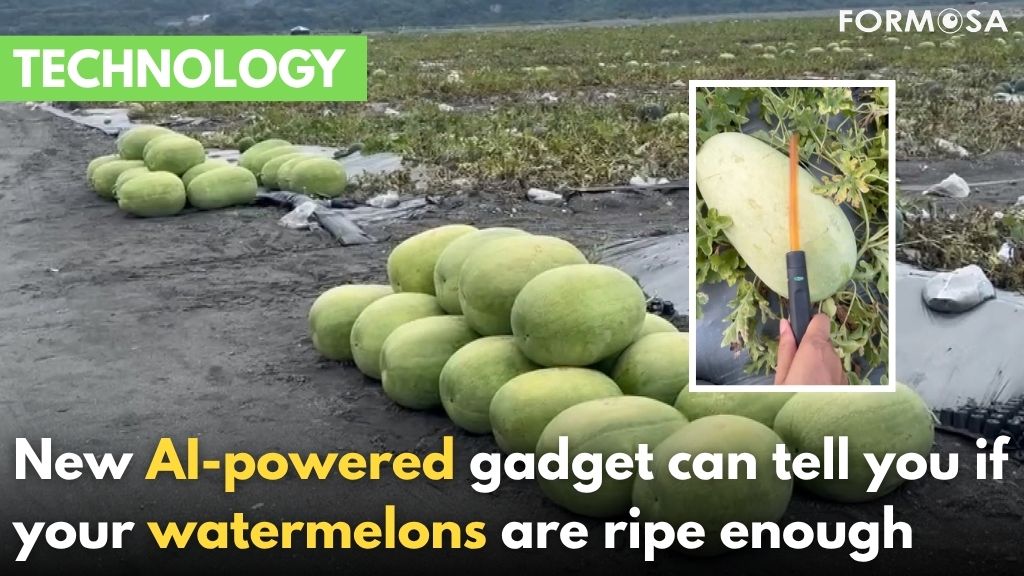
Watermelon season has arrived in Hualien. In the past, professional appraisers would tap watermelons to judge their ripeness, but these experts are becoming harder to find, as many are aging and haven’t passed down their skills. To make up for this, the Hualien County Government and Southern Taiwan University of Science and Technology jointly developed an AI tapping device to determine ripeness. The technology took two years to develop and has already been patented.
The best way to tell if a watermelon is ripe is by tapping it.
A higher, brighter sound means the fruit isn’t ready yet, while a deeper, fuller sound means it’s ripe. But most people could tap on a watermelon until it’s bruised and still not be able to tell the difference.
There are watermelon appraisers who are experts at this, but as they get older and their hearing declines, farmers have been struggling to judge their fruits’ ripeness. Now, with a collaboration between the Hualien County Government and Southern Taiwan University of Science and Technology, AI can help determine whether a watermelon is ripe.
Watermelon farmer
Embracing technology
After listening for a while, appraisers’ ears might get tired and they might make mistakes, so this device can help us to improve judgement accuracy. We use it to tap and listen, confirming whether the assessment is consistent and reliable.
When farmers tap a watermelon with this AI-powered device, it analyzes the sound and shows a green light if the fruit is ripe. It’s already about 85% accurate.
Huang Neng-fu
Southern Taiwan University of Science and Technology president
By loading different sound models into it, the device can perform different functions. For example, when we tap a watermelon, it can determine its level of ripeness—say 60%, 70%, 80%, or 90%—or even detect internal damage or bruising.
Chen Shu-wen
Hualien Agriculture Department director
The Hualien County Government looks at the development of our technology and works together with our farmers to identify their needs and help them reduce labor costs.
From tapping and listening to using an AI-powered device, ensuring farmers can accurately determine watermelons’ ripeness will allow everyone to enjoy delicious watermelon this summer.
For more Taiwan news, tune in:
Mon to Fri at 9:30 pm on Channel 152
Tue to Sat at 1 am on Channel 53
#fruit #watermelon #Hualien #ripeness #AI #technology #patent #summer #agriculture #farmers
花蓮聯手南臺科大! "AI鑑瓜"西瓜熟不熟一敲就知道
2026-05-12
花蓮西瓜進入產季,過去採收得靠"鑑瓜師"拍打辨識熟度,但近年面臨缺工,加上老農年紀漸大,經驗傳承出現斷層。花蓮縣府與南臺科大合作,研發AI敲擊棒,只要拿棒子輕敲西瓜表面,系統就能自動判別成熟度。這項技術耗時兩年,已經取得發明專利。
判斷西瓜熟不熟,得用拍的。
音頻較高,比較亮的是不熟,聲音較悶、較低頻渾厚的,是已經熟了,但一般民眾快把西瓜都敲爛了,也聽不出來。
因為這得靠鑑瓜師的專業判斷。只不過隨著他們年齡年紀大,聽力退步,瓜農也面臨了困境。不過花蓮縣府和南臺科大合作,現在判斷西瓜熟不熟,也可靠AI幫忙。
[[西瓜農]]
“鑑瓜師聽久了以後,就是可能聽力疲乏,然後可能容易出錯,所以這個機器可以輔助我們,去增加它判定的準確度,就是會邊拍,然後邊聽,然後確定說,它是否的準確度是一致的”
這款AI敲擊棒,輕敲西瓜,綠燈代表成熟了,現在的準確度,已經到了八成五。
[[南臺科大校長 黃能富]]
“這個裡面只要放不同的聲音模型,它就有不同的功能,比如說我們敲西瓜,就判斷那個西瓜的熟度嘛,比如說六分、七分、八分、九分,或者我們叫內傷啊,撞傷”
[[花蓮縣農業處長 陳淑雯]]
“花蓮縣政府這邊,也會看我們整個技術的一個發展,來跟我們農友一起來合作,來確認農友的需求,來幫助他們一起來,更加的節省他們的人力成本”
從用拍的聽聲音,到用敲的看燈號,唯有幫助瓜農維持品質,才能讓大家在夏天,都能吃到香甜可口的花蓮西瓜。
更多新聞內容,請鎖定:
民視台灣台(152頻道)週一至週五晚上9:30
民視新聞台(53頻道)週二至週六凌晨1:00
Related News