After TSMC sets up shop in Kumamoto, tourists increase sharply
After TSMC sets up shop in Kumamoto, tourists increase sharply
2026-07-28
Taiwan’s star chipmaker TSMC has set up a plant in Japan’s Kumamoto Prefecture and is investing in a second plant. This is transforming the area. Not only is demand for industry-academia collaboration in the semiconductor sector surging, but Taiwanese tourists have also become the top foreign visitors to the area, which in medieval times was once home to the most powerful samurai family in Japan. Let’s join the FTV team in Kumamoto.
Tang Shih-ching
FTV reporter
Hiya! When you come to Kikuchi, Kumamoto, and want to experience the most authentic samurai culture, you can do what I did and visit this tourism association. You can experience wearing samurai garb. The armor, along with the layers of metal plates, weighs 15 kg. Through the weight on your body, you are truly experiencing the samurais’ mission from centuries ago.
The imposing samurai attire, though requiring half an hour to change into, is the most direct way for tourists to learn about the Kikuchi clan, the most powerful samurai family in medieval Japan.
Mr. Kado
Kumamoto Kikuchi Tourist Association
Since TSMC moved in, the number of foreign tourists has been increasing rapidly. By 2025, the number had reached over 950, almost doubling in a year.
The arrival of TSMC’s majority owned subsidiary JASM and the increase in direct international flights to Kumamoto have transformed this historic city of Kikuchi into a new tourist hotspot. Even the farmhouses in Yatsushiro City have become popular destinations for in-depth tourism.
Kusano
Rush grass farmer, Yatsushiro
Rush grass possesses a strength and unique benefits that science can’t replicate, and the aroma of rush grass, as I just mentioned, has a relaxing effect on the mind and body, and it really does stimulate the release of related hormones.
Ninety-eight percent of the rush grass used to make tatami in Japan is grown here. In the past, the impact of Westernized architecture sharply reduced the number of farming families from thousands to just 200. Now, however, they have turned their fortunes around through "educational walking tours"—and the key driving force behind this is actually a Taiwanese.
Hsieh Chi-i
In depth tourism operator
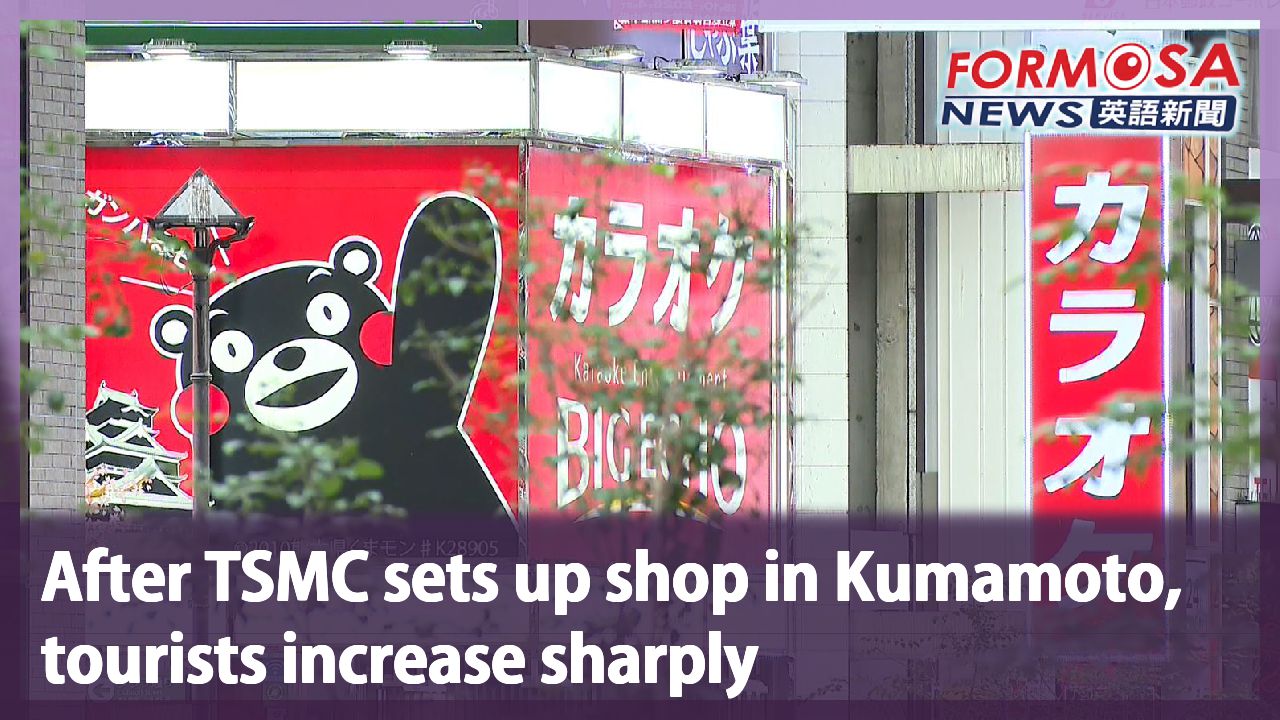
The whole of Kumamoto isn’t just about Kumamon; it includes everything—every dish you eat, every bowl of rice, and every person you meet. Creating a deeper, more profound travel experience out of these encounters is exactly what we want to pursue and provide.
Emphasizing in-depth, long-term small-scale chartered tours and symbiotic tourism, this precisely addresses the predicament of insufficient tour guides and buses in Kumamoto.
The FTV team’s trip also attracted the attention of Japanese media. Local online media reported on it with the headline: "Demand for experiential tourism in Kumamoto is growing, even attracting the attention of Taiwanese TV stations." After all, the influx of Taiwanese tourists into Kumamoto accounts for nearly 30% of foreign visitors staying in the area.
Mr. Matsushita
Japan Travel Bureau, Kumamoto branch.
Since TSMC’s arrival, a perception has formed in Japan that “Kumamoto is synonymous with semiconductors." Therefore, regarding future industrial development, especially as Japan has designated semiconductors as a national strategic priority, ensuring a steady flow of talent and providing learning opportunities has generated considerable interest among many schools and educational institutions.
This ripple effect of the chip industry, ignited by TSMC, has completely transformed Kumamoto’s education, tourism, and economy, and has helped to forge a common destiny between Taiwan and Japan.
For more Taiwan news, tune in:
Mon to Fri at 9:30 pm on Channel 152
Tue to Sat at 1 am on Channel 53
#Kumamoto #Kikuchi #Yatsushiro #Japantourism #Kumamototourism #TSMC
晶圓翻轉日本九州 台積電落腳熊本"催生包車深度旅遊"
2026-07-28
台積電熊本廠開幕、二廠追加投資,強勁的護國神山效應,徹底翻轉日本熊本當地生態,不光半導體的產學合作需求大增,台灣旅客也高居當地外國住宿客首位,更催生出強調深度、長時間的包車旅遊文化,請看民視團隊,在熊本的現場直擊。
[[民視記者 唐詩晴]]
“喝!喝!,來到熊本菊池,要感受最正統的武士文化,可以像我一樣,來到觀光協會,體驗這一身武士服裝,因為光是盔甲,還有層層的鐵片加總,就重達15公斤,真的是用身體的重量,在感受半世紀前的武士使命”
氣勢十足的武士服,雖然一換,就要半小時,但成為觀光客,認識日本中世紀,最強大的武士家族"菊池一族",最直接的方式。
[[菊池觀光協會管理部門 角廣伸]]
“自從台積電進駐以來,海外旅客真的在快速增加,到了2025年,人數已經達到950幾位,幾乎(一年)翻了一倍”
台積電JASM進駐、熊本國際直飛航線增加,讓這座歷史古城,一躍成為觀光新寵,連八代市的農家,也晉升深度旅遊的活招牌。
[[熊本八代藺草農家 草野邦彦]]
“(藺草)它擁有著,科學所沒有的優點與強韌度,而且藺草的香氣,就像我剛才提到的,具有放鬆身心的效果,真的會讓人分泌相關的荷爾蒙呢”
全日本98%的榻榻米原料"藺草",都產自這裡,過去受到建築西洋化衝擊,當地農家從千家銳減剩200家,如今卻靠著"走讀觀光"翻身,而幕後重要推手,竟是台灣人。
[[深度旅遊業者 謝琪薏]]
“整個熊本,它可能就是不會只有熊本熊,還包含就是它所有的,你吃的每一道(菜) ,每一碗飯,然後遇見的每一個人,到底可以對你來講,有一個什麼樣更深刻的,這個旅遊的體驗是我們想要追求,也想要提供的這個服務”
強調深度、長時間的小型包車與共生旅遊,精準解決了熊本導遊、巴士不足的窘境。
民視團隊,此行採訪,也受到日媒關注,當地網媒特別以"熊本體驗式旅遊需求日益增長,連台灣電視台關注"為題報導,畢竟台客大軍席捲熊本,就占了當地外國住宿客近三成。
[[日本JTB旅行社熊本分店觀光開發製作人 松下宗行]]
“自從台積電進駐以來,日本國內已形成「熊本等於半導體」的印象,因此面對未來產業發展,特別是當日本,將半導體列為國家級戰略重點時,如何確保人才來源,並提供學習機會,這讓不少學校和教育機構,都產生了濃厚興趣”
這場由台積電點火的晶片漣漪,全面翻轉熊本的教育、觀光與經濟,也讓台日兩國,化做命運共同體。
更多新聞內容,請鎖定:
民視台灣台(152頻道)週一至週五晚上9:30
民視新聞台(53頻道)週二至週六凌晨1:00
Related News