Taiwan Space Agency chief urges firms to enter the space industry
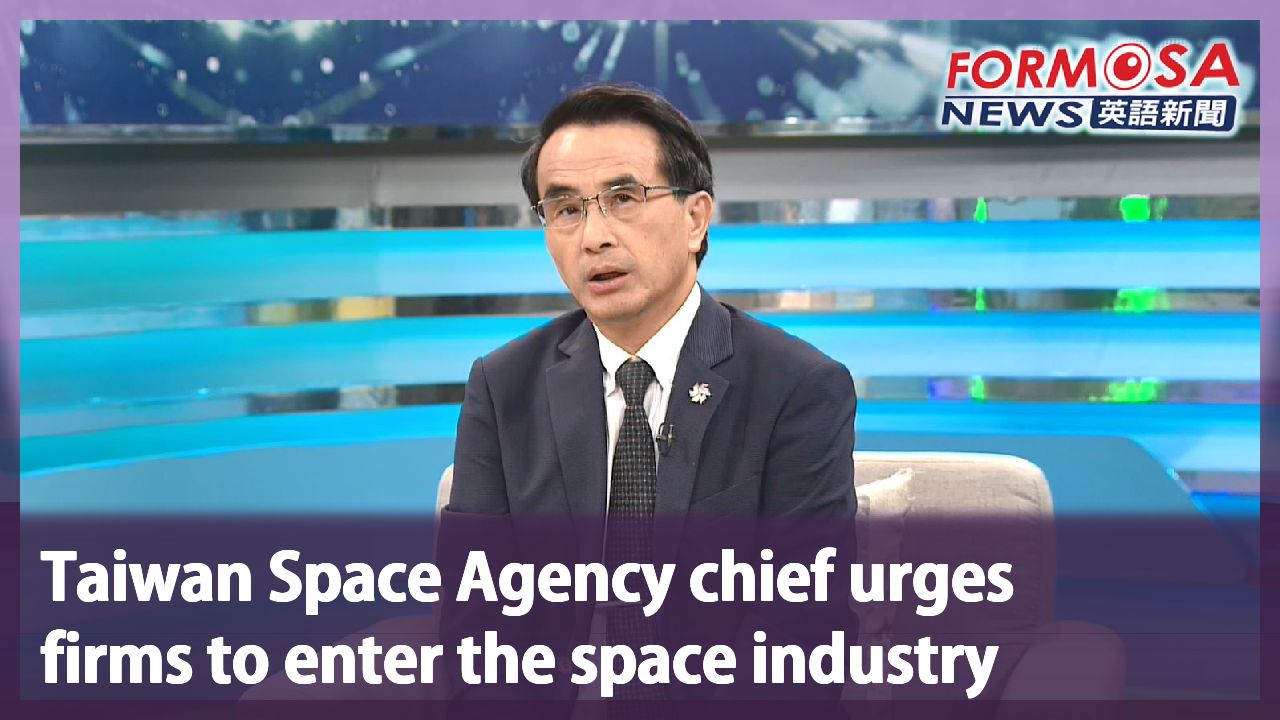
Taiwan Space Agency chief urges firms to enter the space industry
2026-10-13
Wu Jong-shinn, the director general of the Taiwan Space Agency, has long had a passion for Taiwan to build its own rockets that can launch satellites into space. In a recent exclusive interview with FTV, he pointed to the importance of the space industry to Taiwan’s economy and national security and said Taiwan’s private sector could not afford to neglect this sector. Let’s find out more.
- My eyes light up whenever the topic turns to space or rockets.
Wu Jong-shinn, the director general of the Taiwan Space Agency, has announced a goal to launch a Taiwanese satellite into orbit using a Taiwanese rocket by 2034. However, this project could actually have been achieved sooner.
Wu Jong-shinn
Taiwan Space Agency director general
There was a project called the “Hapith” plan. Back then, the idea was for the space center to lead it and the Chung-Shan Institute of Science and Technology to manufacture the rockets. I had set up a team for it—around a dozen professors. It was ultimately canceled, primarily due to the change of administration in 2008 when former President Ma Ying-jeou took office. His perspective was different, as rockets—especially orbital ones—are a highly sensitive technology, especially in the US. If Taiwan were to build them, the US would ask: “What are you planning to do with them?” Because they could easily become intercontinental ballistic missiles when no one’s looking. I was quite disappointed at the time, so I went back to the university.
Despite his past disappointments, there was never any talk of giving up. The US is poised to pass the Taiwan and American Space Assistance Act of 2025, which would institutionalize space cooperation between the two nations for the first time. Wu stresses this marks a crucial step forward.
Wu Jong-shinn
Taiwan Space Agency director general
Over the past five years, space has become a crucial component of national security infrastructure. Let me cite two examples: the US operation to apprehend the Venezuelan president and the bombing of a nuclear facility in Iran. Neither of these actions could have been carried out without space-based support.
Beyond national security, from a commercial perspective, the global space industry is projected to reach US$1.2 trillion by 2030, making it a fiercely contested market among nations.
Wu Jong-shinn
Taiwan Space Agency director general
The leading players in the electronics sector need to adopt a more visionary, long-term perspective and move quickly to invest in the space sector. If they are too slow to invest—considering that our Earth-based economy is primarily driven by OEM manufacturing—are we really going to limit ourselves to just being OEMs in space as well?
Driven by sheer tenacity and professionalism, Wu is pursuing his rocketry dream, striving to secure autonomous space capabilities and carve out a place in the cosmos.
For more Taiwan news, tune in:
Mon to Fri at 9:30 pm on Channel 152
Tue to Sat at 1 am on Channel 53
#Taiwanspaceagency #spacerace #TASA #Taiwansecurity #Taiwansatellite
台製火箭夢! "火箭阿伯"吳宗信喊話政府.企業投資
2026-10-13
國家太空中心主任吳宗信當年40多歲時立下打造台灣自製火箭的夢想,因而有「火箭阿伯」稱號,受邀上民視「新聞觀測站」專訪節目,分享太空產業在國安與經濟領域的重要性,喊話政府企業快來投資,否則"地表的經濟已慢人一步只能OEM,難道到太空也還要OEM嗎"?
- 講到太空或者火箭,眼睛就會亮起來
國家太空中心主任吳宗信,喊出要用台灣的火箭、送台灣的衛星、上軌道,目標2034年實現;不過,其實這個計畫,本來可以更早達成。
[[國家太空中心主任 吳宗信]]
“一個叫哈比特計畫,那時候是想太空中心主導,中科院製造火箭,我們那時候有一個團隊,是我成立的,大概十幾個老師,(取消)我想第一個是政權移轉,那時候2008年,是換馬英九前總統上任,他的想法可能不一樣,因為火箭是比較敏感的,尤其要入軌的火箭,這個是全世界,尤其美國都很敏感,台灣如果要做,美國就問,你要幹什麼,因為它一轉身,可能就可以變洲際飛彈。那時候我是滿失望的,就回學校去”
曾經很失望,始終沒放棄,近日美國可能通過台美太空援助法案TASA Act,兩國太空合作將首度制度化,吳宗信強調,這是極重要的一步。
[[國家太空中心主任 吳宗信]]
“太空,過去這五年,已經變成國家安全一個很重要的基礎建設,我舉兩個例子,一個,像美國跑去委內瑞拉去抓他們總統,還有在伊朗去轟炸這一個核設施,這兩件事,如果沒有太空協助是做不到的”
不只國安,從商業角度看,全球太空產業產值,預計2030年將來到1.2兆美元,是各國兵家必爭之地。
[[國家太空中心主任 吳宗信]]
“電子10哥,20哥,他們應該要更有遠見,看更遠,趕快來投資太空這一塊,我想你如果投資太慢,地球經濟,我們是OEM為主,難道到太空,我們還要做OEM嗎”
吳宗信憑著傻勁與專業,追逐火箭夢,力拼掌握太空自主權,在宇宙爭得一席之地。
更多新聞內容,請鎖定:
民視台灣台(152頻道)週一至週五晚上9:30
民視新聞台(53頻道)週二至週六凌晨1:00
Related News