Ma says ‘we Chinese’ at Nanjing Massacre memorial
Ma says ‘we Chinese’ at Nanjing Massacre memorial
2023-03-29
Meanwhile in China, Former President Ma Ying-jeou is on the third day of his closely watched Chinese tour. He made a stop at the Nanjing Massacre memorial hall, to pay tribute to the victims. The former president was visibly emotional after his visit, telling reporters that, quote, "Chinese people" on both sides of the strait must learn from the past and bravely resist foreign aggression.
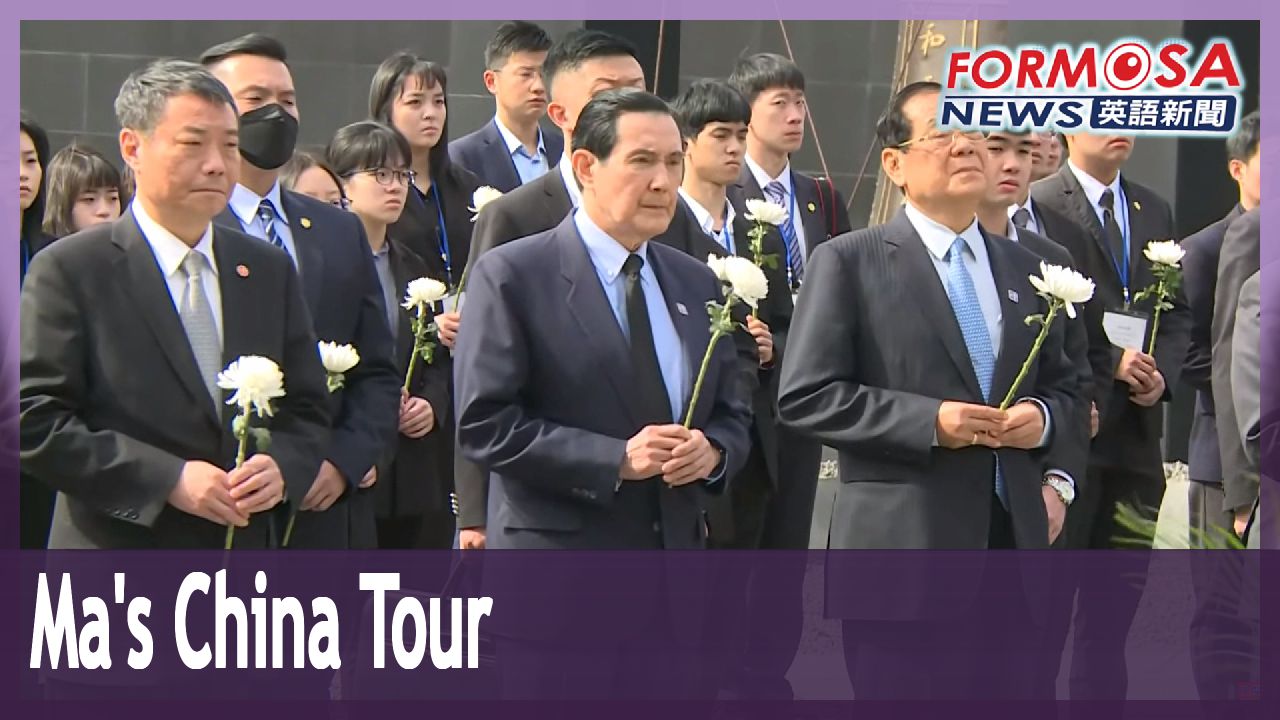
On the third day of his China tour, former President Ma Ying-jeou made a stop at the Nanjing Massacre memorial hall, to lay a flower for the victims.
Clad in a black tie and holding a white flower, Ma was grave as he observed a moment of silence. Standing beside him was Chen Yuanfeng, deputy director of China’s Taiwan Affairs Office, with whom he exchanged only brief pleasantries. After laying his flower for the victims, Ma entered the memorial hall. Taiwanese media were barred from filming, but when he emerged, it was clear that the historical materials on display had made a deep emotional impact.
Chinese reporter
Mr. Ma, what struck you the most about your visit to the memorial today?
Ma Ying-jeou
Former president
I have never been as so profoundly affected as I was today. We Chinese must learn from this war of resistance against Japan. As Chinese people, regardless of which side of the strait we’re on, we must bravely resist foreign aggression. During the course of our fight against the Japanese, we suffered tremendous humiliations.
Ma twice referred to himself as Chinese in his remarks, and he was addressed as “Mr. Ma” by Chinese media. Notably, local officials made a point of restricting media questioning.
Chinese official
These four reporters will ask questions. No one else, all right?
Chinese reporter
Foreign media predict that the two sides of the strait may engage in conflict, and that they may reunify through force. What do you think the two sides of the strait should do?
Ma Ying-jeou
Former president
The two sides should strive to avoid war and to seek peace.
He’s long touted his Taiwan upbringing, but on this China tour, Ma has yet to mention the word “Taiwan.” His China-leaning rhetoric has drawn scrutiny back home, with critics weighing the implications.
馬英九訪南京大屠殺紀念館 強調"我們中國人"
2023-03-29
前總統馬英九訪中第三天,到南京大屠殺紀念館參觀,中國國台辦副主任陳元豐也陪同前往,參觀完後,馬英九出來受訪時情緒大受影響,直呼自己情緒受到很大衝擊,說’’身為中國人’’,不管在海峽哪邊都要自立自強、不該受外國宰割。
前總統馬英九訪中行第三天,到南京大屠殺紀念館,向受難者獻花。
手拿白花、打上黑領帶,馬英九表情哀戚,向大屠殺受難者默哀,站在他身邊,是國台辦副主任陳元豐,兩人只有簡單寒暄、互動不多。馬英九獻花後進入館內參觀,但這段全程沒讓台灣媒體拍攝,館內收藏大量相關史料,讓馬英九出來後,心情似乎久久不能平復。
[[中國記者]]
“馬先生您好,請問您今天參觀紀念館,印象最深是哪一部分?”
[[前總統 馬英九]]
“我從來沒有一次,像今天這樣受這麼大的衝擊,我們所有中國人,都應該從對日抗戰上得到教訓,身為一個中國人,不分海峽兩岸,都應該對於外國的侵略,要勇敢的抵抗,我們中國人跟日本人的作戰過程中,受到這麼多的屈辱。”
整段談話,馬英九連說了兩次’’我們中國人’’,而提問的中國媒體,也以’’馬先生’’稱呼馬英九,且現場指揮人員,還特別出來限制媒體提問。
[[中方管制人員]]
“他們四位記者會提問,然後其他人就不要提問了,好不好。”
[[中國記者]]
“外媒都預言兩岸可能會開打,可能會武統,您認為兩岸該怎麼做?”
[[前總統 馬英九]]
“兩岸都應該去避戰,然後去謀和。”
曾說自己"吃台灣米,喝台灣水長大"的馬英九到了對岸,卻絕口不提台灣,滿嘴中國,是不是自我矮化,台灣民眾心中自有一把尺。
Related News