Is giant panda program in US a victim of US-China tensions? |Taiwan News
Is giant panda program in US a victim of US-China tensions? |Taiwan News
2023-09-15
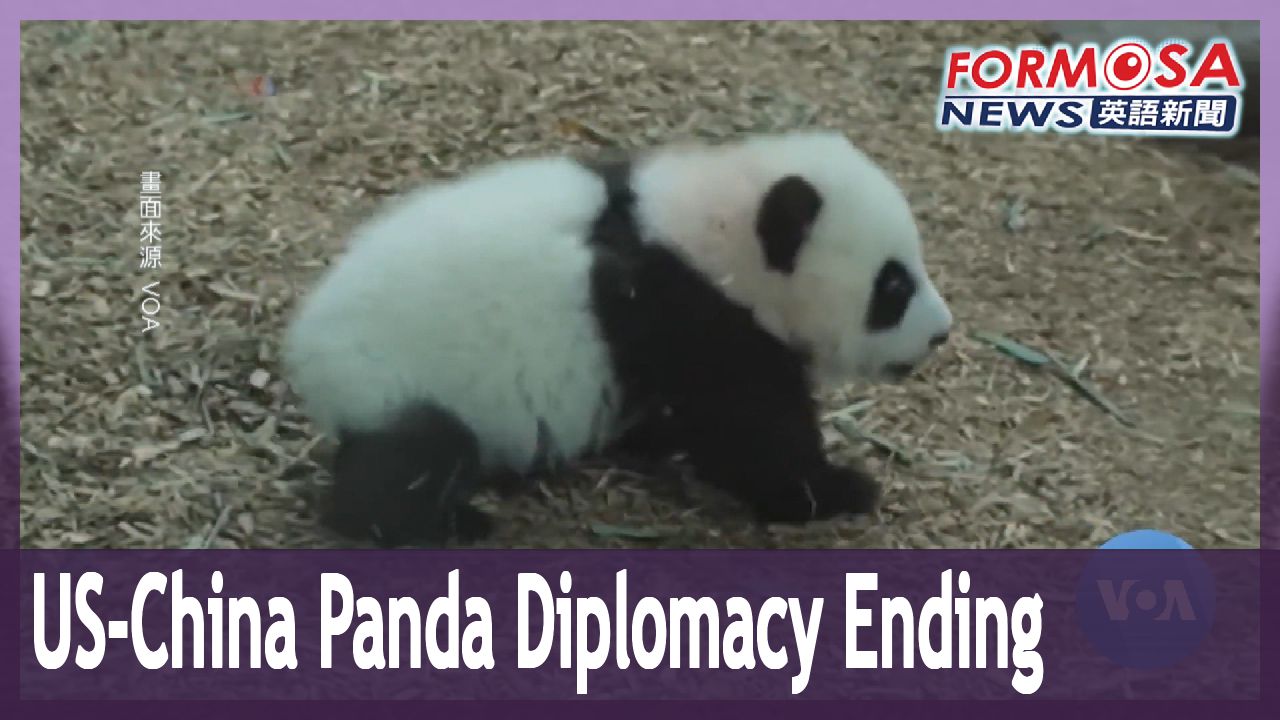
The giant pandas that have been living at the Smithsonian’s National Zoo in Washington for 23 years will return to China by the end of this year. What kind of diplomatic moves were taken to bring the animals to the U.S. and how politics and new conservation strategies might impact the species’ future? Voice of America’s Veronica Balderas Iglesias investigates.
Hsing-Hsing and Ling-Ling arrived in the United States in 1972. The rare gift from China was a sign of not only goodwill but also soft power after then-U.S. President Richard Nixon and first lady Pat Nixon had paid a historic state visit to the East Asian country.
In 1984, when the giant panda was declared an endangered species, Beijing began lending bears instead of gifting them. Ten-year agreements with a price tag of up to 10 million dollars were put in place.
Dennis Wilder
Georgetown University Asian Studies
They decided that in order to help panda conservation in China, they would charge for the pandas. Zoos were willing to pay these kinds of prices because, as I said, they are a major attraction.
Under one of those research and breeding agreements, which would later be extended several times, panda pair Mei Xiang and Tian Tian began living at the Smithsonian’s National Zoo in Washington in December 2000. They are not the only pandas who have made the U.S. their temporary home.
Deborah Seligsohn
Former counselor at US embassy in Beijing
We had a pair at the Atlanta Zoo. The Memphis and San Diego pandas have already gone back to China.
The Washington-based giant pandas and their cub are now also expected to depart to China by the end of this year. There’s been some speculation that economic, political and security tensions between the U.S. and China might be at play in the non-extension of the agreements.
Chinese authorities did not reply to VOA’s repeated requests for comment. The success of breeding and other conservation efforts in U.S. zoos, however, should not be overlooked, some analysts say. The zoos have helped improve the species’ status from “endangered” to “vulnerable.” But others say it is time for a new strategy.
Deborah Seligsohn
Former counselor at US embassy in Beijing
I think the public understands more now than it did back then that zoos are not necessarily the way you preserve animals in the wild.
The Smithsonian’s National Zoo is planning to hold several events in Washington to bid farewell to its pandas. Zoo Atlanta has also announced its four giant pandas will return to China in 2024.
Veronica Balderas Iglesias, VOA News, Washington.
|Taiwan News
For more Taiwan news, tune in:
Sun to Fri at 9:30 pm on Channel 152
Tue to Sat 1 am on Channel 53
華盛頓動物園大貓熊 年底前將返回中國
2023-09-15
在華盛頓史密森尼國家動物園生活了23年的大貓熊,將於年底返回中國。VOA記者探討了牠們被送至美國的外交意涵,以及政治局勢和新的保育策略如何影響著牠們的未來。
1972年,大貓熊「興興」與「玲玲」被中國當成禮物送到美國,牠們代表著中國的善意及軟實力。當時的美國總統理查·尼克森和夫人帕特•尼克森,完成了歷史性的外交突破,親自訪問中國。
1984年,大貓熊被列為”瀕危”物種,中國停止外贈大貓熊,改為以出借的名義輸出各國。10年高達1000萬美元的合約應運而生。
[[喬治城大學中國研究專家 偉德寧]]
“中國以資助大貓熊保育為由,收費出借大貓熊。動物園願意支付這樣的價格,因為大貓熊是他們主要的賣點”
作為研究繁殖計畫的一部分,大貓熊分批被中國送往國外。大貓熊「美香」及「添添」,2000年12月開始定居位於華盛頓的史密森尼國家動物園。而生活在美國的大貓熊並不只有牠們。
[[前美國駐北京大使館顧問 塞利格森]]
“我們還有一對在亞特蘭大動物園。孟菲斯動物園和聖地牙哥動物園的大貓熊已經送回中國”
華盛頓的大貓熊及孩子也有望在今年底返回中國。外界認為,美中兩國在經濟、政治和國防安全層面的緊張局面,是協議不再延長的導火線。
美國之音多次詢問,中國政府都沒有做出回應。有分析師認為,美國動物園在繁殖和其他保育工作上,起到關鍵的作用,幫助大貓熊的處境從”瀕危”降至”易危”。但也有人認為,是該做出改變了。
[[前美國駐北京大使館顧問 塞利格森]]
“我認為,現在大家都明白,動物園不一定是保護野生動物的好地方”
史密森尼國家動物園計劃在華盛頓舉行幾場活動,向大貓熊說再見。亞特蘭大動物園也宣布,園內四隻大貓熊將於2024年返回中國。
更多新聞內容,請鎖定:
民視台灣台(152頻道)週日至週五晚上9:30
民視新聞台(53頻道)週二至週六凌晨1:00
Related News