Traditional Bunun cereal crop revitalized
Traditional Bunun cereal crop revitalized
2024-08-09
Taiwan oil millet is a unique cereal crop traditionally grown by the Bunun people. Unfortunately, as diet Westernized and the crop’s economic value remained low, it nearly became extinct. But Wuling Village in Taitung’s Yanping Township invested in a restoration plan. After 11 years, Taiwan oil millet is finally being harvested again. Now tourists can enjoy foods made from oil millet and the Bunun tribe’s culinary culture is being passed on.
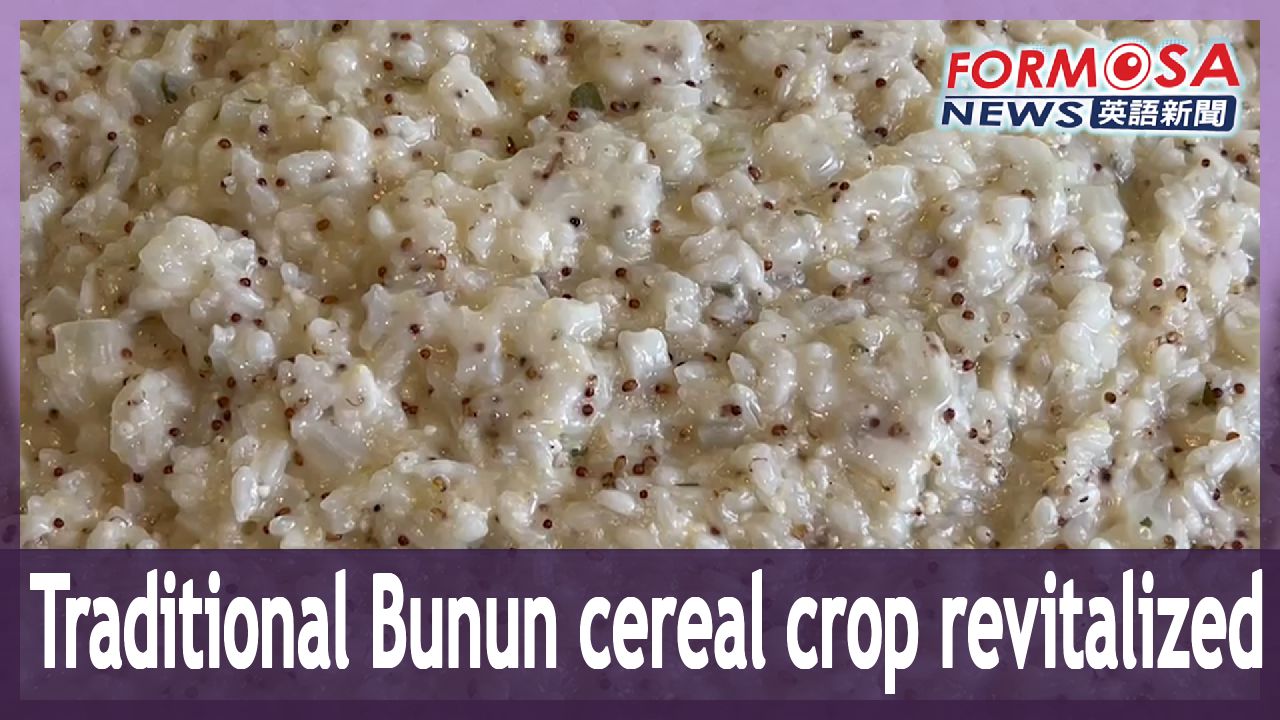
This sweet potato jam next to the bagels is sprinkled with red and white grains, not only adding to its presentation, but also increasing its nutritional value. The grains are red quinoa, which is high in protein, and Taiwan oil millet, which is known as the crop of the future.
Chiu Chih-wei
Wuling resident
It has lot of Omega-3, Omega-9, and squalene, and is supported by plant-based fish liver oil, which makes it great for planting in our village. It’s also resistant to drought and floods.
Passing down their traditional foods, the Bunun tribe makes all kinds of delicious food using Taiwan oil millet.
Tourist
The ingredients are natural, not overly processed. It has a flavor you can’t experience elsewhere, and its ingredients are unique.
Biung Wang
Singer
What I am eating now is oil millet risotto with foxtail millet and red quinoa. It’s a very healthy dish made from grains.
Although it’s now regaining popularity, Taiwan oil millet disappeared for over 60 years. As diet Westernized and its economic value remained low, it was nearly forgotten. But in 2012, Academia Sinica made a plan to domesticate wild oil millet. After 11 years of searching, researching, and selecting varieties, the crop was finally revived in Taitung’s Wuling Village. Biung Wang, a Bunun singer and Golden Melody Award winner, hopes that this food will be integrated into daily life.
Biung Wang
Singer
We hope to return to the Bunun people’s original way of life, including food, clothing, housing, and transportation, and then revive and share our culture from this foundation. This way, young people will understand what previous generations ate and follow in their footsteps.
Chiu Chih-wei
Wuling resident
There was an elder in our village who was always searching for the flavor of his childhood. He was searching for Taiwan oil millet. When we finally found it, we learned that he passed away a month earlier. So, we say this grain has the taste of memory in the hopes that it will bring back the grains from our early days.
After spending years rediscovering their traditional ingredient, now anyone can experience the unique flavors of Bunun cuisine.
For more Taiwan news, tune in:
Sun to Fri at 9:30 pm on Channel 152
Tue to Sat at 1 am on Channel 53
推動台灣特有穀物「油芒」 武陵部落推出各式油芒料理
2024-08-09
台灣特有種穀物「油芒」是布農族的傳統作物,但因為飲食西化、經濟價值低等因素瀕臨絕跡,台東縣延平鄉武陵部落投入復育計畫,花了11年終於復耕,另外,族人推出各式油芒料理,不僅成功擄獲遊客味蕾,也讓部落的專屬味道,得以傳承推廣。
貝果兩旁的地瓜沾醬上,灑滿紅色、白色穀物,不僅增加餐點美感,也讓營養價值,更上一層,因為裡頭除了蛋白質超高的紅藜,還有被譽為未來作物的油芒。
[[武陵部落青年 邱智偉]]
“它的Omega-3、Omega-9很豐富,有植物的魚肝油支撐,角鯊烯的成分也很高,那很適合種植在我們部落,而且它又耐乾旱、耐淹水”
布農族人為了傳承食育文化,將油芒入菜,用各種料理方式,將油芒化身美味佳餚。
[[遊客]]
“食材來自於天然的,沒有過度的加工,然後吃起來的口味是在外面吃不到的,還有它的食材是很有特殊性”
[[金曲歌王 王宏恩]]
“我現在在吃的就是所謂的油芒燉飯,搭配小米、紅藜,很健康的,五穀的一個料理”
擄獲遊客味蕾的油芒,其實消失超過一甲子。因為飲食西化、經濟價值低等因素,被眾人遺忘。2012年,中研院提出野生油芒馴化計畫,花了11年尋找、選種、復育、研究,終於在台東武陵部落成功復育。布農族金曲歌王王宏恩,希望這項飲食文化能從生活扎根。
[[金曲歌王 王宏恩]]
“我們部落強調,希望回到我們布農族原來的這種,食、衣、住、行,然後去讓文化從這個地方,再去做附贈,去做付出,讓小朋友知道說,原來老人家吃什麼,那我們現在也跟著他們吃”
[[武陵部落青年 邱智偉]]
“我們部落的(一位)老人家,他在部落一直想要找尋小時候吃過的味道,他一直想要吃油芒的味道,後來我們找到的時候,要送回去的時候,他早在一個月前就過世了,所以我們就把這樣子的穀類叫做記憶的味道,那我們也是希望說,用記憶的味道,把我們早期的穀類找回來”
耗時多年,找回祖先記憶中的味道,也讓其他人能夠品嘗到,部落的專屬美味。
更多新聞內容,請鎖定:
民視台灣台(152頻道)週日至週五晚上9:30
民視新聞台(53頻道)週二至週六凌晨1:00
Related News