Supplier recycles discarded clothes into new plastic products
Supplier recycles discarded clothes into new plastic products
2024-08-09
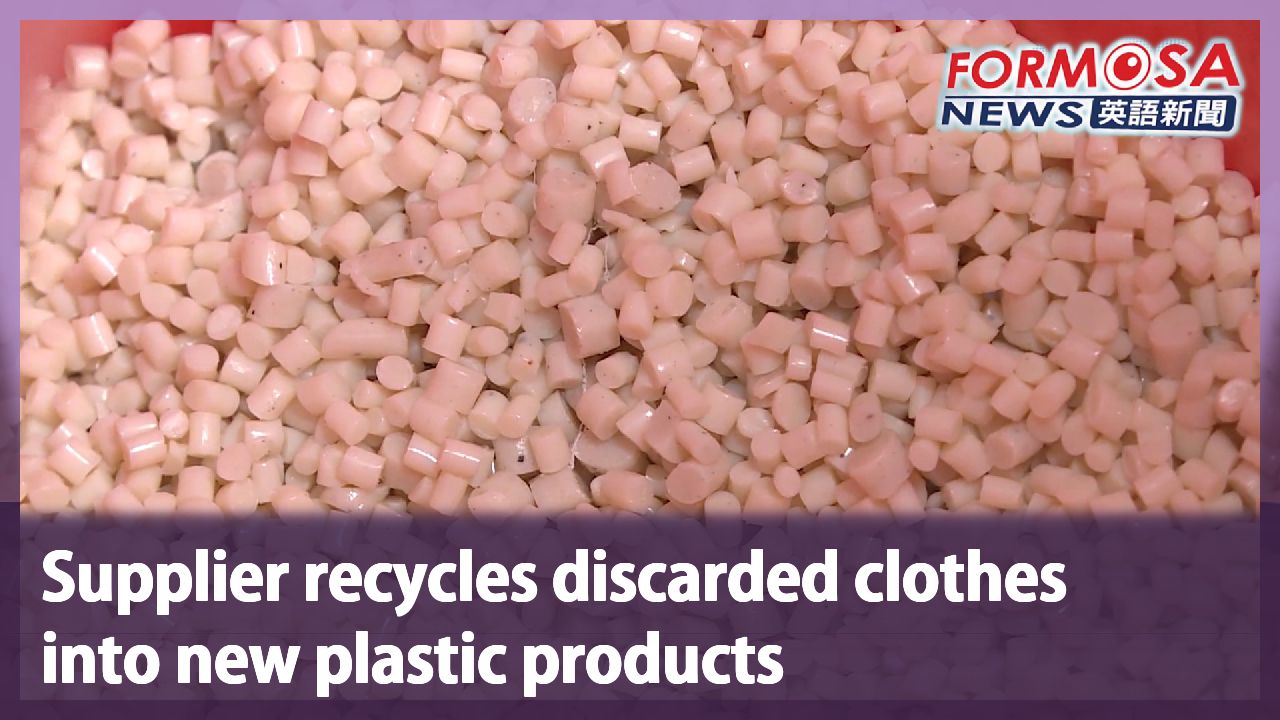
One local supplier has been providing international fashion brands with shelves and display props for 40 years. Responding to the rise of ESGs, it cooperated with the Industrial Technology Research Institute to apply the ideals of a circular economy. After two to three years of R&D, it developed a way to transform discarded clothes into plastic pellets that can be made into display shelves and sunglasses, combining sustainability with fashion and practicality.
These colorful pens have a distinct fiber-like texture. They were made from recycled fabrics that have been given new life.
Cheng Chu-yun
FTV reporter
Recycled materials have many uses, like this hanger that was made from recycled fabric. Its marble pattern wasn’t created with any dyes, but occurred naturally when discarded fabrics were combined using injection molding technology.
From pens and hangers to sunglasses, these products are all made from recycled fabric. This supplier has been providing international fashion brands with customized display props for 40 years. Following sustainability trends and the ideals of a circular economy, its client wanted to find new ways to recycle old materials.
Yang Hsi-tsang
International supplier chair
They asked us to figure out how to reduce, reuse, and recycle their materials. They asked us, the supplier, to find a way to repurpose display props and large amount of clothes to meet ESG requirements.
Responding to this request, Yang Hsi-tsang worked with ITRI to recycle out-of-season and discarded clothing. Through crushing, fiber extraction, fusion, and granulation, the materials were made into plastic pellets.
Yang Hsi-tsang
International supplier chair
Once we turn them into plastic pellets, we can mold them into sunglasses or hangers. Using extrusion, we can turn them into blocks for construction. Overall, it took us two to three years of development. In terms of cost, we spent tens of millions.
Mao I-hui
ITRI industrial service center
This time, we mainly provided the technology for modifying materials. Different materials can be fused together with this technology, creating a new kind of material.
According to the Ministry of Environment, from 2016 to 2021 the amount of recycled clothing in Taiwan increased from 49,000 tons to 76,000 tons, a growth of nearly 60%. After nearly three years of R&D, this supplier traded acrylic and fiberglass materials for its client’s discarded clothes. Using ITRI’s technology, it transformed this clothing into new materials that can be used to make shelves, hangers, and other commercial products, showing the circular economy in action.
For more Taiwan news, tune in:
Sun to Fri at 9:30 pm on Channel 152
Tue to Sat at 1 am on Channel 53
廢棄物商機! 精品供應商落實"循環經濟"新美學
2024-08-09
有40年的在地供應商,長期提供國際服飾品牌層架和展示道具,面對ESG概念興起,為了落實循環經濟,他們和工研院合作,歷經兩、三年時間研發,成功將廢棄布料回收改質,變成可多元使用的塑膠母粒,譬如再製成層板,可用來展示商品,做成太陽眼鏡,也能放在店裡販售,兼具永續、時尚與實用。
色彩繽紛的商務筆,每支顏色都不同,握在手上,有纖維觸感,原來是廢棄布料,回收後華麗變身。
[[民視記者 鄭筑勻]]
“再生材質應用多,像是手上的這支衣架,就是使用回收布料所製成,上頭的大理石紋,並沒有經過任何的重新染色,而是在一開始,使用射出技術做出衣架模型時,融合布料自然生成。”
從商務筆、衣架到太陽眼鏡外框,都是廢棄布料再利用的成果,有40年的在地供應商,長期提供國際服飾品牌,客製化的展場陳列道具。隨著永續意識抬頭,循環經濟成為顯學,客戶拋出考題,也讓供應商接招,開啟改革之路。
[[國際精品供應商董事長 楊錫濸]]
“他叫我們去想辦法,把他這個東西Reduce、Reuse,然後Recycle,重新運用,把他的道具的東西,他陳列的東西,或者是他製造那麼多衣服,這些東西怎麼樣來符合ESG的要求,就找我們供應商要找出一個辦法。”
在引薦之下,供應商董事長楊錫濸,跟工研院對接上,把過季和廢棄的衣物回收集中,經過粉碎、抽絲、融合、造粒等,變成塑膠母粒,應用很多元。
[[國際精品供應商董事長 楊錫濸]]
“我們做成粒子以後,塑膠粒的時候的話,可以射出太陽眼鏡,我們可以射出衣架,那假如說真的要用擠出的話,我們可以擠出木板出來,做建材。那前後我們來講的話,應該是花了兩三年的時間,來去研發這些東西,那你說花錢的話,我們可能花了數千萬。”
[[工研院產服中心副組長 毛奕惠]]
“這一次主要是提供給他,這個介質的改質的技術。這個介質改質技術就是說,透過這個技術可以讓,不同材料的介面可以做一個融合,產生出新的一個材料的配方。”
根據環保署統計,台灣的舊衣回收量,6年間從4.9萬公噸成長到7.6萬公噸,漲幅近6成。歷經2、3年的研發,供應商捨棄壓克力和玻璃纖維材料,將客戶的廢棄衣物,結合工研院技術,回收重新做成層板;其他再生材質做成的產品,也能放在店面販售,讓循環經濟得以實踐。
更多新聞內容,請鎖定:
民視台灣台(152頻道)週日至週五晚上9:30
民視新聞台(53頻道)週二至週六凌晨1:00
Related News