Bunun village a haven for bean biodiversity
Earlier this year, Taiwan deposited seeds from 170 varieties of millet at the Global Seed Vault in the Arctic Circle. It was part of a seed preservation project to ensure crop biodiversity. But seeds don’t have to go across the world to be preserved. In the small Indigenous town of Lamuan in Hualien, crop diversity is preserved locally. Bunun farmers have gone to great lengths to grow bean varieties that faced the threat of extinction at one time. Thanks to them, the traditions associated with the beans remain alive. Our Sunday special report.
From Hualien’s famous Yuli Township, head west along Provincial Highway 30 into Zhuoxi to reach Lamuan, a little-known Bunun village.
Surrounded by mountains on all sides, Lamuan feels like an idyllic paradise. Its inhabitants, the Bunun people, have settlements on both sides of the Central Mountain Range. They are known for their agility and their nomadic lifestyle and are considered the custodians of the mountains.
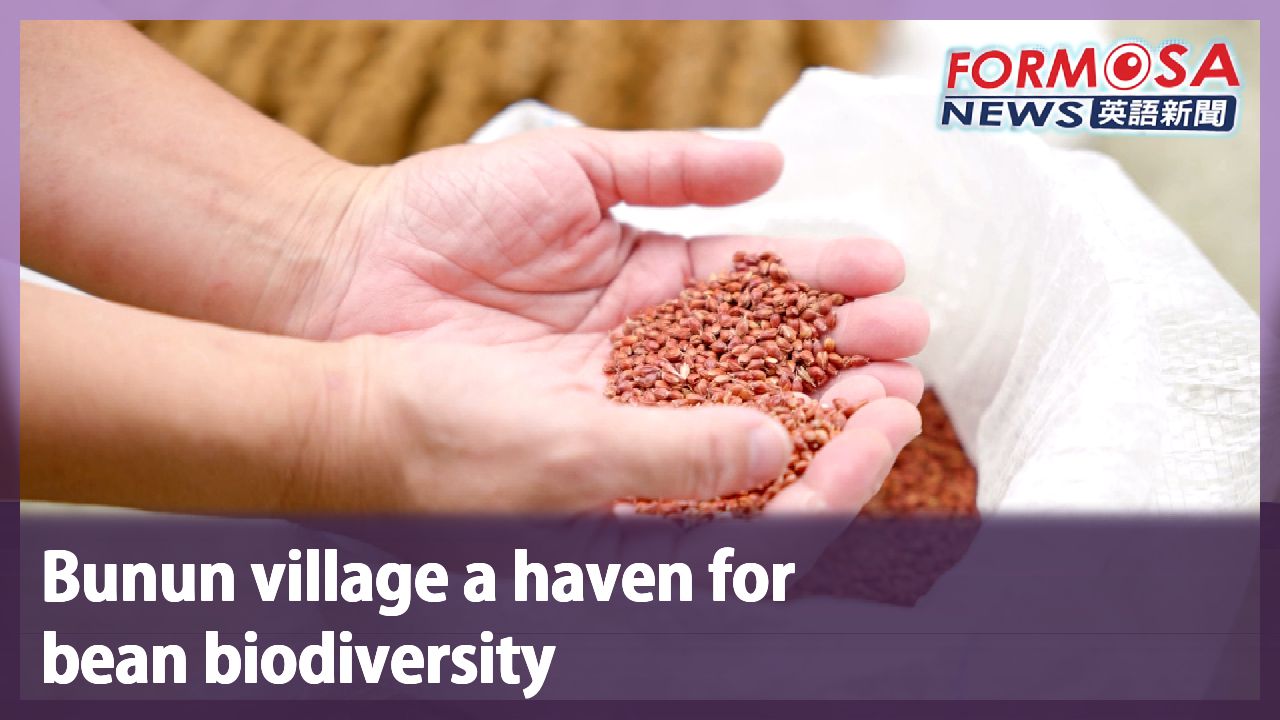
In early June, the rice fields here turn golden yellow. Though rice is now the main staple food for locals, in the past, drought-tolerant millet was the grain of choice. As the Bunun often move home, their fields contain treasures that are easy to carry around: beans of every kind.
In the Bunun language, the word for mother is “tina.” That’s how many women in Lamuan, including 78-year-old farmer Tnanbas Islituan, are affectionately referred to. Though her fields may appear unorganized to the untrained eye, they are actually very orderly. They are packed with many unique legume varieties cultivated by the Bunun people.
Tnanbas Islituan
Lamuan resident
Pulavaz papia is what we call lima beans. I grow three kinds, whereas others grow just one kind. I have three varieties: black, purple and white.
The smiling woman joining her in the fields is Chan Yu-chun, from the Tse-Xin Organic Agriculture Foundation. She moved to Lamuan a decade ago in 2014, after discovering that each tina in the village had her own set of ancestral beans. For them, tending the crops is just part of daily life. But this rich bean tradition was at risk of disappearing.
Chan Yu-chun
Tse-Xin Organic Agriculture Foundation
In our survey we found that people aged 60 and up could name every single bean. But people in their 50s – it was shocking, people in their 50s barely knew what they were called.
Another person who realized the importance of conserving these unique crop varieties is Tanifu Islituan. She decided to move back to the village and leave no field unexplored.
Tanifu Islituan
Lamuan bean club head
Back then I didn’t know just how many types of beans we, the Bunun, had. After the bean classes started, I realized that there were so many varieties. We have to preserve them. It’s really important that we protect these varieties.
A plan to preserve the crop varieties was launched before it became too late. In 2018, Lamuan started organizing bean club gatherings where the tinas of the village could exchange their precious beans and preserve them. At the beginning there were only 19 different bean varieties in circulation, but through the years their number increased to 28. Nowadays, with so many places to get food from, what’s the point of preserving these ancestral beans?
In May 2024, the Taiwan Polar Institute at National Central University deposited seeds from 170 millet species at the Svalbard Global Seed Vault in the Arctic Circle. It was the 26th shipment of seeds sent out from Taiwan, which is doing its part to ensure the world’s biodiversity.
Upaw Tjarupeljan
Paiwan representative
We hope that these seeds can still be a blessing perhaps 1,000 or 2,000 years from now. A blessing of life and sustenance.
Representatives from the Paiwan people in Pingtung’s Sandimen Township contributed millet seeds to the vault. The gift was of special significance, as the United Nations had designated the year 2023 as the International Year of Millets. The crop’s resistance to droughts makes it especially capable of adapting to climate change. The recovery and preservation of millet and other crops cultivated by Indigenous people is crucial to promote sustainability in agriculture, and Taiwan is taking action to further the cause.
Taupas Takludun
Organic farmer in Lamuan
From here onward, it’s all my family’s organic fields. On the edges of the fields, my mother grows millet and red quinoa... There are also runner beans and other legumes.
For many years now, the residents of Lamuan have cultivated organic rice, learning to coexist with weeds and pests. The edges of the fields have become a bustling showcase of the bean varieties grown by the local tinas.
Langus Ismaqasan
Lamuan resident
This mung bean is a traditional variety. It’s not like the mung beans you can find in the street market. It’s a bean used since ancient times and it’s very small. It tastes the same, it just looks different.
In other places, the seeds are conserved away from their original location. But in Lamuan, the residents conserve the plants by keeping them alive in their natural environment.
Chan Yu-chun
Tse-Xin Organic Agriculture Foundation
We aren’t just preserving the genes of the seeds, or the seeds themselves. What’s more important is that we’re preserving all the culture associated with them. These traditions are like seeds. One generation sows the seeds for the next generation to eat. As Tanifu mentioned, it’s vital that people eat and enjoy the things we grow.
Freshly baked millet scones are slathered with a dollop of white bean paste. It’s a treat for the senses. There’s also chewy mochi stuffed with black bean paste. Tanifu uses the locally grown beans to create delightful desserts.
Chan Yu-chun
Tse-Xin Organic Agriculture Foundation
So why do we try to preserve the seeds? Because they keep evolving amid the changing environment. As long as you keep planting them over and over again they’ll keep evolving, because they aren’t dead. What Tanifu is doing is also keeping the seeds alive. All the knowledge about the beans can be adapted and applied to the modern world.
For many years now, the participants of the seed conservation program have adopted organic farming practices to protect biodiversity. Together, they steward land that they inherited from their ancestors, living in harmony with nature. And nature is giving back.
Several years ago out in the fields, a local farmer found a small white fish that he remembered from his childhood in Lamuan. The surprising discovery attracted the attention of a research institution, which launched an investigation.
Yang Cheng-hsiung
Taiwan Biodiversity Research Institute
While doing fieldwork we would also pay attention to any signs of fish in the area, checking if there are any fish present or not. As you pass by, you can see the fish swimming about.
The fish in question is the Aphyocypris kikuchii, a species endemic to Taiwan. It is listed as a nationally endangered species in the “Red Lists of Freshwater Fishes of Taiwan.” Nowadays the fish can be found in Hualien and Taitung, with a large population living in the fields of Lamuan.
From a 2017 survey to the present day, the number of Aphyocypris kikuchii in Lamuan has remained at around 1,500 individuals, indicating stability in the population.
Yang Cheng-hsiung
Taiwan Biodiversity Research Institute
If farmers adopt more environmentally friendly techniques, the fish can continue living in the fields, and surviving in water channels and ponds. The habitat has to be preserved in order for the fish to be able to survive in such places.
The ecological diversity in Lamuan is the result of many years of environmentally friendly practices by local residents. To allow the Aphyocypris kikuchii to thrive in their fields, the farmers in Lamuan have set aside the edges of their rice paddies to serve as ecological ditches.
Taupas Takiludun
Organic farmer in Lamuan
By digging out this ditch, we ensure that the Aphyocypris kikuchii can continue living. We don’t want them to die off due to a lack of water. That’s why we’re creating this ecological ditch.
Yang Cheng-hsiung
Taiwan Biodiversity Research Institute
The farmers here are so sweet. Turning their land into these so-called ecological ditches means they can no longer use it to grow rice. Economically speaking, that’s a loss for them. But even so, they are willing to make the sacrifice for the sake of the fish.
At Zhuoqing Elementary School in Hualien’s Zhuoxi Township, about 98% of the students are Bunun. In 2023, the school allocated some space on campus to grow millet and legumes. Tinas from the village regularly make visits to the school to ensure the culture and traditions associated with the beans are kept alive.
The legumes passed down through generations of Bunun people have to be understood, cultivated, and more importantly, eaten. The only way to ensure the beans are kept around is by making sure they are a tasty part of the culinary culture and memory. Now 27 elementary schools in southern Hualien serve millet and beans in their daily lunches.
Chan Yu-chun
Tse-Xin Organic Agriculture Foundation
This year we combined millet and organic brown rice from Walami in Yushan to make puffed rice snacks. The kids loved them.
A bean stew made with love simmers in the pot.
Every bean contains the culture of the Bunun and the hopes of the local tinas. From local efforts to international projects, seed preservation programs aim to get more people involved to pass these invaluable traditions down and build a sustainable future.
For more Taiwan news, tune in:
Sun to Fri at 9:30 pm on Channel 152
Tue to Sat at 1 am on Channel 53
2024-10-06