Bunun village a haven for bean biodiversity
Bunun village a haven for bean biodiversity
2024-10-06
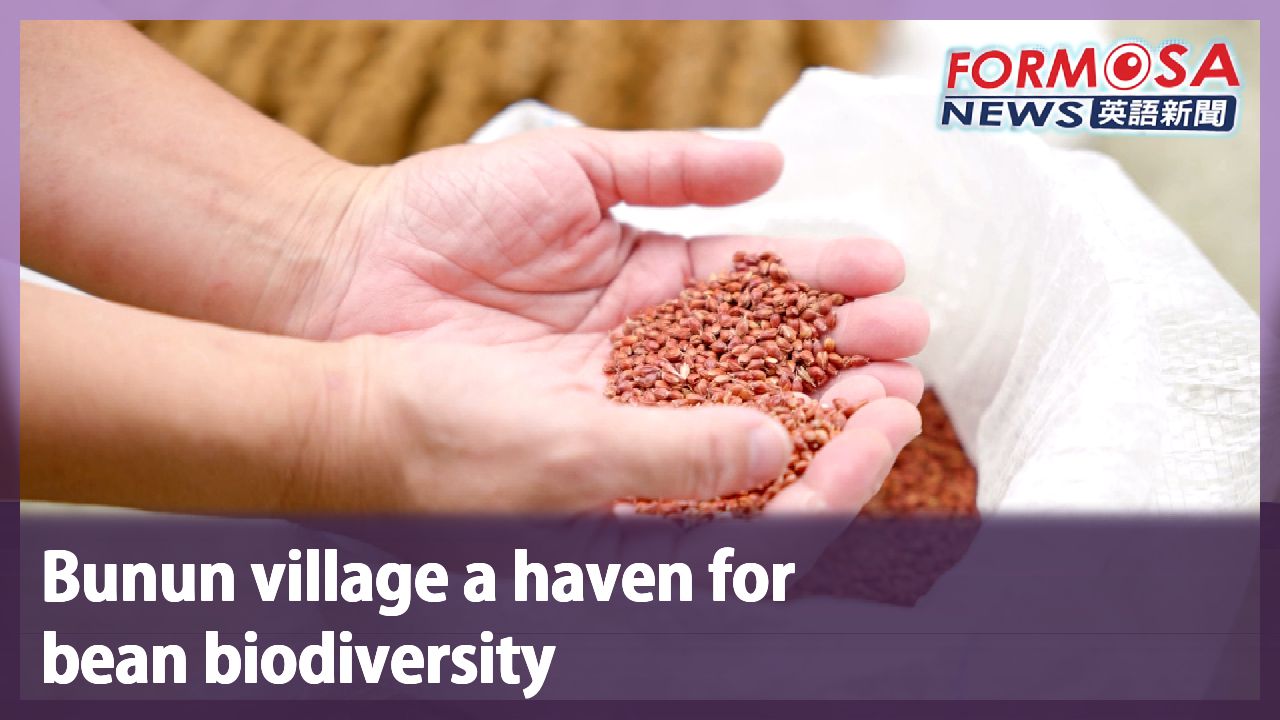
Earlier this year, Taiwan deposited seeds from 170 varieties of millet at the Global Seed Vault in the Arctic Circle. It was part of a seed preservation project to ensure crop biodiversity. But seeds don’t have to go across the world to be preserved. In the small Indigenous town of Lamuan in Hualien, crop diversity is preserved locally. Bunun farmers have gone to great lengths to grow bean varieties that faced the threat of extinction at one time. Thanks to them, the traditions associated with the beans remain alive. Our Sunday special report.
From Hualien’s famous Yuli Township, head west along Provincial Highway 30 into Zhuoxi to reach Lamuan, a little-known Bunun village.
Surrounded by mountains on all sides, Lamuan feels like an idyllic paradise. Its inhabitants, the Bunun people, have settlements on both sides of the Central Mountain Range. They are known for their agility and their nomadic lifestyle and are considered the custodians of the mountains.
In early June, the rice fields here turn golden yellow. Though rice is now the main staple food for locals, in the past, drought-tolerant millet was the grain of choice. As the Bunun often move home, their fields contain treasures that are easy to carry around: beans of every kind.
In the Bunun language, the word for mother is “tina.” That’s how many women in Lamuan, including 78-year-old farmer Tnanbas Islituan, are affectionately referred to. Though her fields may appear unorganized to the untrained eye, they are actually very orderly. They are packed with many unique legume varieties cultivated by the Bunun people.
Tnanbas Islituan
Lamuan resident
Pulavaz papia is what we call lima beans. I grow three kinds, whereas others grow just one kind. I have three varieties: black, purple and white.
The smiling woman joining her in the fields is Chan Yu-chun, from the Tse-Xin Organic Agriculture Foundation. She moved to Lamuan a decade ago in 2014, after discovering that each tina in the village had her own set of ancestral beans. For them, tending the crops is just part of daily life. But this rich bean tradition was at risk of disappearing.
Chan Yu-chun
Tse-Xin Organic Agriculture Foundation
In our survey we found that people aged 60 and up could name every single bean. But people in their 50s – it was shocking, people in their 50s barely knew what they were called.
Another person who realized the importance of conserving these unique crop varieties is Tanifu Islituan. She decided to move back to the village and leave no field unexplored.
Tanifu Islituan
Lamuan bean club head
Back then I didn’t know just how many types of beans we, the Bunun, had. After the bean classes started, I realized that there were so many varieties. We have to preserve them. It’s really important that we protect these varieties.
A plan to preserve the crop varieties was launched before it became too late. In 2018, Lamuan started organizing bean club gatherings where the tinas of the village could exchange their precious beans and preserve them. At the beginning there were only 19 different bean varieties in circulation, but through the years their number increased to 28. Nowadays, with so many places to get food from, what’s the point of preserving these ancestral beans?
In May 2024, the Taiwan Polar Institute at National Central University deposited seeds from 170 millet species at the Svalbard Global Seed Vault in the Arctic Circle. It was the 26th shipment of seeds sent out from Taiwan, which is doing its part to ensure the world’s biodiversity.
Upaw Tjarupeljan
Paiwan representative
We hope that these seeds can still be a blessing perhaps 1,000 or 2,000 years from now. A blessing of life and sustenance.
Representatives from the Paiwan people in Pingtung’s Sandimen Township contributed millet seeds to the vault. The gift was of special significance, as the United Nations had designated the year 2023 as the International Year of Millets. The crop’s resistance to droughts makes it especially capable of adapting to climate change. The recovery and preservation of millet and other crops cultivated by Indigenous people is crucial to promote sustainability in agriculture, and Taiwan is taking action to further the cause.
Taupas Takludun
Organic farmer in Lamuan
From here onward, it’s all my family’s organic fields. On the edges of the fields, my mother grows millet and red quinoa... There are also runner beans and other legumes.
For many years now, the residents of Lamuan have cultivated organic rice, learning to coexist with weeds and pests. The edges of the fields have become a bustling showcase of the bean varieties grown by the local tinas.
Langus Ismaqasan
Lamuan resident
This mung bean is a traditional variety. It’s not like the mung beans you can find in the street market. It’s a bean used since ancient times and it’s very small. It tastes the same, it just looks different.
In other places, the seeds are conserved away from their original location. But in Lamuan, the residents conserve the plants by keeping them alive in their natural environment.
Chan Yu-chun
Tse-Xin Organic Agriculture Foundation
We aren’t just preserving the genes of the seeds, or the seeds themselves. What’s more important is that we’re preserving all the culture associated with them. These traditions are like seeds. One generation sows the seeds for the next generation to eat. As Tanifu mentioned, it’s vital that people eat and enjoy the things we grow.
Freshly baked millet scones are slathered with a dollop of white bean paste. It’s a treat for the senses. There’s also chewy mochi stuffed with black bean paste. Tanifu uses the locally grown beans to create delightful desserts.
Chan Yu-chun
Tse-Xin Organic Agriculture Foundation
So why do we try to preserve the seeds? Because they keep evolving amid the changing environment. As long as you keep planting them over and over again they’ll keep evolving, because they aren’t dead. What Tanifu is doing is also keeping the seeds alive. All the knowledge about the beans can be adapted and applied to the modern world.
For many years now, the participants of the seed conservation program have adopted organic farming practices to protect biodiversity. Together, they steward land that they inherited from their ancestors, living in harmony with nature. And nature is giving back.
Several years ago out in the fields, a local farmer found a small white fish that he remembered from his childhood in Lamuan. The surprising discovery attracted the attention of a research institution, which launched an investigation.
Yang Cheng-hsiung
Taiwan Biodiversity Research Institute
While doing fieldwork we would also pay attention to any signs of fish in the area, checking if there are any fish present or not. As you pass by, you can see the fish swimming about.
The fish in question is the Aphyocypris kikuchii, a species endemic to Taiwan. It is listed as a nationally endangered species in the “Red Lists of Freshwater Fishes of Taiwan.” Nowadays the fish can be found in Hualien and Taitung, with a large population living in the fields of Lamuan.
From a 2017 survey to the present day, the number of Aphyocypris kikuchii in Lamuan has remained at around 1,500 individuals, indicating stability in the population.
Yang Cheng-hsiung
Taiwan Biodiversity Research Institute
If farmers adopt more environmentally friendly techniques, the fish can continue living in the fields, and surviving in water channels and ponds. The habitat has to be preserved in order for the fish to be able to survive in such places.
The ecological diversity in Lamuan is the result of many years of environmentally friendly practices by local residents. To allow the Aphyocypris kikuchii to thrive in their fields, the farmers in Lamuan have set aside the edges of their rice paddies to serve as ecological ditches.
Taupas Takiludun
Organic farmer in Lamuan
By digging out this ditch, we ensure that the Aphyocypris kikuchii can continue living. We don’t want them to die off due to a lack of water. That’s why we’re creating this ecological ditch.
Yang Cheng-hsiung
Taiwan Biodiversity Research Institute
The farmers here are so sweet. Turning their land into these so-called ecological ditches means they can no longer use it to grow rice. Economically speaking, that’s a loss for them. But even so, they are willing to make the sacrifice for the sake of the fish.
At Zhuoqing Elementary School in Hualien’s Zhuoxi Township, about 98% of the students are Bunun. In 2023, the school allocated some space on campus to grow millet and legumes. Tinas from the village regularly make visits to the school to ensure the culture and traditions associated with the beans are kept alive.
The legumes passed down through generations of Bunun people have to be understood, cultivated, and more importantly, eaten. The only way to ensure the beans are kept around is by making sure they are a tasty part of the culinary culture and memory. Now 27 elementary schools in southern Hualien serve millet and beans in their daily lunches.
Chan Yu-chun
Tse-Xin Organic Agriculture Foundation
This year we combined millet and organic brown rice from Walami in Yushan to make puffed rice snacks. The kids loved them.
A bean stew made with love simmers in the pot.
Every bean contains the culture of the Bunun and the hopes of the local tinas. From local efforts to international projects, seed preservation programs aim to get more people involved to pass these invaluable traditions down and build a sustainable future.
For more Taiwan news, tune in:
Sun to Fri at 9:30 pm on Channel 152
Tue to Sat at 1 am on Channel 53
台灣送小米種原到北極!花蓮南安部落布農族迪娜傳承豆豆文化
2024-10-06
您知道什麼是「保種」嗎?今年5月,台灣將170種珍貴的小米種原,送往北極「世界種子庫」,就是希望為全球物種多樣性的保存,貢獻一分力量,尤其在極端氣候的考驗下,抗旱的小米或許有朝一日,能成為全球農業永續發展的解方。而除了「異地保種」之外,花蓮卓溪鄉南安部落還持續進行「現地保種」。因為當地布農族,保存著許多獨有的豆類品種,有些曾經一度面臨消失危機,但族人們努力找回這些豆豆,持續種植保種,還透過校園,傳承這些豆豆文化。為什麼他們要這麼做?又為當地帶來了什麼樣的改變呢?
從廣為人知的花蓮縣玉里鎮,延著台30線往西,進入花蓮縣卓溪鄉,來到比較少人知道的布農族聚落,「南安部落」。
南安部落四面環山,猶如世外桃源,布農族是生活在中央山脈兩側的原住民族,活動力強,頻繁遷徙,向來有「中央山脈守護者」的美譽。
六月初,飽滿的稻穗染黃大地,南安部落現在大多種植水稻,但早期主食以耐乾旱的小米為主,因應布農族遷徙的民族特性,族人的田裡,藏著方便攜帶的珍貴的寶石,就是各式各樣的豆豆。
布農族語中,媽媽叫迪娜(Tina),78歲的迪娜潘竹菊的農田,外行人看來雜亂無章,實際上井然有序,迪娜的豆豆田,暗藏許多布農族獨有的豆類。
[[布農族迪娜 潘竹菊]]
“Pulavaz Papia就是小萊豆。因為我種的有三種,人家種一種,我種了三種,黑的、紫色的、白的。”
笑得燦爛的詹于諄,是慈心有機農業發展基金會,駐點花蓮的專員,2014年進駐南安到現在10年了,她意外發現布農族裡每個迪娜都藏有祖傳的豆子,種豆豆是迪娜的日常,但珍貴的豆子,面臨消失危機。
[[慈心有機農業發展基金會專案經理 詹于諄]]
“我們當初的調查會發現,在部落裡面60歲以上的長者,可以講出這些豆豆的名字,可是50幾歲,很可怕哦,50幾歲這個世代,就幾乎講不太出來了”
意識到「保種」的重要性,從外地返鄉的布農族中生代吳紹琪,開始踏進迪娜的豆豆田。
[[南安豆豆班承接者 吳紹琪]]
“那時候我沒有想到說,我們布農族有那麼多豆,後來加了我們這個豆豆班之後,我才開始慢慢看說,哇原來種類那麼多,這個不保存不行,要一直繼續保種,這一塊真的很重要。”
「保種計畫」再不做就來不及,2018年南安部落成立了豆豆班,迪娜們紛紛拿出珍藏的種子,「以豆易豆」,讓當時僅存19種的豆類,近年陸續增加到28種。不過多數人共同的疑問是,現在食物來源這麼多,還需要保存傳統的豆類嗎,「保種」的意義在哪裡?
2024年5月底,中央大學極地研究中心,把170種小米種原,送往北極斯瓦爾巴,有「全球農業諾亞方舟」之稱的「世界種子庫」,這是台灣送出的第26箱種子,為全球種子多樣性貢獻一分心力。
[[排灣族代表 盧玉香]]
“我們期待這個種子,在未來也許一千年、兩千年之後,它能夠成為繼續的祝福,特別對生命,糧食的祝福。”
來自屏東山地門的排灣族代表,送出小米種原,選擇小米有其特殊意義,聯合國訂定2023年為國際小米年,面對極端氣候威脅,抗旱的小米,被視為氣候變遷下的重要作物。復育和保種小米和部落作物,是全球農業永續發展的關鍵 ,台灣持續推動。
[[花蓮南安部落有機農 林錫輝]]
“這邊開始就是我家的有機田 ,我媽都會在田埂,種一些小米 紅藜,花豆 豆豆之類那些”
多年來花蓮南安部落,力行有機水稻耕種,和雜草、昆蟲共生共存,這裡的田埂很熱鬧,成了布農族迪娜的豆豆舞台。
[[布農族迪娜 李菊妹]]
“這個綠豆是傳統的豆,不是街上的豆,是我們以前古時候傳統的豆,因為它特小。其實吃起來都一樣,其實都一樣,只是它的成長不一樣。”
有別於國際是「異地保種」,花蓮南安採取「現地保種」,適地適種 讓種子活著存在。
[[慈心有機農業發展基金會專案經理 詹于諄]]
“就是說我們這邊保存,不是只是這個種子的基因,也不是保存這個種子,而是包括保存它背後這一套的價值,還有更重要,他們也是種子,一代一代會再去種植會再去吃。剛剛紹琪提到一個很重要的事,種出來要有人吃,要有人喜歡吃”
剛烤好的小米司康,沾上白芸豆餡料,別有滋味,還有Q彈麻糬裡,包的是布農族的黑芸豆,中生代吳紹琪把迪娜的豆豆,變身成美味甜點。
[[慈心有機農業發展基金會專案經理 詹于諄]]
“剛剛講保種,為什麼保種重要,種子它會隨著環境一直進化演化,你只要一直種,重複在做這件事情,它不是死的,它會演化,所以像紹琪這樣,他們也是活生生的,他們也把這些豆豆的知識,在當代有做一些活化跟運用”
多年來保種計畫採有機耕作,族人努力維護生物多樣性,保有祖先留下的好山好水,人與生態友善共存,大自然給予的回饋很直接。
幾年前布農族農友,發現南安田區,出現了小時候曾看過的小白魚,這項驚喜,吸引了研究單位展開調查。
[[農業部生物多樣性研究所助理研究員 楊正雄]]
“我們之前放的時候,會順便觀察這一段有沒有魚影,有沒有魚在,因為你經過看到魚跑掉的樣子”
這種小魚,名叫「菊池氏細鯽」,全世界只有台灣有,因此又稱「台灣細鯽」,在淡水類紅皮書中,被列為「瀕危」等級,如今在花東出現蹤跡,南安田區數量最多。
從2017年調查到現在,花蓮南安的菊池氏細鯽,數量維持約1500隻,穩定存在。
[[農業部生物多樣性研究所助理研究員 楊正雄]]
“如果這個魚本身,如果需要可以維持在田裡面,或是在水圳、埤塘,這樣的環境去生存的話,其實牠確實需要農夫,對環境有再多一些友善的利用,保持一些棲地的環境,讓牠可以使用,牠才辦法留存在這個地方”
生態的多樣性,是南安部落多年來,友善土地的成果,為了讓嬌客菊池氏細鯽,能從大排悠游到田間,南安稻田邊刻意保留了生態溝。
[[花蓮南安部落有機農 林錫輝]]
“挖這條溝的意義是要讓菊池氏細鯽魚能延伸,不要讓它沒有水,讓細鯽死掉,所以我們才挖這條生態溝”
[[農業部生物多樣性研究所助理研究員 楊正雄]]
“這邊的農民其實滿可愛的,因為本身的土地,化成所謂的生態池,其實是不能再變成稻子的狀態,對他來講經濟上是有損失的,可是他們在某種程度上,會願意為了這條魚去做一些犧牲”
花蓮縣卓溪鄉的卓清國小,全校98%的孩子都是布農族。2023年校園內闢出空間,種起小米和豆類,迪娜定期進校園,為部落文化傳承,持續灌溉希望的種子。
布農老祖先傳下的各式豆類,要有人懂,有人種,更要有人吃,唯有進入飲食文化,讓味道在記憶中留香,保種傳承才能長久。現在花蓮南區,27所國中小的營養午餐裡,吃得到小米和豆豆。
[[慈心有機農業發展基金會專案經理 詹于諄]]
“今年我們就是把小米還有用玉山,玉山的瓦拉米的有機糙米,去做成爆米香,然後變成一個點心,小朋友 哇 吃得很開心”
這天迪娜煮了一鍋,用愛調味的豆豆湯。
每一顆豆豆裡 蘊藏著部落的文化,還有迪娜深刻的盼望,保種計畫從在地到國際,需要有更多人共同實踐,讓豆豆不失傳,環境永續,代代相傳。
更多新聞內容,請鎖定:
民視台灣台(152頻道)週日至週五晚上9:30
民視新聞台(53頻道)週二至週六凌晨1:00
Related News