Lentil-sized nurdles cause major pollution problems along Taiwan’s beaches
Lentil-sized nurdles cause major pollution problems along Taiwan’s beaches
2025-05-23
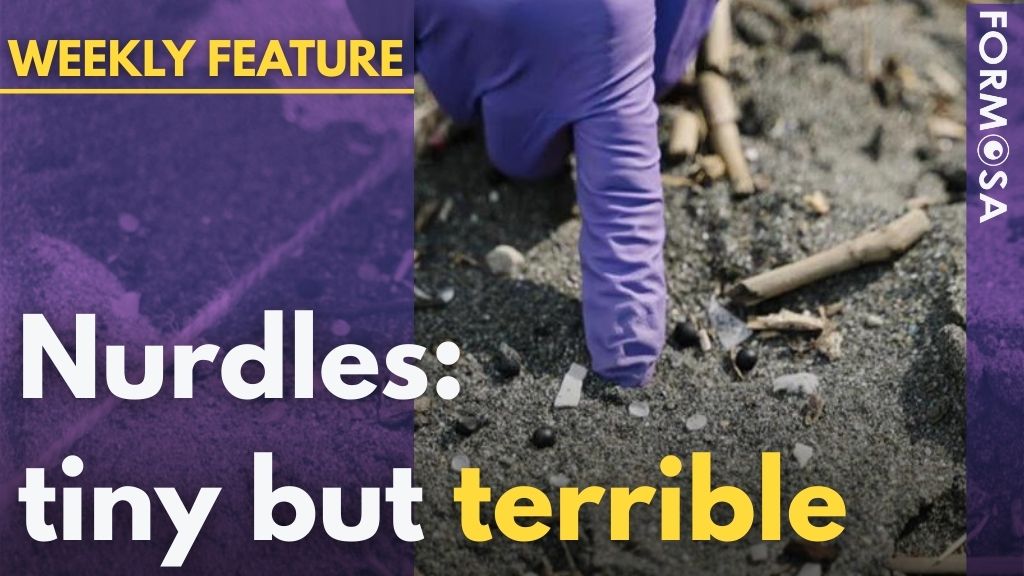
We all know about the environmental damage caused by discarded plastics such as shopping bags or water bottles. But have you ever heard of nurdles? They are the plastic pellets used to manufacture plastic products. Their small size makes them really prone to leaking into the environment, and extremely difficult to clean. Last year, Greenpeace and two local universities led the first systematic study into nurdle pollution in Taiwan. They found a shockingly high nurdle density of almost 100 pellets per kilogram of sand at a beach near a petrochemical plant in Kaohsiung. Our weekly special report.
Greenpeace’s iconic ship, the Rainbow Warrior set sail from Hong Kong in October 2024 for a five-day journey. Its destination: Kaohsiung. It was the vessel’s first visit to Taiwan in seven years.
The Rainbow Warrior has been involved in activism for pressing environmental issues such as campaigns against whaling and protests against deforestation in the Amazon. One of its tasks in Taiwan was to monitor plastic pollution in marine sediments.
Ship captain
Victoria
Rainbow Warrior, Rainbow Warrior. This is Victoria calling.
We joined a research team from Taiwan at Kaohsiung Port, to take a boat to the Rainbow Warrior out at sea.
Voice of crew member
Rainbow Warrior
So we are waiting until we are out of the traffic separation scheme and then we will launch our boat. I will call you. Copy?
The Rainbow Warrior dispatched a speed boat to pick up the group. It was no easy feat due to strong winds and big waves.
Crew had to pull the speed boat back in over and over again as tall waves and sudden gusts of wind pushed it away.
Crew member
Rainbow Warrior
OK guys. Once we get back. I need everyone to walk on this side. Do not stand up until I tell you. OK?
After a bumpy ride, the research team finally boards the Rainbow Warrior. Chief Mate Ignacio Soaje, familiarly known as Nacho, gave us a tour of the ship of his dreams.
Ignacio Soaje
Rainbow Warrior chief mate
And this is a place to open or to operate with helicopters. And also we have the small boats. They are always ready. And now we have five boats on board.
Ignacio Soaje
Rainbow Warrior chief mate
We also have spaces like the radio room. As you can see, this is where we have all the computers, all the settlers, all the satellite communications is all here.
About a dozen crew members from all over the world live on the ship, which is equipped with everything necessary for daily life and work. There’s a galley, a dining room, a recreation room and even a sick bay.
Ignacio Soaje
Rainbow Warrior chief mate
Everything here for advanced medical care, defibrillator, basic. Yeah.
Wen Yu-ping
FTV reporter
I am currently on the famous Rainbow Warrior, which has sailed all over the world researching the marine environment. We are now heading for the mouth of the Gaoping River to collect a sediment sample.
The Rainbow Warrior halts off the shore of Linyuan Industrial Park. A grab sampler is lowered into the sea to collect sediments from the seabed.
Wu Wen-huai
National Taiwan Ocean University
We let the instrument down. The rope goes slack when it hits the floor. Once it reaches the seabed, the pin and spring system unlocks and the shovels close to collect the sediment.
The samples collected from the seabed are put into metal trays to perform lab tests. The crew is not just researching sediments at the bottom of the sea, but also anything floating in the surface. For that, they have a manta trawl net.
After 15 minutes, the net is pulled up and emptied. A visual assessment confirms the presence of microplastics, including discarded plastic fragments and the key target in the study: plastic pellets, also known as nurdles.
Voice of Wu Wen-huai
National Taiwan Ocean University
They look like the ones we saw on the beach. Yellow pellets.
Nurdles look like lentils and measure less than 5 mm. They are used in the plastics industry, where they are extruded or melted to make all sorts of plastic items. In other words, they are a prime material for factories. Their small size and light weight means they often leak into the environment. Past environmental efforts were mostly concerned about plastic waste after items are discarded. But it turns out pollution can start from the very beginning of the manufacturing process.
We’re now at Zhongmen Beach near Linyuan Industrial Park. In August and September of 2024, Greenpeace, National Taiwan Ocean University and National Sun Yat-sen University joined forces to systematically research nurdle pollution in Taiwan for the first time.
Chang Kai-ting
Greenpeace Plastic Reduction Project
Right here I can already see nine or ten nurdles. You can see more with every step you take on the beach. It’s astonishing.
The team combed four beaches near Linyuan Industrial Park in two different seasons. The highest concentration of nurdles was found on Zhongmen Beach, with 96 plastic pellets for every kilogram of sand.
Shiu Ruei-feng
National Taiwan Ocean University
Controls at the source are very important. There should be regulatory measures in place at the production end. That’s to say, they shouldn’t be released from factories. Once they are in the environment it becomes very difficult to collect them.
Experts say the nurdles may have ended up at the beach due to leaks during transportation or during the manufacturing process. For now in Taiwan, there are no laws to control it. So long as the pellets lost don’t affect operation costs, factories don’t care.
Shiu Ruei-feng
National Taiwan Ocean University
The presence of the nurdles here is clearly tied to the industry in the area. The pellets were brought to the area to be used by plastic factories.
Linyuan Industrial Park is a major hub for the petrochemical sector in Southern Taiwan, located along the coast of Kaohsiung. Every year, it rakes in a combined NT$1.5 trillion, making it a significant contributor to the national economy. Is there really no way to trace back where the pellets originated? What can be done to stop spills?
Lai Ying-ying
Ministry of Environment
If there is a higher concentration of nurdles in a specific area, we can investigate the cause. We can see if there are any firms nearby that could be prone to leaks. The issue can then be further examined by local authorities and environmental protection agencies.
Chang Kai-ting
Greenpeace Plastic Reduction Project
We are also calling on the government of Taiwan to tackle the issue of nurdles. There are a lot of firms producing plastic products in Taiwan. We think it’s important that the companies have measures in place to check for potential leaks throughout the production process.
According to environmental charity Fidra, about 10 trillion nurdles are lost into the natural environment annually. That’s the equivalent of 450,000 tons. Once in the ecosystem they are almost impossible to remove. Plastic pollution is everywhere, on land and at sea, from pellets to products.
News report from July 2, 2015
After five days of failed rescue attempts, a necropsy revealed the whale had swallowed large amounts of plastic bags. The text on them was still readable after a scrub.
News report from March 10, 2018
NCKU’s Marine Biology and Cetacean Research Center performed a necropsy, only to find large garbage liners and plastic bags inside the animal.
Hettie Geenen
Rainbow Warrior captain
My ambition for the ocean... I think it’s not my ambition. What I believe is that everybody needs to do something. And everybody, even if it’s small, even if it’s big.
Hettie Geenen has been part of Greenpeace for 25 years now. It pains her to see the harm caused to the beautiful ocean. She and the crew on the Rainbow Warrior are committed to protecting the marine environment.
Hettie Geenen
Rainbow Warrior captain
Yeah, be aware. Be aware is the big thing. Of what’s happening and how much plastic there is. And how easy we use it: For packing, for quickly do something and then throw it away. And we really need to be aware of this more, I think.
Ignacio Soaje
Rainbow Warrior chief mate
You just stand out here, and you see all the dolphins, jumping, jumping, jumping.
A dolphin leaping from the water called Dave has become the mascot of the Rainbow Warrior. It’s become the figurehead of the ship, leading the vessel across the seas.
Ignacio Soaje
Rainbow Warrior chief mate
I just cut off this rope with buoys that were stuck on the tail of a humpback whale
Nacho narrates how he freed a humpback whale from a net as part of the Rainbow Warrior crew.
The whale sprays water in gratitude, as the crew celebrates the rescue. It is a rare moment of joy while fighting plastic pollution.
Ignacio Soaje
Rainbow Warrior chief mate
I was like this for one week. I had so much emotion so much adrenaline for the “I saved a whale, I touched it.” Yeah.
The sun sinks in the horizon and night sets in as the lights on the Rainbow Warrior sail away. Their glimmer symbolizes a spark of hope in the fight against plastic pollution in our beautiful oceans.
For more Taiwan news, tune in:
Mon to Fri at 9:30 pm on Channel 152
Tue to Sat at 1 am on Channel 53
民視獨家登環團指標船艦「彩虹勇士號」調查塑膠原粒
2025-05-23
您知道什麼是「塑膠原粒」嗎?也就是製造塑膠的原料,這些應該在工廠裡的塑膠原料,竟然外洩到環境中!國際環保團體「綠色和平」與國內的海洋大學及中山大學合作,進行台灣首次的「塑膠原粒」調查,在高雄林園工業區附近共四處沙灘,及外海的海洋底泥,都發現了塑膠原粒。民視獨家登上綠色和平船艦「彩虹勇士號」,全程記錄台灣首次的「塑膠原粒」調查,試圖追蹤汙染從何而來。
環團綠色和平,標誌性船艦「彩虹勇士號」,2024年10月底從香港出發,歷經五天航行,來到台灣高雄港,這是睽違七年後,彩虹勇士號再度出現在台灣。
從阻止南極捕鯨,到抗議亞馬遜森林砍筏,「彩虹勇士號」一直在急迫的環境議題上領航前進,這次航行到台灣,要進行海洋底泥的塑膠調查。
[[遊艇船長]]
“彩虹勇士號,彩虹勇士號,這是維多利亞呼叫”
民視採訪團隊與台灣調查團隊同行,先搭乘台灣的遊艇出高雄港,在大海中,與彩虹勇士號會合。
[[聲源 彩虹勇士號船員]]
“我們正在等待,等到我們退出分道航線時,我們會放下快艇,再通知你們”
彩虹勇士號放下充氣快艇,在海上接駁調查團隊,海上風浪越來越大,快艇在狂風中載浮載沉。
風浪實在太大,接駁挺數度被吹遠,再設法拉回。
[[彩虹勇士號船員]]
“各位,我們現在要回到船艦上,請你們不要靠近側邊,不要站立”
歷經一番波折,調查團隊全員,順利登上彩虹勇士號,來自阿根廷的大副Nacho,熱心帶領記者,認識這艘夢幻船艦。
[[彩虹勇士號大副 Nacho]]
“這空間可用來停放或操作直升機,我們也隨時準備5艘充氣艇”
[[彩虹勇士號大副 Nacho]]
“這是我們的廣播室,我們有電腦等設備”
十多名來自世界各地的船員,以船艦和大海為家,船上設備必須滿足生活、工作,所有需求,廚房、餐廳、交誼廳,也設有緊急的醫療室。
[[彩虹勇士號大副 Nacho]]
“這裡提供一些醫療照護的基本需求”
[[民視記者 温鈺萍]]
“記者目前所在的位置,是在國際知名船艦彩虹勇士號上,這艘船的行跡遍及全世界,主要在做海洋的研究相關調查,現在我們正駛向高屏溪的出海口,這一次要做的是,海洋底泥的採樣調查”
彩虹勇士號直搗高雄林園工業區外海,吊臂吊起「抓斗式採泥器」放入大海中,要採集海洋底泥。
[[海洋大學研究生 吳文淮]]
“這個丟下去,你會發現繩子鬆掉了,代表說它已經沉到底部了,等到它沉到底部之後,這個夾子因為插針有彈簧的關係,彈出來之後,它會把這個夾起來,裡面都是我們要的沉積物”
採泥器挖起大海中的底泥,全數收集到採樣罐,再進實驗室檢驗,這次調查的範圍,除了底泥,還包括海面漂浮物,運用的工具是「蝠型網」,以拖拉的方式,收集海上漂流物。
15分鐘後拉起蝠型網,倒出集塵袋裡的碎屑,經過初步過篩,濾網上滿是常見的微塑膠碎片,但這次調查的重點,是外界沒有關注過的「塑膠原粒」。
[[聲音來源:海洋大學研究生 吳文淮]]
“它有點像我們在沙灘看到的,黃色塑膠原粒”
外觀像米粒,大小在5公釐以下的塑膠原粒,經過熔化可以做成各種塑膠製品,講白一點,就是工廠裡的初級原料,因為顆粒小、重量輕,國際上常有逸散的案例發生,台灣向來關注塑膠製成產品後,在後端的汙染,沒想到塑膠從前端原料開始,凡走過,必留下汙染。
這裡是高雄林園工業區附近的中門沙灘,2024年8月、9月,綠色和平和海洋及中山大學團隊合作,首度進行台灣塑膠原粒汙染調查。
[[綠色和平減塑專案主任 張凱婷]]
“我旁邊這裡,我用看的就可以看出,9顆、10顆這樣,整個沙灘隨便走幾步就是,真的是滿驚人的”
調查範圍鎖定高雄林園工業區附近共四處沙灘,分兩個季節採樣,其中林園中門沙灘塑膠原粒分布密度最高,每公斤的泥沙,竟然多達96顆的塑膠原粒。
[[海洋大學海洋環境與生態研究所副教授 許瑞峯]]
“源頭管制很重要的是,應該要在生產端,可以有一些管制措施,也就是說,在工廠的時候就不用排出去,因為排出去有個問題,在回收的時候很困難”
學者推估,這些塑膠原粒,可能在運送或製造過程中外洩到環境,但對此台灣目前「無法」可管,對業者而言,只要數量沒有影響到成本,根本不會在意。
[[海洋大學海洋環境與生態研究所副教授 許瑞峯]]
“很明顯塑膠原粒的樣子,其實跟當地的產業結構有比較大的關係,因為這些原粒的來源,可能就是來自於製造的工廠”
高雄林園工業區是南台灣石化重鎮,與鄰近的臨海工業區,年產值合計共1.5兆,龐大數字撐起國家產業經濟,但散落在沙灘和大海的塑膠原粒,來源無處追,也無法管嗎。
[[環境部資源循環署署長 賴瑩瑩]]
“如果說針對塑膠微(原)粒比較高的地方,就可以去了解他的原因,看看在周邊,有沒有一些特別的工業,容易逸洩這樣的情況,這個部分可以由地方,或者是環保單位再來去了解”
[[綠色和平減塑專案主任 張凱婷]]
“我們也建議台灣政府,應該要去對塑膠原粒這一種,現在在台灣,有這麼多家的塑膠生產,像是製造商,這些業者在執勤的時候,有沒有可以盤點一些環節,是否有原料逸散的可能性”
根據國際組織FIDRA的報告推估,全球每年約有10兆顆,多達45萬噸的塑膠原粒散落到自然環境中,幾乎無法清除,塑膠從原料到成品,從陸地到海洋,汙染無處不在。
[[新聞畫面:2015.7.2]]
“經過五天的搶救還是無效,把鯨豚解剖出來之後,發現裡面有垃圾袋,而清洗之後,還可以看出印刷的字體”
[[新聞畫面:2018.3.10]]
“成大鯨豚中心,決定進行解剖查清楚,沒想到慘不忍睹,很大的垃圾袋,塑膠袋”
[[彩虹勇士號船長 Hettie]]
“我對海洋的願景是,我想不只有我而已,我相信應該是所有人,所有人都應該為海洋做些什麼,不管是做大事或小事”
加入綠色和平25年,Hettie感受到海洋美麗下的哀愁,和彩虹勇士號的成員,一起把信念化為行動,守護大海。
[[彩虹勇士號船長 Hettie]]
“要有意識,我覺得覺醒很重要,我們要意識到,人類輕易地使用大量塑膠,用在包裝等,快速用完就丟棄,我們必須要有覺醒”
[[彩虹勇士號大副 Nacho]]
“就站在這裡,可以看到海豚在底下跳躍”
海豚跳躍栩栩如生的模樣,成了彩虹勇士號的幸運物,這隻名為Dave的海豚,佇立船頭引領船員,在大海中前行。
[[彩虹勇士號大副 Nacho]]
“我剛剛砍斷了這些,這些浮具纏在一隻鯨魚的尾巴上”
Nacho跟我們分享,彩虹勇士號曾經在航行時,救援一隻遭到網繩纏繞的鯨魚。
鯨魚的道謝,伴隨著船員的歡呼,這是眾多大海塑膠汙染悲劇下,難得的幸運篇章。
[[彩虹勇士號大副 Nacho]]
“我有整整一個星期都是寒毛豎立,我太激動了,整個腎上腺素分泌,因為我救了一隻鯨魚”
夕陽西下,夜幕低垂,彩虹勇士號在海面上揚起風帆,點起燈火,期許在塑膠汙染的黑暗中,點燃一線希望,繼續領航前行,為海洋而戰。
更多新聞內容,請鎖定:
民視台灣台(152頻道)週一至週五晚上9:30
民視新聞台(53頻道)週二至週六凌晨1:00
Related News