When living alone isn’t lonely: how elders stay connected with society
When living alone isn’t lonely: how elders stay connected with society
2025-06-13
Almost 1 million elders live on their own in Taiwan, with another half a million people living in households made up solely of seniors. Living alone comes with many challenges, but especially on the front of social relations. Fighting loneliness can take on many different looks, from going to social gatherings at a community center, to joining a storyteller troupe and entertaining kids on weekends. This Weekly Feature, we take you to see how elders are staying connected in their golden years.
The pill boxes, medicine bags and the alarm clock on the dining table are all decorated with hand-written reminders. At 101 years old, Liu Chien-ching lives alone in his house in New Taipei’s Banqiao District. He can still take care of himself, so his daughter and caregiver only drop by for visits, meaning Liu is on his own most of the time. For safety reasons, he’s not going out as much in recent years. But loneliness is hard to combat.
On Monday, Wednesday and Friday afternoon, a care companion comes to Liu’s house to do exercise, read the newspaper and more importantly, have a chat.
Her name is Huang Hsin-yi, and her praise gets Liu smiling from ear to ear. The two get along so well that sometimes Liu breaks out into song.
Two years ago, Liu’s daughter decided to hire a daily life companion to prevent her father from being completely cut off from society.
Huang Hsin-yi
Daily life companion
You need to be someone who is not afraid of chatting with older people. Sometimes, they tell you their life story over and over again. They tell you about their condition and their mood. So you have to be able to accept that there are sometimes negative thoughts, or situations that are disconnected from people and issues in the present. You have to be responsive to the information they give you, and the emotions they feel. They need to feel like you care about them, and that you aren’t just doing things perfunctorily.
Lo Yun-ting
Long-term care organization
When we talk about elder care, the conversation usually focuses on nursing and home care. But older adults do not just have physical problems. They need companionship, and someone to help them with their mental wellbeing. So we created this job of “daily life companion.” We hope that these companions can help slow down aging and enrich their lives.
Chang Shu-ching
Federation for the Welfare of Taiwan’s Seniors
For many older people who live alone, being on one’s own for long periods of time and not taking part in social activities can leave them feeling disconnected from society. That can make them feel lonely, and to develop mental health problems, like depression.
Physical and mental wellbeing are both important to leading a happy life in old age. In recent years, cases of elders dying alone have become increasingly common in Taiwan. With fewer family interactions and nobody offering care, some elders end their life all by themselves, be it due to illness, accidents or even, suicide.
About 980,000 older adults live by themselves in Taiwan. And about 520,000 elders live in a household where they are taking care of other elders. Lonely elder deaths seem inevitable as people live alone or with other older adults.
Chang Hung-che
National Taipei University of Nursing and Health Sciences
Elders living alone can feel insecurity, anxiety, and fear about things happening around them. They also become targets for scammers. It’s important to pay attention to their physical and mental safety, and their psychological wellbeing.
But living alone doesn’t necessarily entail loneliness. Lone dwellers can still lead fulfilling lives.
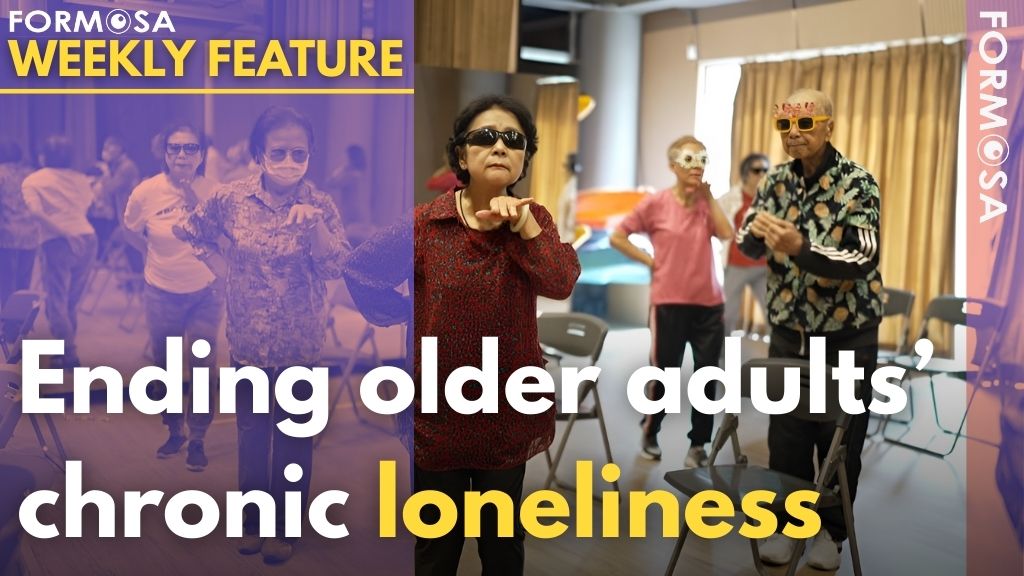
Every Friday morning, Huaxing borough in Taipei’s Wenshan District organizes a sports class for people aged 65 and up. The dress code is funky glasses and colorful shirts, all a must to groove to the beat.
Ms. Tsao
Participant
I love it. Because if you stay at home and you don’t go out, you don’t get to have as many friends. The way our teacher leads the class gets is very exciting and it gets your grey cells moving too. It keeps dementia at bay.
83-year old Mr. Tsao lives with his wife. He has to not just face the challenges of his aging body, but also take care of his other half. His situation, having to care for others in old age, is becoming increasingly common in Taiwan.
Chen Chih-ying
Huaxing Borough warden
When we talk about people living alone we don’t just mean people who live on their own. In our society there is an increasing number of households made up of two elders. Usually it’s couples, where one person in their 70s is taking care of another person in their 80s. Or someone in their 80s taking care of someone in their 90s. We also consider these households as being people who live alone.
Many communities have begun holding elder care courses to strengthen the connections between elders living alone and society. Their goal is to get older people to get out of the house, prevent physical degeneration and delay disability and dementia. But what about people who want nothing to do with these activities?
Chen Chih-ying
Huaxing Borough warden
You can’t just visit them three times and call it a day. We should ask them out, 10, 20 times. Tell them about all the activities there are. If we bring them out and have them joining in once or twice, they’ll see that its fun. They’ll see how nice it is to go out and do exercise, and chat with the classmates next to you. Sometimes the reluctance comes from never having done anything like that before. But once they do get out, the infectious atmosphere will reach them. That’s when we know we’ve achieved our goal of getting older people out and about, engaging with the community, meeting others and interacting with each other.
Coaxing people out of the house and getting them involved in the community allows seniors to make friends and form enriching experiences, while regaining their long-lost self-esteem and enthusiasm. Another way to stay in touch with society and other generations is by volunteering to hang out with children.
It’s just before 10 in the morning and the director and deputy director of the Ugly Duckling Theatre Troupe are busy as can be, as spectators are already filing in for the show.
This public library in Yilan holds storytelling sessions every weekend, led by volunteers from the Ugly Duckling Theater Troupe. The biggest highlight of the events are the performers.
One of them is “Chalk grandma,” as she is known by the kids. Her real identity is Wang Hui-shen, a 77-year-old who lives with her elderly husband. When she’s not taking care of him at home, she’s volunteering at the theater troupe.
Wang Hui-shen
Ugly Duckling Theater Troupe
I used to be awfully shy. After I started volunteering at the theater troupe, my friends thought I’d become a different person. I started liking myself more, too. When I volunteer, I can reach out with my hand and hold many little hands. It fills me with positive energy, with an immense happiness. Going out is very valuable, as it makes every day of my life fresh and new.
These older adults have a potential that goes well beyond their physical limitations.
96-year-old Sun Ju-hsien is also a volunteer at the troupe. Thirty years earlier, she brought her grandson to a storytelling session and ended up becoming a teller herself.
Sun Ju-hsien
Ugly Duckling Theater Troupe
I’m very happy doing this. After I’ve told my story, I immediately ask whose turn it is for the following week. I’m always looking forward to my turn. I used to be a bit afraid. I was afraid I’d say it all wrong, and do a bad job. But the kids are very welcoming. They are happy however you say it. There’s a lot of people. Parents bring their children over, which means they like me. They like what I do, and so I feel that it is all worth it.
Sun has become a popular storyteller among the kids, making a connection across generations. She shows that it’s possible to bust myths and misconceptions about old age and that it’s possible to have a meaningful life in your golden years.
Chiu Chih-han
Ugly Duckling Theater Troupe
The volunteers that join the Ugly Duckling Theater Troup, especially the elderly ones, all have a shared characteristic. They are lively, open-minded and flexible. They can go from being 80 years old to just 12, or even 5 or 3. They use child-like voices when they perform their stories, which is a very valuable skill in our troupe. Being part of this project makes life not be boring or monotonous any more. It’s fantastic for everyone’s physical and mental wellbeing.
These elders are a treasure trove of knowledge. With a positive attitude and an open mindset, they are all finding value and inspiration late in life, keeping loneliness at bay.
#loneliness #lonelinesspandemic #old #oldage #goldenyears
For more Taiwan news, tune in:
Mon to Fri at 9:30 pm on Channel 152
Tue to Sat at 1 am on Channel 53
高齡「獨居」孤獨死數量增!可多社交豐富晚年
2025-06-13
隨著婚姻與家庭觀念的轉變,「獨居」已經成為趨勢,不婚、不育,或因個人偏好而選擇獨居者,皆不在少數,目前台灣的獨居長者大約有98萬 人,老人照顧老人的「老老照顧」也有將近52萬人。然而,伴隨而來的健康、生活與安全問題也一一浮現,尤其近年來,「孤獨死」現象普遍在日本、韓國、台灣出現,只不過,獨居並不等於孤獨,該如何好好過生活?
餐桌上的藥盒、藥袋、鬧鐘,貼滿溫馨提醒的便條紙,101歲的劉鑑清,一個人住在新北市板橋老家,因為生活還能自理,女兒、居服員通常在探視後,便各自離去,因此,劉鑑清多數時間都是一個人,而為了安全起見,這幾年他已經不太外出,孤獨的他,該怎麼辦呢。
每週一、三、五下午,生活老師黃馨儀,就會到劉鑑清的住處,不僅陪他做運動、 讀報紙,更重要的是聽他說說話。
黃馨儀總是不吝讚美,劉鑑清則是笑得合不攏嘴,兩人互動親切,劉鑑清有時心血來潮,還會高歌一曲。
兩年前,劉鑑清女兒,為了不讓父親斷了社交與外界刺激,決定請「生活老師」到宅陪伴爸爸。
[[居家長照機構生活老師 黃馨儀]]
“要不會害怕跟長輩聊天,因為長輩或許會一直跟你說,他的生命故事,他現在的狀況跟心情,你也要能接收到個案長輩,會有一些比較負面,或者是跟現在的人事物,是沒有辦法結合的狀況,所以你要能接收到長輩的資訊,也可以接收到他的情緒,讓長輩覺得真的是有人關心我,而不是例行公事”
[[居家長照機構北區經理 羅筠婷]]
“一般講到長輩照護,很多都是想到看護、居家服務員,這樣子是屬於身體型的照護,我們發現長輩,不是只存在身體型的問題,很多時候是心靈的陪伴,也需要有人去解決他們的心理需求,所以我們發展出了叫「生活老師」的職位,我們最主要希望的就是,長輩可以做到延緩退化,跟給他們一些生命刺激的部分”
[[老人福利推動聯盟祕書長 張淑卿]]
“很多獨居長輩來講的話,他如果長期獨居,他又沒有適度的社會參與,簡直是跟整個社會斷鏈的話,就會產生心理的孤寂,心理障礙,可能就憂鬱”
獨居長者的身心健康問題,不容忽視,近年來「孤獨死」現象,愈來愈長在台灣出現,主要原因在於,長輩與家人、親友很少互動,身邊又無人照顧,導致病逝或意外、輕生,才被外界發現。
而在台灣,獨居長者大約有98萬人,老人照顧老人也將近52萬人,孤獨死的現象,似乎正在慢慢發酵,其中獨居、老老照顧,都是孤獨死的原因之一。
[[台北護理健康大學長照系退休副教授 張宏哲]]
“獨居本身就會讓一個人,沒有安全感、焦慮、恐懼,到底周遭會發生什麼事,更何況現在詐騙集團,常常會鎖定獨居的老人,所以他的安全、心裡安全、心理的健康就很值得關注”
然而,獨居並不等於孤獨,一個人也可以好好過生活。
每個禮拜五早上,在台北市文山區華興里,都會舉辦樂齡運動,讓65歲以上的長者一起來動一動,爺爺奶奶戴起墨鏡,穿著花襯衫,跟著音樂動起來。
[[學員 曹先生]]
“非常開心,因為如果你在家裡,沒有出來的話,就沒有這麼多朋友,而且老師教得各方面,會提高你的興趣,腦筋也會動,比較不容易癡呆”
83歲的曹先生平常與妻子同住,不僅要應對自己隨著年齡增長,而來的健康問題,還要承擔照顧另一半的責任,類似曹先生這樣老老照顧的情況,越來越常見。
[[台北市文山區華興里里長 陳峙穎]]
“獨居長輩其實不只自己居住,才叫獨居長輩,我們現在社會,老老住在一起的狀況,案例也越來越多,常常一對老夫妻70歲照顧80歲,80歲照顧90歲的,這樣子的長輩,我們也會把他們定義為獨居老人”
為了照顧高齡長者,強化獨居老人與社會連結,許多社區紛紛規畫關懷長輩課程, 目的就是鼓勵長輩走出家門,預防身體退化,延緩失能、失智。然而,對於那些不願意參與社交的長輩們,又該怎麼辦呢。
[[台北市文山區華興里里長 陳峙穎]]
“針對長輩三顧茅廬是不夠的,我們對獨居長輩要把他請出來,可能十次、二十次,不斷跟他講說有活動,實際把他帶出來之後,也陪著他去參加一次、兩次,他會發覺其實好像滿好玩的,來參加運動也不錯,跟左右兩邊同學聊聊天也不錯,因為有時候他們抗拒是沒體驗過,可是來了之後,那個氛圍就會感染他,這就達到我們要的目的了,就讓長輩走出來,走進社區,去多認識,多互動”
鼓勵高齡長者出門,多多參與社交活動,除了認識新朋友,生活變豐富,還能找回久違的自信與熱情,更有長輩以志工行動陪伴孩童,打造跨世代共融。
早上十點不到,醜小鴨劇團團長邱芷涵,副團長王惠申已經忙到不可開交,因為外頭觀眾已經陸續進場。
這裡是宜蘭市化龍一村圖書館,每逢假日,醜小鴨劇團的志工們,就會在這裡說故事給小朋友聽,而劇團最大的亮點,就是她們。
小朋友口中的粉筆奶奶,是77歲的王惠申,與年邁先生同住,成了典型的老老照顧,但她不想老是待在家,於是加入劇團,擔任志工。
[[醜小鴨劇團副團長 王惠申]]
“我以前非常害羞,參加劇團志工之後,朋友都覺得我變另一個人,我也開始喜歡上我自己,在志工工作當中,我覺得可以伸出我的手,去牽出很多很多的小手,可以帶給我,很多正面,很巨大的快樂。走出來,我們還有很大的價值,我每天覺得活得好精采”
其實高齡長者的潛力,不只在她身上發生。
96歲的孫儒先,是劇團的創團志工, 30年前,她帶孫子聽故事,聽著聽著,自己也成了說書人。
[[醜小鴨劇團志工 孫儒先]]
“我很高興,我常常說,是這個禮拜我講完了,下一個禮拜是誰,我盼望哪一個禮拜天又是我。以前是有點害怕,我不敢,我怕講得不對、不好,後來小朋友也很歡迎,怎麼知道歡迎呢,人多,都來了,家長帶著他們來了,那就表示他們很喜歡我,他們喜歡,我就覺得很值得”
孫儒先成了大家都喜歡的說故事奶奶,他不僅打破年齡的界線,翻轉許多人對老人的歧視與迷思,也找到晚年的生活意義。
[[醜小鴨故事劇團團長 邱芷涵]]
“會加入我們醜小鴨劇團當志工,尤其是長輩的這些志工,我覺得她們有一個特性,是很活躍的,她們的觀念是很開放,而且她們是很有彈性的,她們可以把自己的年齡,從現在年齡可能80歲,降到12歲,甚至5歲、3歲都有可能,她用很童趣的聲音,去詮釋每一場故事,我覺得這是在我們劇團裡,這是非常難能可貴的,她整個生活上,就不會覺得很枯燥乏味,這樣對於她的身心健康,真的是非常有幫助的”
高齡社會是生命智慧的聚寶盆,只要心態正向、開放,每一位高齡長者,都能找到生命的價值與尊嚴,實踐幸福到老的自在人生。
Related News