Green lights used for pest control mistaken for aurora
Green lights used for pest control mistaken for aurora
2025-06-19
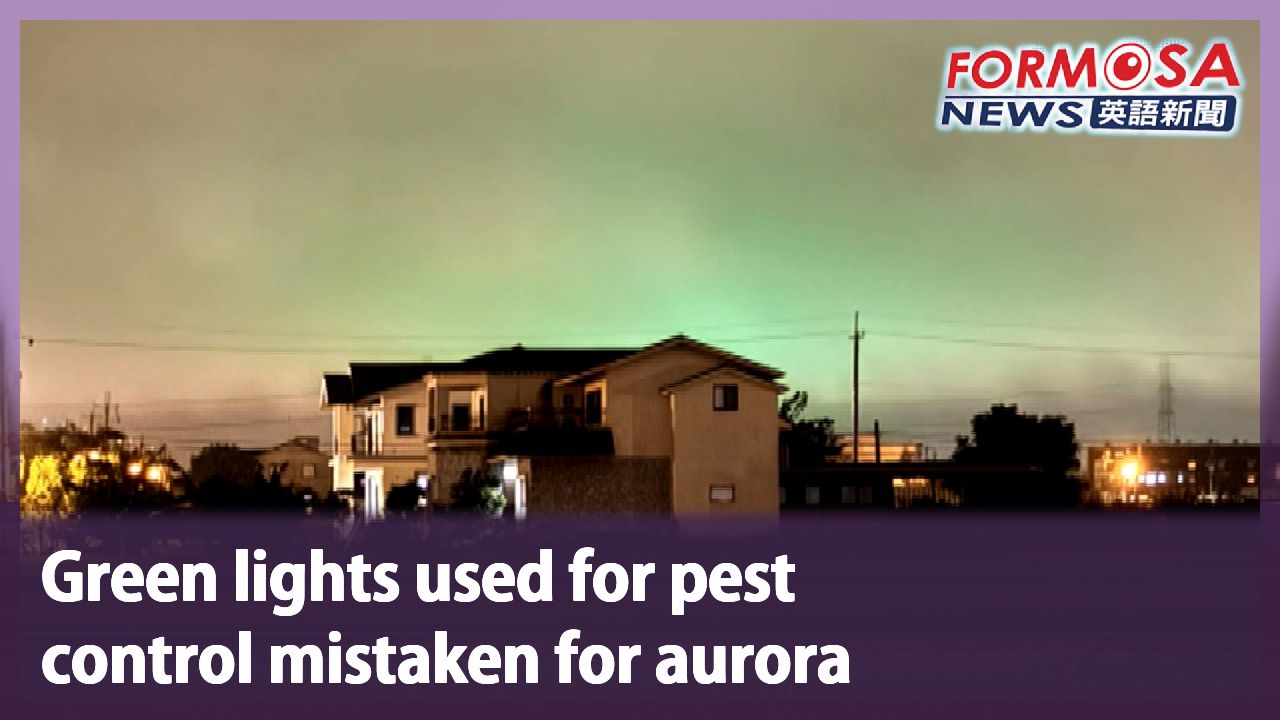
Lately the sky in Yilan’s Sanxing area has had a green tint, which some people have mistaken for an aurora. This phenomenon is actually caused by green lights at Sanxing’s green onion farms, used to drive away the crop’s most infamous pest: the beet armyworm. The lights make the pest think it’s daytime, thereby reducing their activity. They help the green onions grow pest-free and make the local sky more colorful.
Looking over the roof of this house, there appears to be an aurora in the distance. But with Taiwan being a subtropical country, it’s unlikely that the famous northern lights would appear here. Taking a closer look at the site, this colorful haze is actually from green lights at a green onion farm, which are used to keep away pests.
Green onion farmer
Lots of people here say, “Why does your field look like an airport?” Because the airport runways also use green lights. I tell them it’s not an airport! It’s meant to keep those moths away!
Sanxing green onions’ biggest enemy is the beet armyworm, which grows into the small mottled willow moth. This pest usually hides during the day and comes out at night. But these lights make it think it’s still daytime, reducing its activity overnight and protecting the green onions. Green light in particular has been shown to help green onions grow.
Green onion farmer
Once it lights up, the moths won’t come near the green onion field. If they do come, they won’t lay eggs and reproduce here. If they don’t lay eggs, then there isn’t a pest problem.
Lee Wen-li
Agricultural researcher
Some moths are nocturnal—they rest during the day and are active at night. Originally, we used white lights, which were actually effective, but we were still not satisfied. I asked them if they wanted to try different lights and see how effective they are. In the end we found that green lights are the most suitable.
Tests have confirmed that green lights are effective at pest control, but cost is still a major issue. Authorities reported that it costs NT$15,000 to install the lights on one plot of land, and the monthly electricity fee amounts to NT$500. This may seem like a lot, but it’s about the same as the cost of using pesticides, and it’s much more environmentally friendly.
For more Taiwan news, tune in:
Mon to Fri at 9:30 pm on Channel 152
Tue to Sat at 1 am on Channel 53
#greenonions #northernlights #aurora #Yilan #Sanxingscallions #greenlight #pestcontrol #environmental
宜蘭三星出現極光? 誤會一場"是三星蔥溫室燈"
2025-06-19
宜蘭地區出現極光了嗎?有民眾發現,最近三星地區的天空,出現綠光,看起來有點像極光,但其實這是三星蔥的溫室燈光。之所以架設綠燈,是為了驅逐三星蔥的天敵"甜菜夜蛾",讓他們誤以為是白天,進而減少活動,比較不會靠近蔥田,而這樣的綠色光線,意外幫三星地區的天空,增添色彩。
從遠處往前看,咦!台灣明明地處亞熱帶國家,為什麼房子的屋頂上有極光可以看,實際走到現場去看,那不是極光啦!而是溫室裡頭的燈光,而這些燈光的目的,是為了驅除三星蔥上的害蟲。
[[三星蔥農]]
“像我這裡有很多人就說,你的田區怎麼像飛機場?因為機場,降落的跑道它也是綠色的光。我說不是機場啦!因為那是要防那隻蛾啦!”
三星蔥的最大天敵,是俗稱管仔蟲的甜菜夜蛾,這種蟲的習性晝伏夜出,之所以裝燈,就是為了讓牠以為現在是白天,降低牠的活動性,而之所以使用綠色燈光,是因為經過測試,綠光還能幫助三星蔥生長。
[[三星蔥農]]
“它照了以後,那個蛾就不會靠近蔥田,然後蛾過來的話,就不會來這裡下蛋,不會來這裡產卵,然後不會產卵的話,就不會有蟲害的問題。”
[[農業部農業試驗所研究員 李文立]]
“其實有一些蛾它是夜行性動物,那它白天本來休息,是它的休息時間,晚上活動。最初其實我們用的是白燈,那白燈其實是有效的,可是我們還是,我還是不滿意。我跟他們說,你們要不要試試其他的燈,看看其他的燈對這個效果是怎麼樣,後來我們找到最合適的就是綠燈。”
儘管經過實驗,綠燈確實對防治蟲害有效,但成本也是個大問題,經過相關單位計算,這些燈的成本,建置一分地大個是一萬五千塊,而電費一個月五百塊,雖然乍看不少錢,但實際與用農藥噴灑相比較,其實相差不大,而且他還有另外一個好處,就是對環境友善。
更多新聞內容,請鎖定:
民視台灣台(152頻道)週一至週五晚上9:30
民視新聞台(53頻道)週二至週六凌晨1:00
Related News