Historical movie theaters finding a way out in tough market
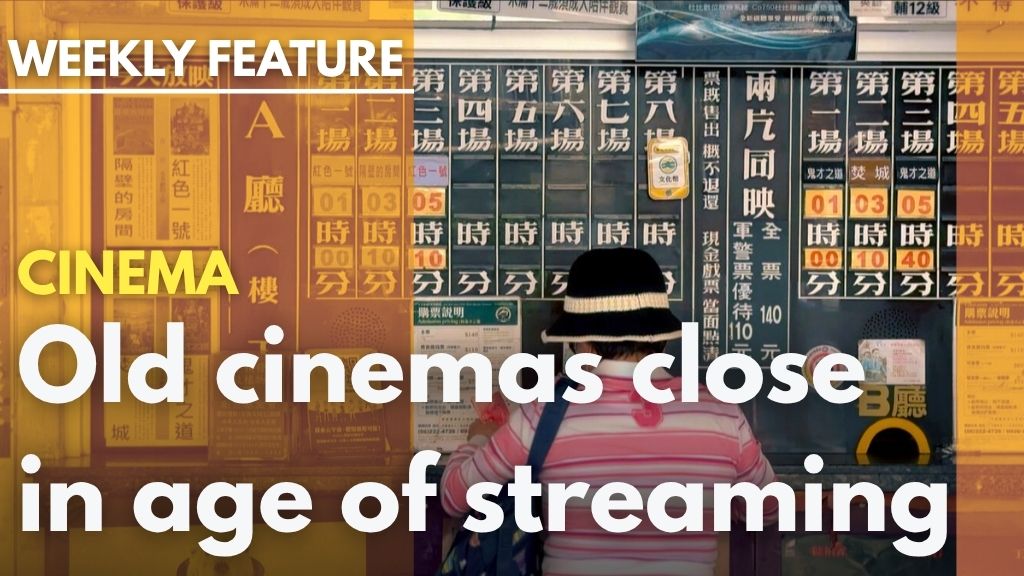
Historical movie theaters finding a way out in tough market
2025-07-04
Movie theaters are struggling post-pandemic as films increasingly premiere on screening platforms. Even more so for independent cinemas. In recent years, many historical theaters are closing down one after another, including the 75-year-old Chin Men Theater in Tainan, famed for its hand-painted billboards and endorsement by award-winning director Ang Lee. The theater said it’s only closing temporarily to devise a new business plan. What is the way out, if there is one? Our Weekly Feature.
This is a footage from the day Tainan’s Chin Men Theater celebrated its 75th anniversary on Feb. 12, attended by numerous moviegoers and long-term employees, as well as veteran billboard painter and long-term collaborator Yen Chen-fa. But the atmosphere was not one of joy, for it was also on this day the theater announced that it’s temporarily closing down for a new business direction.
Located in central Tainan, Chin Men Theater was established in 1950, then known as The First Chuanchen Theater. It was renamed as Chin Men Theater after changing hands in 1969. The theater’s fame exploded after acclaimed director Ang Lee mentioned that he often went there to watch movies when he was in high school; and being the last cinema in Taiwan to display hand-painted billboard further solidified its iconic status. For it to close down, even if only temporarily, was a difficult goodbye for many.
Mr. Yu
Moviegoer
I really like how it still feels like how it was when we were kids. You can buy all sorts of snacks there, unlike in today’s theaters where there’s only popcorn and coke. You can buy some snacks, and that’s really nostalgic.
Mr. Liao
Moviegoer
Its most defining feature is what everyone sees, the hand-painted billboards outside, and the free postcard of the billboards you’ll get if you go in and watch a movie, which is a really attractive deal. I think I might cry. It feels like a part of old-time Tainan has disappeared in the sands of time.
Some of the moviegoers are Chin Men’s loyal customers who’ve gone here from their teenage years till established adulthood; while others are university students who are only starting to fall in love with this historic theater but must now say goodbye. The manager, Wu Jyun-cheng says it was a difficult but necessary decision to close down.
Wu Jyun-cheng
Chin Men Theater
It’s been really difficult since the very first day. When I think about how our generation must now pass the baton onto the next generation, and how they will have to endure the hardships of beginning a new undertaking, it really makes me a little wistful. A business must generate revenue, it can’t just sit there and look pretty.
Yen Hsin-yue
Most senior employee
Back then, I collected ticket stubs at the entrance. Business was really good then, when we first became a second-run theater. At most there were more than 3,000 tickets a day. It’s much, much worse now. Then, we’d always have a full house. There were so many people. What it’s like now cannot compare at all.
At present, the theater occasionally sells more than 100 tickets on weekends, but usually sales hover in the double digits on weekdays. With revenue of mere thousands but expenses over NT$10,000 per day, including licensing fees, utilities and payroll, Chin Men essentially loses money every day it’s open.
This isn’t the first crisis in the theater’s history. In 1969, when Wu’s parents took over the family business, then still a first-run theater, it faced fierce competition.
Wu Jyun-cheng
Chin Men Theater
Business wasn’t great when we were a first-run theater. We almost had to sell the business just as soon as we’d taken over. Then, a manager at United Artists’ Taipei branch, Mr. Chou suggested that we take a step back, retreat in order to advance.
The manager surnamed Chou suggested that Chin Mei could instead license popular films that’s just had their first run, to show at a discounted rate. The cheaper double-feature business model was an immediate hit among students.
Yen Hsin-yue
Most senior employee
It’s so cheap, and also double feature. That’s why Ang Lee used to come here. So did students at NCKU. We really had lots of students here then.
The year 2020 sent the film industry into another crisis amid the COVID-19 pandemic. It’s not only that no one went to the theaters anymore. Even after the pandemic subsided, consumers did not return to previous levels. Post-pandemic, some distributors postponed new releases, while others opted for streaming as first release window.
So how can old theaters stay afloat? Here’s an unconventional idea from a century-old establishment in Nantou City that’s bringing back customers.
Here, you can watch a movie with your cat, and also consult a pet psychic free of an additional charge. It’s hard to imagine that such a lively and innovative atmosphere could be experienced at the oldest first-run theater still in operation in Taiwan.
Nantou Theater was established in the 1920s during the Japanese colonial period. It was initially known as “Iat Butai,” a stage theater showing Taiwanese theater, glove puppetry and cabaret. It only started screening films toward the end of the Japanese period, and changed its name to “Nantou Theater” in the 1950s.
Tsai Chieh-feng
Nantou Theater 3rd-gen owner
Especially over the Lunar New Year or long weekends, it’d be really crowded. I still remember when “Titanic” was showing, everyone wanted to get in, even if they had to stand or find somewhere to sit on the stairs. It didn’t matter, you just had to let them in.
But the heydays did not last long. In the 2000s bootlegged DVDs flooded the market, just as the theater was recovering from the 1999 Jiji earthquake. Post-pandemic, streaming dealt another blow. One by one, theaters in Nantou closed down, except for the century-old Nantou Theater still hanging on a thread. Not that second-generation owner Tsai Ting-hung never thought about giving up.
Tsai Ting-hung
Nantou Theater 2nd-gen owner
We were losing money every month. Even my own mother had to stand guard at the entrance. It really broke my heart to see my mother who’s already in her seventies still having to come to work at the theater every day. So I really want to close it down. But Chieh-feng didn’t want that, so I passed it on to him.
Tsai Chieh-feng
Nantou Theater 3rd-gen owner
If it were to disappear, then first of all, people in Nantou would have to travel to other municipalities if they wanted to go to the movies. And second, if Nantou no longer had a movie theater, everyone will feel a void in their hearts, so we really didn’t want that to happen.
Although Tsai Chieh-feng grew up at the theater, he did not end up in the film business. He studied restaurant management in university and worked in public relations after graduating. His determination not to have Nantou’s only remaining movie theater to fold took him back to his hometown and learn about every nook and cranny of running a theater—from the silver screen to the sound system—alongside his father, Tsai Ting-hung. He also put his professional experience in public relations into good use. The first change he implemented to promote Nantou Theater was to restore the building façade.
Tsai Chieh-feng
Nantou Theater 3rd-gen owner
We referenced a photo taken around 1966 to restore it, including the window panes and the signboards, wich were redesigned based on the fonts of that time. At the entrance here, many cinemas now use electronic displays, but we’re still using traditional wooden grids.
He also put a creative spin on promotional events of every movie showing soon.
Tsai Chieh-feng
Nantou Theater 3rd-gen owner
We thought we could borrow a set of desk and chair from the set, and borrowed school uniform from our part-timers. I remember that the girls would change into their own clothes after school, and stuff the uniform into their drawer, probably to go on a date.
Since they’re on a limited budget, they had to borrow the desk and chair. Even the blackboard is entirely handmade. Even so, it’s clear they’ve poured their hearts into creating the experience.
Tsai Chieh-feng
Nantou Theater 3rd-gen owner
We also give out the goodies bag of the God of Culture and Literature, which includes a card to write wishes on. We did get the god’s approval by casting divination blocks. That’s why we can do this giveaway.
Through weekend markets and other cultural events, Nantou Theater has made itself into the local weekend go-to and an emerging cultural landmark. Not only has it welcomed back more and more film lovers, it’s also attracted a great number of visitors outside Nantou. Even though the theater’s only starting to break even, the father-and-son are determined to keep it going for as long as possible.
Tsai Ting-hung
Nantou Theater 2nd-gen owner
I believe that for a theater to survive in the countryside, we can’t do things the conventional way and follow in others’ footsteps. Of course, there are some things we can’t change with the facilities, but whatever can be changed, I’d let Chieh-feng know and we’d do our best to change it.
Tsai Chieh-feng
Nantou Theater 3rd-gen owner
I think they might have reservations, because if things flop then the losses will be even greater. But at the same time they also believe that some things just have to be done. Don’t think too much, just get started and deal with the rest later.
In recent years, Chin Men Theater had taken advantage of its storied establishment, offering event venue rentals for film sets and the general public. Renters have held a myriad of activities, from book clubs to standup comedy, and even to stage a proposal. Although this did generate a greater revenue for the theater, it still wasn’t enough to keep it afloat.
Wu Jyun-cheng
Chin Men Theater
It’s not just our business model. We must also solve the aging problem of our organization, as well as issues over maintaining the building. All these are challenges for Chin Men down the line.
Wu is now considering the feasibility of collaborating with eateries in the Chihkhan shopping district, so patrons can enjoy Tainan’s famous small eats while watching a movie. He’s also considering turning the office on the second floor into a café.
Wu Jyun-cheng
Chin Men Theater
We’re like a computer that needs to be restarted. It’s hard to say whether the pause will go on indefinitely, I even can’t say when the end will be. We are indeed off now, but whether things can get back on track after restarting is also still hard to say.
Hopefully, it’ll only be a short goodbye. Too many historic theaters have closed down already. Even when the curtains come down, scenes in old places will always stay in our memories.
For more Taiwan news, tune in:
Mon to Fri at 9:30 pm on Channel 152
Tue to Sat at 1 am on Channel 53
#ChinMenTheater #ChuanMeiTheater #ChuangMeiTheater #NantouTheater #MovieLover #Films #Tainan #Nantou #TaiwanTravel #台南旅遊 #南投旅遊 #全美戲院 #南投戲院 #電影 #文化記憶 #대만감성 #台灣感性
台南全美戲院暫時熄燈 南投百年戲院 結合在地行銷轉型
2025-07-04
國際知名導演李安學生時期,經常到台南全美戲院看電影,這裡是他的電影夢啟蒙之地。然而,這家剛慶祝完75週年的老戲院,卻因不敵連年虧損,宣布暫時熄燈,讓無數影迷的惋惜與不捨。事實上,自從疫情爆發以來,觀眾的視聽習慣產生轉變,加上影音串流平台的崛起,使得願意走進戲院的消費者大大減少。尤其是像全美戲院這樣超過50年以上獨立經營的老戲院,生存更是雪上加霜。然而,這些具有歷史文化意涵,同時也見證台灣電影產業發展的老戲院,難道只能就此定格,成為時代的眼淚嗎?
這是台南市全美戲院的75歲生日,現場聚集不少影迷和資深員工,國寶畫師顏振發也到場同樂,但依然瀰漫著一股感傷氣氛,原來全美戲院已經對外公告,要暫時熄燈研議轉型。
位於台南市中心的全美戲院,於1950年落成,當時名為第一全成戲院,直到1969年換手經營,才更名為全美戲院,因為名導李安曾提及高中時,經常到這裡看電影,加上至今仍保有全台唯一的手繪電影看板文化,具有高知名度和指標性,如今傳出將暫時停業,令不少民眾相當不捨。
[[民眾 俞先生]]
“我喜歡他們那種,像我們小時候進去,可以買很多零食。買那些,不是像現在戲院的,爆米花或者是可樂,可以買一些零嘴,那種感覺很有回憶。”
[[民眾 廖先生]]
“它的特色就是像大家有看到的,外面的手繪看板,還有入場看戲就會得到一張手繪的明信片,滿吸引人的。有點想哭,覺得有一種台南老味道、老地方的東西,隨著時代漸漸消失”
有台南影迷從年輕看到成家立業,還有大學生剛剛愛上這家老戲院,卻得馬上道別,吳俊誠經理做出這樣的決定,心中也是百般無奈。
[[全美戲院經理 吳俊誠]]
“一路都很辛苦,想到我們這一代,如果要交給下一代,也是一樣篳路藍縷,有一點感傷,你要營業一定要有收入,不是開著好看而已”
[[全美最資深員工 顏杏月]]
“我那時候是在票口撕票,那時候真的生意很好,剛改做二輪片的時候生意很好,最多有三千多票。現在差很多了,那時候都客滿,人很多,跟現在這樣沒有辦法比”
現在假日票房,偶爾可以賣到一百票,但平日通常只能賣出幾十票,一天幾千元的收入,卻必須支應包含片租、水電 ,及人事費用,約上萬元的成本,相當於全美戲院每天開門,都在虧錢。
其實這並非全美戲院,第一次遇到經營危機,1969年吳俊誠經理的父母,從娘家接下戲院,開始經營,一開始是做首輪電影,卻面臨激烈競爭。
[[全美戲院經理 吳俊誠]]
“那時候做首輪其實生意不好,也差一點剛經營就要賣掉了,那時候台北聯美公司,一個周經理建議我們,以退為進,退一步海闊天空。”
周經理建議全美戲院,等到首輪電影院下片後,再租回幾部熱門電影,以折扣價格重新上映,因為票價更便宜,還可以一次看兩部片,大受學生族群歡迎。
[[全美最資深員工 顏杏月]]
“那麼便宜,還兩個片子,所以那時候李安都來這邊看電影,那時候成大的學生,我們那時候真的學生很多”
但2020年新冠疫情爆發,電影產業再度陷入危機,不只疫情期間 電影院沒人上門,即便後續疫情趨緩,回歸電影院的人潮還是不如從前,有的電影公司因此暫緩發片,有的則直接讓電影上架串流平台。
老戲院的未來何去何從,位於南投市區的百年老戲院,決定出奇制勝,喚回流失的顧客。
帶著愛貓一起看電影,還能體驗免費的寵物溝通,活潑、創新的氛圍,讓人很難想像這間電影院,竟然是全台現存最老的首輪電影院。
南投戲院的前身是「悅舞台」,最早可以追溯到,1920年代日治時期,曾演過歌仔戲、布袋戲和歌廳秀,直到日治後期才開始播映電影,1950年代正式更名為南投戲院。
[[南投戲院第三代經營者 蔡杰峰]]
“尤其是過年或者是連假的時候,戲院這邊真的是擠爆。印象最深應該是《鐵達尼號》,那時候大家站著也要進去,或者是樓梯找位置坐,不管怎樣就是一定要讓他進場”
然而好景不常,南投戲院先後遭遇,盜版錄影帶橫行和九二一地震,以及疫情後串流平台崛起,帶來的衝擊,眼見整個南投的電影院,一間間關門,只剩下自家的南投戲院在苦撐,蔡定宏也曾動過,想要收起戲院的念頭。
[[南投戲院第二代經營者 蔡定宏]]
“每個月在賠錢,我媽媽那時候也在戲院看門口,我說一個六七十幾歲的老母親,每天在戲院上班,我心有不捨,所以我很想把它結束,可是杰峰覺得,他不想結束這個行業,我說OK那你就回來
[[南投戲院第三代經營者 蔡杰峰]]
“它如果消失的話,第一個,南投人要看電影,可能就真的全部都要到外縣市去了,第二個,如果南投連電影院都沒有的話,大家心裡面應該某一塊會覺得失落,所以我們不希望它發生”
蔡杰峰雖然從小在戲院裡長大,但大學時念的是餐飲相關科系,畢業後則進入公關業工作,和電影幾乎完全不相關,但為了不讓南投唯一的電影院,就此關門,他硬著頭皮回鄉,跟在父親蔡定宏身邊,學習各種銀幕、音響的相關知識,也利用自己的公關長才,推廣南投戲院,第一步就是進行建築外觀復舊。
[[南投戲院第三代經營者 蔡杰峰]]
“我們對照的是,大概民國55年拍的一張照片,我們是用那張照片把它還原,包括它的窗格,還有上面的招牌字,都是仿照當時的字體,下去重新設計。門口這邊,像現在很多電影院都是用電子螢幕,我們還是維持傳統用木格”
蔡杰峰發揮創意,搭配每一檔即將上映的電影,做不一樣的行銷活動。
[[南投戲院第三代經營者 蔡杰峰]]
“我們想說借一個課桌椅布置場景,跟我們的工讀生借制服。我印象中女生下課,會把換下來的衣服塞在抽屜,換便服出去,可能要約會”
經費有限所以課桌椅是借來的,黑板也只能用手工製作,但活動內容卻看得出用心。
[[南投戲院第三代經營者 蔡杰峰]]
“我們會長期供應祈願卡跟包裝。有擲筊請示神明同意,所以我們才可以這樣做。”
透過舉辦市集和不同的文化活動,南投戲院變成在地人聚會的場所,和新興的文青景點,不只有越來越多的影迷回歸,還吸引到不少外地觀光客,雖然目前收支只能勉強打平,但蔡家父子對於守護老戲院的目標,相當堅定。
[[南投戲院第二代經營者 蔡定宏]]
“我覺得一個鄉下地方,我們戲院要經營的話,不能墨守成規,跟在人家的後面走。硬體設備上,當然有一些部分,是我們沒辦法去改變的,可是能夠改變的,我都會跟杰峰講,我們盡量去改變它”
[[南投戲院第三代經營者 蔡杰峰]]
“我覺得在他們心裡面,一定會想說,這樣子如果失敗的話,是不是虧損會更大,但是他們會覺得,有些事情可能是需要義無反顧,不去考慮太多,先做再說”
而這幾年全美戲院也已經嘗試,在空間運用上進行調整,像是開放影廳給電影劇組拍攝取景,也租給民眾舉辦讀書會,脫口秀表演 甚至進行求婚,雖然收入確實增加了,但還不足以讓老戲院繼續營運下去。
[[全美戲院經理 吳俊誠]]
“不是只是我們經營模式而已,我們的組織老化要怎麼調整,我們建築物要怎麼維護管理,這都是全美未來要面對的挑戰。”
吳經理目前正在積極探索,和赤崁商圈的商家合作的可能性,不排斥未來推出,端著台南小吃進電影院,邊吃邊看電影的服務,也考慮把二樓的辦公室打造為咖啡廳。
[[全美戲院經理 吳俊誠]]
“我們就像電腦重開機一樣,你說是關還是開,我也說不出來,確實它是關了,要重開機,重開機以後是不是正常,又是一個未知數”
期待這次再見真的只是暫別,在時代洪流下,一間間老戲院,紛紛上演散場電影,但陪伴你我走過的青春記憶,永不落幕。
更多新聞內容,請鎖定:
民視台灣台(152頻道)週一至週五晚上9:30
民視新聞台(53頻道)週二至週六凌晨1:00
Related News