Agrivoltaic technology is used to help rural farmers grow mushrooms
Agrivoltaic technology is used to help rural farmers grow mushrooms
2025-08-27
Mushrooms are a high-value agricultural crop, which requires specific temperatures and humidity to thrive. To allow mushroom farmers to have sufficient electricity to cultivate high-quality mushrooms, the Industrial Technology Research Institute, or ITRI, introduced agrivoltaic technology to farmers in Hsinchu’s Jianshi Township. With sunlight as a source of power, being remote is no longer an issue.
Following the footsteps of a mushroom farmer, we walked into this mushroom garden. In addition to mature mushrooms, there was also a large number of mycelia that would grow into mature mushrooms.
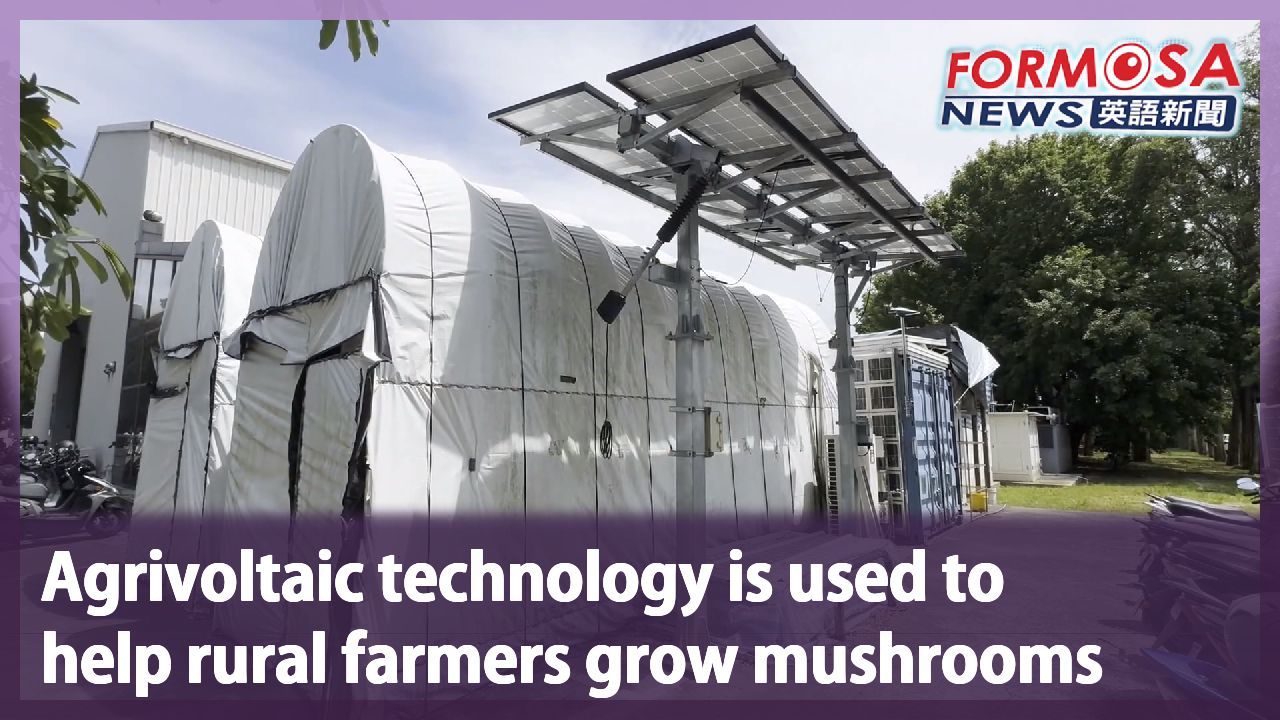
This is a mushroom farm in Jianshi Township. What makes this mushroom farm unique is that the humidity of this whole environment is controlled, and electric fans are installed throughout. And the power source is the sun.
Mushroom farmer
The power supply needs to be stable, because sometimes there may be a typhoon or some natural disaster, causing the power lines to be cut. When that happens, we’ll rely on our own power, which comes from the solar panels on the roof.
Indigenous tribesman
It is very energy-efficient. It doesn’t consume much power. The sun and mother nature generate the power. So it is like raising mushrooms in their original natural environment.
To cope with the lack of electricity in the mountains, ITRI introduced agrivoltaic technology by setting up solar panels to generate power, so that mushroom farmers can have a stable power supply to control the temperature and humidity to create a suitable environment for their mushrooms’ growth. Being in a remote area is no longer an issue.
Sung Chih-ta
Technology industry worker
It gets cold in the mountains, so there is no need for an air-conditioned room. This place is completely natural, and we only use electric fans. The solar panels provide more than enough electricity to power the fans.
Huang Chao-yang
GEL, ITRI
Because this is just a simple shed, we are unable to install solar panels on the structure, so we use photovoltaic panels vertically on the side of the structure as well as fixed photovoltaic panels next to it to provide electricity during the day.
The solar energy provides farmers with the electricity they need, who in turn can grow crops with high economic value for the nearby Indigenous tribes, allowing young tribes people who have moved away to return home with peace of mind.
For more Taiwan news, tune in:
Mon to Fri at 9:30 pm on Channel 152
Tue to Sat at 1 am on Channel 53
#mushrooms #farming #agriculture #technology #entangledlife #solarPV #solarpower #agrivoltaics
太陽能打造"農電共生" 新竹尖石鄉用綠能種香菇
2025-08-27
香菇屬於高經濟價值的農作物,但種香菇以溫度、溼度、空氣最重要,為了讓香菇農可以有充裕電力,培育出品質好的香菇,工研院以「農電共生技術」,利用太陽能發電來協助尖石鄉的農民、種香菇。
隨著菇農的腳步,走進菇園內,映入眼簾的,除了成熟的香菇,還有大量未成熟的菌絲。
這是尖石鄉的菇園、而這座菇園最特別的地方在於,他們種香菇的方式,加入控制濕度的機器和電扇,至於用電來源,全靠菇園棚外的太陽能板。
[[菇農]]
“電的穩定性,因為有時候這裡可能颱風來了,或是一些天然災害,可能原本的電線斷了,這個可能就需要內部的那些電去跑,因為太陽能板直接裝在屋頂上,這個是直接的嘛。”
[[部落民眾]]
“很省電,它不會說要用到電要用什麼,就是用太陽、大自然來發電,所以會較接近…用原生態去種這些香菇,養這些香菇。
為了因應高山欠缺電力的狀況,工研院推出農電共生技術,架設太陽能板發電,讓菇農可以用穩定的電力來控制 溫度、濕度,營造好的養菇環境,同時也解決偏鄉用電的問題。
[[科技業者 宋智達]]
“山上很冷,是不需要用冷氣房,我們山上完全自然的,只用電風扇,那太陽能面板 供電風扇的電是足足有餘。”
[[工研院綠能所副組長 黃朝揚]]
“因為這個是簡易農棚,所以它的結構其實沒辦法搭建太陽能板,所以我們在旁邊就是利用立面的光電板,跟固定的光電板,提供這邊白天的電力。”
透過太陽能來提供農民所需要的電力,為原鄉部落創造出高經濟價值的農作物,也讓外地的部落年輕人,能放心返鄉。
更多新聞內容,請鎖定:
民視台灣台(152頻道)週一至週五晚上9:30
民視新聞台(53頻道)週二至週六凌晨1:00
Related News