Taiwan’s white paper on dementia released
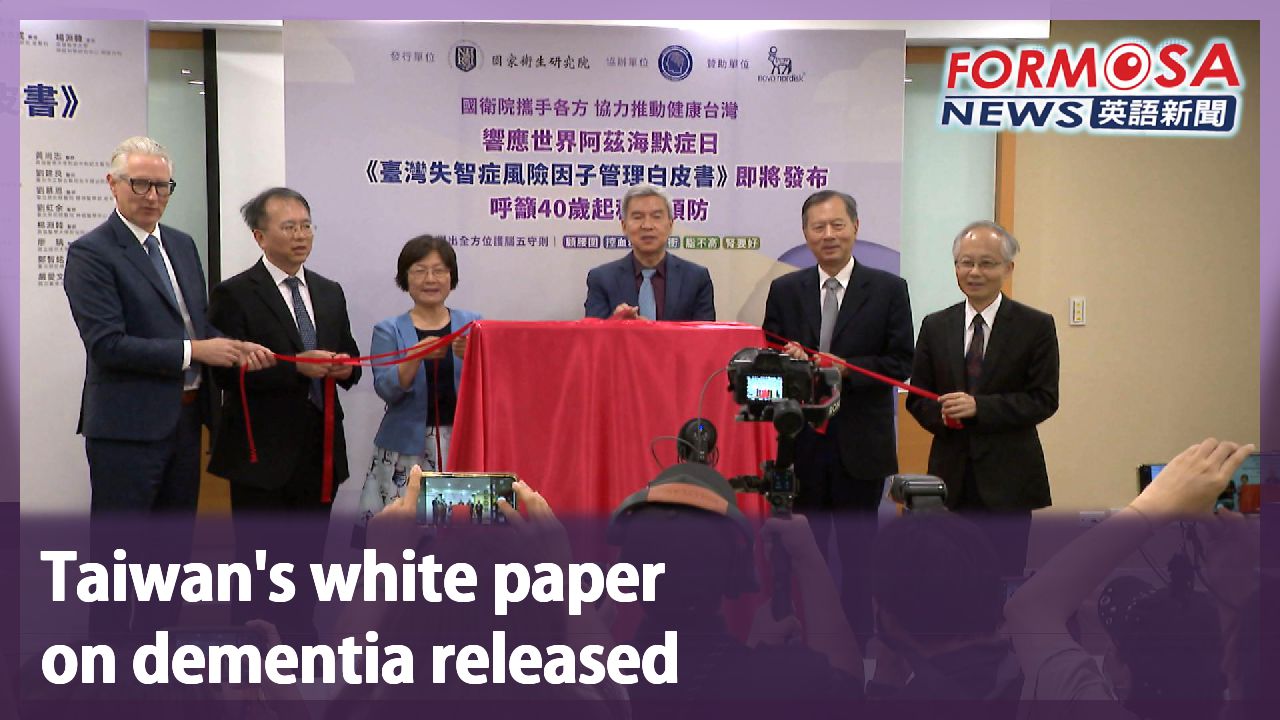
In time for World Alzheimer’s Day, Taiwan’s National Health Research Institutes announced the release of the "White Paper on Managing Risk Factors for Dementia." The initiative urges citizens to begin proactive prevention from age 40, identifying this stage as the “golden period” for intervention. FTV reporter Stephany Yang has the details.
Novo Nordisk, a global leader in the prevention and treatment of diabetes, obesity, and other chronic conditions, signed a Memorandum of Understanding with Taiwan’s National Health Research Institutes and Kaohsiung Medical University. As part of this strategic collaboration, they also jointly released the "White Paper on Managing Risk Factors for Dementia," aiming to encourage early intervention and comprehensive risk management. Through this partnership, they hope to tackle pressing public health challenges, improve chronic disease management, and accelerate research efforts.
Hans Duijf
Novo Nordisk Taiwan General Manager
We started the collaboration last year in 2024. With the same mission in mind, if we are together to address the increasing public health burden of chronic diseases. That includes diabetes, obesity, and dementia, then we simply have to work together. I think that really is the recognition that the thing that can make the biggest difference is really early intervention and prefearbly prevention because that is where we can add the most life to years and years to life.
Sytwu Huey-Kang
NHRI President
Last year, we signed an agreement with Novo Nordisk with the aim of fostering public-private collaboration. The National Health Research Institutes serve as an ideal interface, helping to bridge government policy and resources with Taiwan’s academic institutions, medical centers, domestic industry, and international support.
According to a 2023 survey by the Ministry of Health and Welfare, nearly 8% of Taiwanese aged 65 and older live with dementia. That’s roughly one in every 13 seniors. The white paper outlines 14 modifiable risk factors of dementia, including managing obesity, diabetes, hypertension, and high low-density lipoprotein cholesterol.
Hans Duijf
Novo Nordisk Taiwan general manager
From a risk factor perspective, we as a company is very focused on diabetes and obesity, and recognize that as a rule of thumb for people with diabetes or obesity, the risk of developing dementia is approximately double. So, certainly, when thinking about the best thing to prevent dementia is really to intervene early and work on the prevention of diabetes. One of the underlying causes there is to really think about obesity as a significant contributor and risk to diabetes and to dementia. Leading a healthy lifestyle, but also increasingly thinking about the right medication to deal with obesity is the right way forward.
Chu Chien-fang
Ministry of Health and Welfare, Department of Long-Term Care
Starting Jan. 1 next year, under the Long-Term Care Plan 3.0 initiative, we will expand dementia care services to cover individuals of all ages. This approach comes from the recognition that younger individuals with early-onset dementia often still possess work capabilities and bear significant financial responsibilities for their families. Without proper support following a diagnosis, the burden can overwhelm the entire family. By broadening the scope to include all age groups, Long-Term Care Plan 3.0 aims to identify and assist dementia patients, especially younger ones, as early as possible.
Under the current regulations, eligible recipients of government-subsidized long-term care services in Taiwan include people aged 65 and older, Indigenous people aged 55 and older, individuals with physical or mental disabilities and those aged 50 and older with dementia. Starting Jan. 1, 2026, eligibility will be expanded to include people under 50 with dementia who are also disabled, as well as patients in the post-acute care program.
For more Taiwan news, tune in:
Mon to Fri at 9:30 pm on Channel 152
Tue to Sat at 1 am on Channel 53
#dementia #longtermcare #health #diabetes #WorldAlzheimer’sDay #NationalHealthResearchInstitutes #Ministry of Health and Welfare #earlyprevention
2025-09-19