South African apple imports cut after diplomatic spat with Taiwan
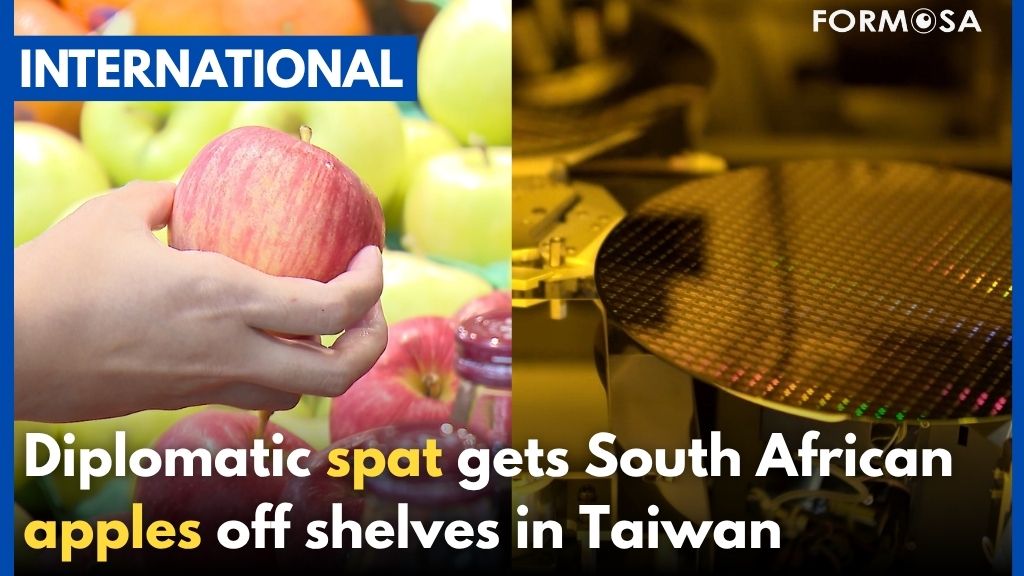
South African apple imports cut after diplomatic spat with Taiwan
2025-10-06
Apples from South Africa have all but disappeared from shelves, and it’s no coincidence. What started as a diplomatic dispute over Taiwan’s representation in South Africa has now turned into a high-stakes trade standoff. Taiwan has responded not just by limiting apple imports, but by weaponizing one of its most powerful assets, semiconductors. And it seems the pressure is working.
The apples here come from all over the world: the US, New Zealand, Japan, but not South Africa.
Shopper
Can’t find South African apples
I think they’re mostly from New Zealand, so that’s what we buy. Stores rarely carry apples from South Africa.
Taiwan imported 99 tons of apples worth US$102,000 from South Africa from January to August this year, according to the Ministry of Agriculture. It’s a steep drop from the same period in 2024, where there were 2,696 tons of imported apples reaching US$3 million. Imports shrunk by 96%, and South Africa fell from No. 6 to No. 10 as a top apple provider.
Voice of Wu Ling-hsiang
Think tank
South Africa depends on Taiwan for more than selling apples. Diplomacy is about giving and taking, so Taiwan is willing to make the effort and fight for its own best interests.
South Africa forced Taiwan to rename and relocate its de facto embassy away from the administrative capital, Pretoria. Taiwan responded by restricting apple imports and for the first time imposing controls on chip exports.
Voice of Wu Ling-hsiang
Think tank
Academically, this would be referred to as “exercising power,” which is built on your resources. Taiwan is a leader in the world when it comes to semiconductors, which make semiconductors a strategic resource. This resource can be weaponized to grant Taiwan power, in a way.
The Ministry of Foreign Affairs says South Africa wants to negotiate, which could be a sign that Taiwan’s “chip diplomacy” is working. While restrictions have been suspended, it remains to be seen whether they will return to what they were before.
For more Taiwan news, tune in:
Mon to Fri at 9:30 pm on Channel 152
Tue to Sat at 1 am on Channel 53
#apples #southafrica #chips #trade #taiwan
降等更名! 南非打壓我國辦事處 "晶片出口管制"引發國際矚目
2025-10-06
南非去年開始將台灣駐點辦事處降等、更名,更移除首都駐處,我國政府擬祭出半導體、晶片出口管制,南非立刻請求協商,可見台灣的「晶片外交」手段奏效,同時在貿易上也作出調整,現在南非的蘋果進口量也雪崩式下滑。
賣場裡整區的蘋果,來自不同產地,美國、紐西蘭、日本通通有,就是找不到南非。
[[民眾]]
“大概都是紐西蘭的多,所以我們都會買紐西蘭的。沒有(買過南非的蘋果),因為賣場好像也很少看到。”
根據農業部統計,今年前8月,從南非進口99公噸的蘋果,總額10.2萬美元,相較於去年同期進口量,2696公噸、總額300萬美元,跌幅超過96%,佔我國蘋果進口排名,也從去年同期的第6名跌至第10名。
[[聲源: 科技力智庫執行長 烏凌翔]]
“南非依賴我們絕對不只有蘋果。外交本來就可以有進有退,所以台灣願意這樣做,努力這樣做,就是看爭取自己的最大的權益。”
因為南非打壓台灣主權,將台灣駐點辦事處降等改名,更移除首都的駐處,我國政府出招,除了限制蘋果進口,也首度祭出半導體、晶片出口管制。
[[聲源: 科技力智庫執行長 烏凌翔]]
“這個在學理上面叫做權力的運用,那這個權力要以資源做基礎,台灣有的資源就是半導體這個產業獨步全球,所以這個動作是把台灣的半導體優勢化為,或者叫做武器化,拿來當做一種權力的運用。”
根據外交部證實,南非已請求協商,可見台灣的「晶片外交」手段奏效,目前禁令雖然暫時喊停,但兩國的外交談判結果如何?還有待觀察。
更多新聞內容,請鎖定:
民視台灣台(152頻道)週一至週五晚上9:30
民視新聞台(53頻道)週二至週六凌晨1:00
Related News