After 9 years, farmers successfully harvest wasabi again
After 9 years, farmers successfully harvest wasabi again
2026-01-26
Wasabi was once grown in the scenic mountains of Alishan at a high altitude and was a local specialty loved by Japanese and Taiwanese people alike. However, it was also grown on state-owned land and tolerated for decades, until the then-Forestry Bureau banned the cultivation of wasabi on altitudes of 2,200m and up near the end of 2016. In 2023, the Tsou people established a cooperative to try grow the crop again at mid-altitude area. Their efforts have paid off and a newly developed wasabi cultivar is expected to become the next local money spinner after high mountain tea and coffee. Our weekly special report.
Chen Meng-liang
Japanese cuisine chef
The taste is good. It’s basically the same as before. A customer brought some down before and it wasn’t as great. But this one’s not bad. It’s sweet and spicy at the same time.
After trying some, this experienced Japanese chef gave his seal of approval to the new variety of Alishan wasabi.
Chen Meng-liang
Japanese cuisine chef
Fresh wasabi is spicy and sweet, but it doesn’t sting. It’s milder. Whereas powdered wasabi has chemical additives more or less. So while it’s spicy, it also burns. But not with fresh wasabi: when you mix it with soy sauce, it even gives the soy sauce a slight sweetness that lingers.
This exquisite taste didn’t come easily, all because wasabi cultivation was banned on Alishan in 2017.
Chen Meng-liang
Japanese cuisine chef
It’s a pity. Customers keep asking why we don’t offer fresh wasabi anymore. Sometimes they order bluefin tuna, which should be paired with Alishan wasabi, but it’s just not possible.
Wasabi used to be one of Alishan’s most iconic produce. The holy trinity of Alishan were the sacred trees, taking the forest railway to catch the sunrise, and wasabi.
Liang Pi-chu
Alishan wasabi farmer
In the past, when visitors come up here, the first thing they look for is wasabi. It was an Alishan specialty that only grows here and exported to Japan.
Mazuma wasabi from Alishan has great quality and taste, and was therefore popular in the Japanese market. It was also pricey, at more than NT$1,000 per kilo.
Huang Chin-cheng
Alishan wasabi farmer
Back then, at the height of wasabi cultivation on Alishan, everyone living on the mountains, Han Chinese and Indigenous alike, relied on growing wasabi for their livelihoods. Apart from bamboo shoots, wasabi was probably the most widely cultivated. And it’s not just about the economic value. It’s such a great crop and kept so many of us alive.
Liang Pi-chu
Alishan wasabi farmer
Before, we only had scooters and carts. After we started growing wasabi, we could buy mircovans, then sedans, and we could start doing repairs around the house too. It really allowed us mountain residents make a good living.
Wasabi can only be grown in humid, shady and cool areas between 12 and 18 degrees. Not only that, it also takes one-and-a-half to two years before it can be cultivated. Due to the stringent conditions required, in Taiwan they’re almost exclusively grown in Alishan at around 2,200m above sea level, in state-owned forests. That’s also where the controversy begins: the crop may be an important source of income for farmers, but the government grew increasingly concerned about the impact of wasabi cultivation on the local ecosystem.
Nine years ago, we also reported on the wasabi farms at the time.
After a fierce tug-of-war, the Forestry Bureau, now the Forestry Conservation Administration, reclaimed all state-owned forest land in 2017 and banned wasabi cultivation. It also eradicated all wasabi plants, thus bringing an end to the once-thriving industry.
Huang Chin-cheng
Alishan wasabi farmer
When wasabi cultivation was brought to a halt, all young people moved out in the next few years. That means there wasn’t a way they were going to make a living in the mountains.
Now, after nine years, can the industry be revived?
We’re now at Alishan Wasabi Cooperative chair, An Shu-mei’s wasabi farm. She’s set up a screen house to create a suitable growing environment for wasabi plants.
Here it is, the coveted wasabi.
An Shu-mei
Alishan Wasabi Cooperative chair
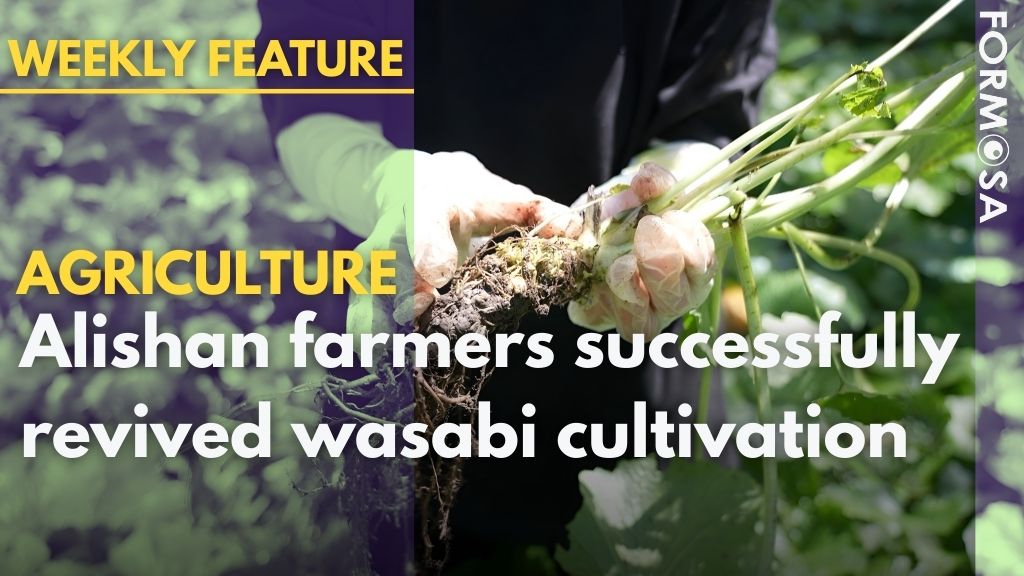
I’m pulling it up like this. The roots are free of disease. It’s really healthy, without any disease. This is the wasabi rhizome that will be ground into wasabi paste, it’s this section here.
The wasabi rhizome is still covered in soil, but reveals itself after rinsing.
An Shu-mei was a pastor for the Tsou people in Alishan. To help support the local economy, she started growing wasabi a few years ago, at the village of Lalauya, 1,200m above sea level.
An Shu-mei
Alishan Wasabi Cooperative chair
Our wasabi was famous and had great economic value. There has to be a cash crop that allows our tribespeople to make a living. It’s also the question of protecting our land, our Indigenous reserve. The plot of land next to Lalauya was already sold to Han Chinese people. The Indigenous front is only a cover. We keep losing so much of our productive land.
An Shu-mei established the cooperative in 2023 to encourage fellow villagers to get into the trade. But her efforts did not pay off in the beginning.
An Shu-mei
Alishan Wasabi Cooperative chair
People were skeptical. Everyone said to me, “Even Dr. Lee failed. What made you think you’d succeed?” I’ve also heard that many biotech companies tried to cultivate wasabi and even invited our villagers to try planting them too, but even the companies gave up.
People didn’t mean to be dismissive. There were simply too many cases of failure.
Liao Hui-fen
National Chiayi University professor of biochemical science
Most wasabi cultivars cannot adapt to the altitudes of 1,200m to 2,200m. So we had to select and breed a cultivar ourselves. The wasabi cultivar grown on Alishan now can be considered a new cultivar. It’s handpicked by us in Taiwan. It’s not what the Japanese had, the Mazuma or Shimane cultivars. So the Alishan wasabi cultivar is really precious. It’s suited to the environment here.
An Shu-mei not only had to select a new cultivar, she also had to create quality seedlings. With subsidies from the Agriculture and Food Agency, the cooperative built a smart greenhouse for cultivating healthy and bacteria-free seedlings, which will then be allocated to cooperative members to grow in their own screen houses.
But that’s still only the beginning. There are still many challenges that await wasabi farmers.
Wang Chi-sheng
Alishan wasabi cooperative member
The high-altitude farms were colder and didn’t have an issue with pests. But now that we’re growing here, it’s harder to fight against pests and disease. This is what we’re dealing with.
Yang Cin-sian
Taiwan Agricultural Research Institute
Moving wasabi to a place between 1,000m and 2,000m above the sea where most Indigenous reserves are poses several challenges. First, the temperatures are higher, and the duration of high temperatures is also much longer. That’s the first challenge. Second, the insect population differs. Within this area, pest infections are much more common and varied than higher up in the mountains.
Growing healthy wasabi crops in lower-lying regions was an immense challenge, but the cooperative, now with more than 20 members, persisted.
Towards the end of 2024, the cooperative finally harvested the first batch of wasabi crops and immediately attracted wide attention. Even Japanese buyers hurried to score them.
Liao Hui-fen
National Chiayi University professor of biochemical science
They’ve been missing the Alishan wasabi from before. So as soon as they heard that we’ve started growing it again, they were excited to come and see. They actually love our wasabi. When they came before, they asked for long-term purchasing contracts even for the leaves and stems. But because our farms are still small and we can’t guarantee a certain yield, it’s not feasible for us to accept large orders at the moment.
The challenge now is for the yield to catch up with demand. Wasabi already sells for more than NT$6,000 per kg, and can reach over NT$10,000 for produce of high quality. This has become a great source of motivation for Indigenous farmers.
Liang Pi-chu
Alishan wasabi farmer
Although those of us who are active in wasabi cultivation belong to the older generation, there are already a couple of youngsters who’ve joined our cooperative. I also hope that young people can help us succeed.
Nine years has passed since wasabi cultivation on Alishan was uprooted. What does the state-owned land now look like?
The wasabi plantation reclaimed by the Forestry Bureau at that time covered nearly 300 hectares. Today, no trace of the former plantation can be seen.
Ho Wen-I
Forestry and Nature Conservation Agency technician
It’s good. We had hope to retain its original state, meaning a larger natural habitat for wild animals. Here we’re starting to capture images of the Formosan black bear, as well as other commonly spotted wild animals, including wild boars, Reeves’s muntjacs, goats, yellow-throated martens, crab-eating mongooses and even pangolins, really diverse fauna.
After nine years, it seems that both wasabi farmers and environmentalists have reached a happy ending.
For more Taiwan news, tune in:
Mon to Fri at 9:30 pm on Channel 152
Tue to Sat at 1 am on Channel 53
#agriculture #taiwan #alishan #wasabi #sashimi #sushi
阿里山山葵 改種在低海拔 克服氣候與病蟲害 再現經典風味
2026-01-26
阿里山的山葵,曾經是台灣的綠金,品質好、價格高,出口日本,為農民賺進大把收益,也成為阿里山觀光的一塊招牌。不過2016年底,當時的林務局一紙禁種令,禁止農民在2200公尺,中海拔的國有林地上種植山葵,自此,阿里山山葵在台灣的日本料理店幾乎絕跡。為了讓原有的經典風味重現,阿里山鄒族農民,最近成立了合作社,嘗試在1200公尺的低海拔山間重新栽種山葵。
[[日式料理廚師 陳孟亮]]
"味道可以,跟以前的沒有差很多,之前有一個客人帶下來,味道沒有那麼好,它這個味道還不錯,會辣而且有甜。"
品嘗一口,阿里山山葵合作社栽種最新品種的山葵,資深日式料理師傅,給了肯定的評價。
[[日式料理廚師 陳孟亮]]
“這個(新鮮)山葵,它就是辣、甜,而且不會很嗆,比較柔和。像這種(山葵粉)它就是,多多少少有化學的添加,它有時候辣的話,就是太嗆了,像這個不會,有時候甚至你把它放到醬油裡面,會變成醬油稍微甜甜的,就是會回甘的感覺。”
這一抹山葵的滋味何其珍貴,自從2017年阿里山不種山葵後,這風味就逐漸消失在台灣人的餐桌上。
[[日式料理廚師 陳孟亮]]
“滿可惜的,客人都一直問說,以前來有新鮮山葵,現在怎麼沒有,有時候來點黑鮪魚的生魚片,應該要配阿里山的山葵,可是沒辦法。”
山葵曾經是阿里山上最具標誌性的特產,到阿里山觀光,不只要看神木、搭森林火車迎接日出,還要帶上一點山葵當成伴手禮。
[[阿里山山葵農 梁碧珠]]
“當然過去我們的遊客上來,他們第一個來就是要買山葵,因為那時候,是我們阿里山的特色,只有阿里山可以種,然後都外銷到日本。”
阿里山產的紅梗山葵品質好、風味佳,長期受到日本市場喜愛,價格也相當高貴,一公斤要價台幣上千元。
[[阿里山山葵農 黃金成]]
“當年阿里山山葵的盛況,應該是說,只要住在山上的包括漢人跟原民,都是靠山葵吃飯。除了竹筍,可能最大宗的就是山葵,而且山葵它不是只有產值而已。這麼好的作物,養活了多少人。”
[[阿里山山葵農 梁碧珠]]
“我們那個時候都是只有摩托車、搬運車,後來種了山葵以後,就開始買中華800 買1100的貨車,然後就買轎車,房子也都慢慢的改善修繕,那個時候真的是帶給我們山區居民很好的收入。”
山葵喜歡潮濕、陰涼環境,溫度要在12到18度之間,生長期更是長達一年半到兩年,因此早年阿里山葵大多種植在海拔2200公尺左右,國有林班地的樹林下。不過,這阿里山農民的經濟命脈,後來卻漸漸變成政府眼中的山林劊子手。
九年前民視異言堂也曾經訪問拍攝當時葵園情況。
當年歷經激烈的拔河,最終林務局(今林保署)在2017年,全面收回國有林地,禁種、剷除所有山葵,曾經風光一時的山葵產業因此宣告結束。
[[阿里山山葵農 黃金成]]
“當山葵停下來,隔沒有幾年,所有的年輕人都要往外,就表示說山上沒有辦法生存,就一定要往外。”
九年過去,曾經的綠金盛世,可能重來嗎?
跟著山葵合作社的主席安淑美,來到她的山葵園,網室栽培環境,層層黑網遮蔭,模擬山葵需要的生長條件。
珍貴的山葵即將現身
[[阿里山山葵合作社理事主席 安淑美]]
“我這樣子拔,就是這樣子。基本上它的根系完全沒有什麼根瘤病,這個是很健康,它沒有任何根瘤病。這個就是要磨成泥的山葵,山葵泥就是這一段。”
泥土覆蓋看不清楚,洗淨後的山葵終於露出真面目。
其實安淑美是阿里山鄒族的牧師,為了部落的發展,幾年前,她毅然決然投入農耕之路,在海拔1200公尺的樂野部落,種起山葵。
[[阿里山山葵合作社理事主席 安淑美]]
“因為山葵本來就很有名,而且它有經濟價值,我們怎麼讓族人可以有一些比較經濟好的作物,讓他們可以去賴以為生。第二個,土地,我們要守護我們的土地,原住民保留地,像我們樂野隔壁已經賣給漢人了,掛人頭,很多我們好的土地很多就是一直流失。
部落要留住人,也要留住土地,2023年安淑美成立阿里山山葵合作社,想要吸引族人一起來試種山葵,但一開始…
[[阿里山山葵合作社理事主席 安淑美]]
“大家懷疑啊,族人、部落(說)’牧師,以前都種不成功了,李醫師什麼都不成功,你怎麼會成功呢?’ 聽說有很多生技公司來育,嘗試育,也給族人試種,後來都放棄了,後來那個公司也放棄了。”
不是大家故意潑冷水,是因為過去幾年,山上早有太多試種山葵卻失敗的故事。
[[嘉義大學生化科技學系 廖慧芬教授]]
“其實從海拔2200(公尺到1200的地方,大部分的山葵是沒有辦法適應這樣的環境,所以我們必須要先做選種、育種的動作。所以目前阿里山的這個品種,算是山葵的新品種,是我們台灣自己再挑出來的,那不是原本日本人的紅梗、綠梗的品種,所以阿里山的山葵,這個品種是非常的珍貴,很適合這個環境。”
安淑美的山葵大計除了採用新品種的山葵外,育苗也是關鍵,在農糧署補助下,合作社先蓋了一座育苗用的智能溫室,目的是要育出健康無菌的山葵組培苗,再讓社員們移到各自的網室栽種。
儘管已經育出新的品種,但是要把山葵搬下山復耕,挑戰還是很多。
[[阿里山山葵合作社社員 汪啟聖]]
"以前種到高海拔的地方比較冷,那個病蟲害比較沒有。可是我們拿到這裡種,病蟲害還蠻辛苦的對抗,所以這是我們的困難。”
[[農業部農業試驗所副研究員 楊欽憲]]
“山葵移到海拔1000到1200,原住民保留地比較多這個區間,遇到問題大概就是,一來是溫度提高,(高溫)時間也拉長很多,所以這個是第一個瓶頸。第二個瓶頸,它的昆蟲樣態可能不太一樣,所以在這個海拔區間,遇到的那些蟲害,相較於海拔高的部分,多很多樣態出來。”
要在中低海拔山區種出健康漂亮的山葵,考驗可是從沒斷過。目前山葵合作社已經有20多位社員,他們正一邊種植一邊解決難題。
2024年底,合作社成功採收了第一批山葵,立刻吸引了外界的注意,特別是一直對阿里山山葵情有獨鍾的日本商社,更是直奔產地前來商談。
[[嘉義大學生化科技學系 廖慧芬教授]]
"在他們印象裡面,就是一直懷念當年的,台灣阿里山的山葵,所以一聽到我們的阿里山山葵又繼續再種了,他們就很高興的來看,其實對我們的山葵非常的喜歡,因為之前來看的時候,包括我們的葉子,包括我們的根莖,其實他們都希望說能不能做長期收購的合約。但是因為我們現在,第一個面積小,產量也還不能預估的情況之下,我們比較難去接受比較大的訂單。"
不怕沒人買,就怕沒山葵賣,市場上如今的山葵價格已經喊到一公斤六千元以上,品質好的甚至要破萬元,以山葵重振部落的心願,正積極努力實現中。
[[阿里山山葵農 梁碧珠]]
“雖然我們現在種的比較是老一輩,當然我們部落也有幾個有兩三個年輕人也已經投入,也是加入我們的山葵合作社,我也是希望藉著年輕人,能夠把這樣的區塊做起來。”
九年過去,台灣當年為了保育山林,斬斷了鼎盛的山葵產業,曾經被破壞的林班地,如今又是如何呢?
當年林務局回收的山葵園,有將近三百公頃,舊地重遊,已經看不出曾經的葵園痕跡。
[[林業保育署奮起湖工作站技術士 何文義 ]]
“這樣很好,我們就是希望維持原始的態樣,也是增加野生動物棲息的環境。在這邊的話,陸陸續續都拍攝到黑熊的蹤跡,一些常見的野生動物,山豬、山羌、山羊、黃喉貂、食蟹獴、穿山甲都有,動物的生態是很豐富的。”
山林保育與經濟發展之間或許不是二擇一的難題,期盼在山葵合作社的努力下,阿里山的綠金能再現奇蹟。
更多新聞內容,請鎖定:
民視台灣台(152頻道)週一至週五晚上9:30
民視新聞台(53頻道)週二至週六凌晨1:00
Related News