Traditional markets get modern revamp to attract customers
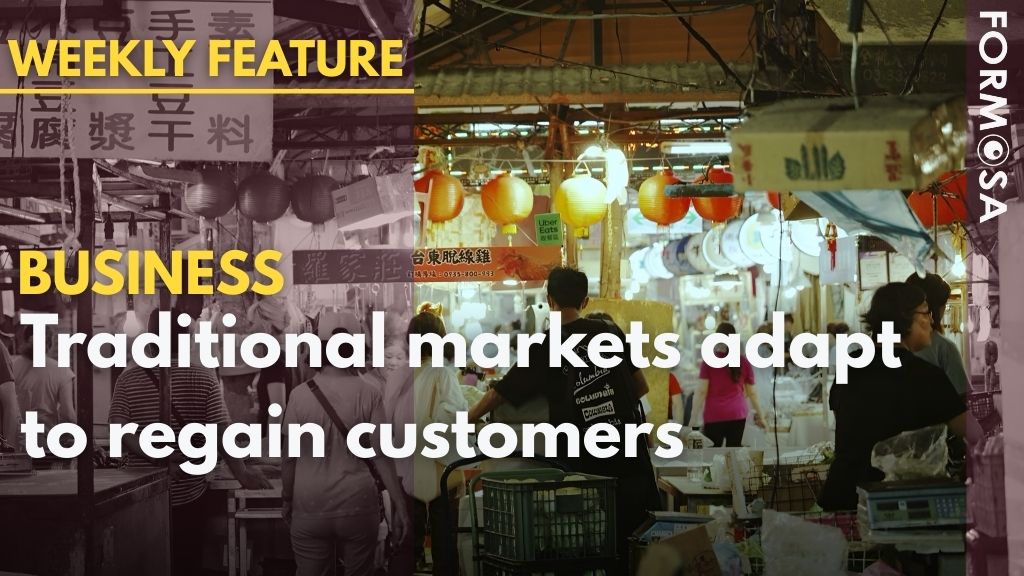
Traditional markets get modern revamp to attract customers
2026-03-10
Due to unruly human behavior in its open-air structure, traditional markets are gradually losing customers to supermarket chains. According to the Ministry of Economic Affairs, more than 100 traditional markets closed in just two years, from 2021 to 2023. To reattract customers, governments are stepping in to revamp the facilities and vendors are also finding clever ways to gain new customers. Our weekly special report.
Pulling a trolley and fritting from one stall to another: this is A-ming, a retail-level fruit and vegetable vendor. Every morning, he goes to Sanchong Fruit and Vegetable Market to bulk buy what he’s planning to sell.
He stacks boxes upon boxes of produce onto the trolley, then takes them over to his truck in the parking lot. It usually takes several trips back-and-forth to get everything he needs.
Loading his truck under the hot summer weather is quite some serious workout. Some vendors couldn’t bear to see him having to work so hard, so they try to make things easier by pre-packaging the goods. Others even help A-ming transport the boxes over with their own scooters. That saves him a number of trips.
Many people enjoy shopping at traditional markets for the social aspect. However, traditional markets all over Taiwan are in decline, losing customers and even forced to close in some cases.
According to the Ministry of Economic Affairs, from 2021 to 2023, the number of government-owned markets fell from 486 to 438. The decline is even steeper with privately-owned markets, from 215 to 153. In total, more than 100 markets have shut down in just two years.
It’s likely some shoppers are put off by those inconsiderate people, and coupled with the rise of supermarket chains and hypermarkets, many customers would rather opt for those instead. Is modernizing traditional markets, and thereby improving the shopping experience, the solution?
As soon as one walks in, they’re greeted by the cool AC. This is Wugu Market in New Taipei, where A-ming runs his fruit and vegetable stall. It’s not only well-lit and comfortable. The vendors also try to provide a better experience themselves. A-ming and his wife Elsa clearly put a lot of thought into product display.
Elsa
Fruit and vegetable vendor
We have different layers as opposed to having everything on one flat surface before. We noticed that people may be overwhelmed when everything’s placed together, so we categorized our products in different layers to make it easier for them.
Established in 2022, Wugu Market is the first modernized, government-run traditional market in New Taipei. Stalls here are placed in designated areas for fresh produce, meats and prepared foods. Scooters are also not allowed inside, making for a comfortable and safe shopping experience.
A-ming
Fruit and vegetable vendor
The clearest difference is the AC. In traditional markets, when the weather’s hot, it really feels like a sauna. It’s really hot. Also drainage. We have well-designed drains with covers, whereas in traditional markets it’s the usual type that have many gaping holes, and residue like vegetable waste and other stuff will get inside, and cause blockage. When it’s really hot, the odor becomes worse.
Wugu Market’s modern facilities allow it to be free of the shortcomings plaguing traditional markets, but foot traffic there still can’t compare to markets past.
Ya-wen
Pork vendor
I can’t manage to sell the day’s inventory. Sometimes I make sausage from those pork, and also cured meat. For the shoulder, we turn that into sliced meat for hotpots. And pork belly can be made into bacon.
Ya-wen has run a pork stall for over 20 years. She applied for a spot at Wugu Market when it opened because rent was cheap. But she didn’t expect the decline in shoppers after the initial opening period. Many vendors have already left.
Ya-wen
Pork vendor
In the beginning there were more than 100 vendors. But after the number of customers fell, vendors left too.
At the time of filming, we noticed that the signboards from those previous vendors remained, but their spots were taken over as storage or made into dining areas. And with less vendors, the number of customers also dropped.
Customer
Some people enjoy shopping at markets because they like to look around for things to buy, but there aren’t as many vendors or products available here anymore.
Why is it so hard to attract customers even though the facilities are much better?
Wu Yi-shin
National Sun Yat-sen University assistant professor
Most people seem to redesign markets on the premise that consumer habits have changed when that’s not the case.
Dr. Wu Yi-shin believes instead that consumer habits are hard to change. For example, modernized markets with AC may be more pleasant for pedestrians, but because scooters aren’t allowed inside, a great proportion of customers and older adults are left out. That greatly shrinks vendors’ customer base.
Wu Yi-shin
National Sun Yat-sen University assistant professor
I think they can start with allowing scooters inside, but with rules in place. I believe that would be a good start. It’s less abrupt than banning them altogether. Begin by putting a speed limit on scooters and make scooter riders build a new scooter etiquette, then move on to the next stage. People with scooters will be better behaved and that makes it easier to implement traffic control.
Because of its proximity to industrial zones and a redevelopment zone, the local population is still quite small. To attract customers, the vendors’ association often hands out vouchers on weekends or organizes family activities to create incentives to locals to drive over to shop. Additionally, being close to highway exits also brought them customers through partnerships with tour groups, and turn the market into a rest stop of sorts.
Chen Wen-sun
Wugu Market vendors’ association head
Wugu’s tourism is mainly centered on our Guanyinshan National Scenic Area. Many visitors come from Central and Southern Taiwan and stop here to rest. They can have meals, do some shopping and rest a bit before going back on the road.
While the vendors’ association launches campaigns to attract customers, individual stalls try to get them to make a purchase.
Ya-wen noticed that her customers are usually small families in the nearby redevelopment zones. They buy little and don’t cook very often. So she began offering sausages and vacuum-packed ingredients that suit those customers better, and has since gained a steady clientele.
Ya-wen
Pork vendor
I’ve been here for almost three years now. I have a steady customer base and also my own Line open chat group. My customers order from there and we also try to offer products, such as vacuum-sealed meat that they can order straight from the chat.
Meanwhile, A-ming approached many eateries outside when he’s not taking care of the stand. He now has several long-term contracts, and clients like working with him because he has machinery that can quickly prepare chopped green onions, ginger and chili. A diverse clientele improved his business.
A-ming
Fruit and vegetable vendor
Sometimes there are really so few customers. In this situation you must come up with solutions. So I approach restaurants and we also do deliveries and group-buying. I deliver to the nearby Zhouziyang redevelopment zone, and also Sanchong and Xinchuang, because I live in Sanchong and I can do deliveries on my way home. So there are ways to get more customers.
Vendors at Wugu Market have to do more than traditional retail-level outdoor markets, and even reaching customers beyond the market building. But A-ming has no complaints. He says he believes it’s only a matter of time for vendors to have to adapt to new business practices. He also says he observes local markets on holidays to Japan and South Korea.
A-ming
Fruit and vegetable vendor
The markets there are now all renovated, have AC and are all pretty clean, which is closer to what we have here. But they try to keep a retro vibe, meaning they combine the old and the new, while prioritizing cleanliness and tidiness. But our modernized markets may still feel off for older generations or people who are used to traditional markets. But I also think it’s a matter of habit. If you visit certain sellers often, you’ll eventually develop a cordial relationship with them. You just have to take the first step inside here.
Newer markets may no longer look like they used to, but it’s all for a better customer experience. They also offer a more social experience even when chain stores are gradually taking over.
For more Taiwan news, tune in:
Mon to Fri at 9:30 pm on Channel 152
Tue to Sat at 1 am on Channel 53
#shopping #markets #consumertrends #taoyuan #nanmenmarket
逛傳統市場的人變少 兩年收掉百家 現代化市場能找回客人嗎?
2026-03-10
傳統市場商品種類多,熱鬧又充滿人情味,然而,開放式的空間,也導致夏天逛市場悶熱不堪,有時還得忍受各種氣味夾雜、人車爭道的亂象。經濟部統計,2021到2023年間,全台就收掉了上百家傳統市場,主要原因是民眾消費習慣改變,傳統市場生意已經大不如前。然而,近年來,有一些傳統市場開始朝「現代化轉型」,成果如何?帶您一起了解。
拉著拖車,穿梭在菜市場,看到熟悉的攤販便打聲招呼。阿銘平常經營蔬果攤生意,每天早上都會到三重的果菜批發市場叫貨,準備當天要上架販售的蔬果。
將一箱箱蔬果堆疊上推車,再人力搬運到停車場,一個小時內,阿銘得來回好幾趟。
悶熱的夏天,阿銘搬貨,搬到滿頭大汗,有的老闆見他辛苦,主動趁空檔先把貨包好,有的騎機車幫忙載貨,讓阿銘可以少走幾趟。
濃厚的人情味,是傳統市場的特色與魅力,但如今全台各地,有許多傳統市場卻都面臨嚴重的客源流失危機。
經濟部統計,2021年到2023年間,公有市場的數量,自486場下滑至438場,民有市場也從215場,減少至153場,兩年間,全台就收掉上百座傳統市場。
隨著連鎖超市、大型賣場崛起,傳統市場不再是大家心目中的採買首選。面對客源流失危機,朝現代化轉型,升級硬體設備,解決悶熱、衛生以及交通問題,會是解方嗎?
才剛走進大門,便有涼涼冷氣吹來,這裡是阿銘的蔬果攤所在的新北市五股公有市場。不只整體空間乾爽明亮,就連個別攤商的陳設也很講究,像是阿銘的攤位就請太太Elsa特別設計過。
[[果菜攤老闆Elsa]]
“分層是因為我們剛開始的攤架是比較平面的,但是大家的視覺可能不知道要看哪裡,所以我們後來覺得分層,他們比較清楚。”
2022年落成的五股公有市場,是新北市第一座現代化的公有市場,最大的特色之一,是將蔬果、肉類、熟食分區販售,也完全隔絕機車,民眾逛起來舒適又安全。
[[果菜攤老闆 阿銘]]
“最明顯的就是大家會說的,民眾一來就是有冷氣,(傳統市場)那邊就是熱的時候,一進去就覺得好像到三溫暖室一樣,很熱。再來就是水溝,這邊有水溝分流的系統,那邊就是一般的水溝,還有很多地方有洞,所以可能會有很多菜渣或東西跑進去,很容易堵塞,可能太陽大一點的時候,味道就會更明顯。”
現代化的五股市場解決了不少過去的沉痾,然而卻沒有找回傳統市場流失的顧客。
[[豬肉攤老闆 雅雯]]
“(每天進貨的量)賣不完,有時候會來做一點香腸,然後我們有做香腸、做鹹豬肉,比如說梅花肉沒賣完,做火鍋肉片,五花肉沒賣完做培根。”
經營豬肉攤的雅雯已經在菜市場打滾20多年,五股市場剛開幕時,因為租金便宜,便申請進駐,沒想到開幕的熱潮退去後,五股市場的來客數量就不斷下滑,讓許多攤商都撐不下去。
[[豬肉攤老闆 雅雯]]
“起初剛開始申請(攤位)都是一百多攤,後來人開始少了,攤位就都離開了。”
記者在市場內發現部分攤位上的招牌還沒拆,卻已經被用來堆置雜物,或擺放桌椅,作為用餐區,而在攤商陸續退租後,客人走進市場的意願也下降不少。
[[民眾]]
“有的人逛菜市場就是他的樂趣,就是喜歡看東看西的,買東買西的,現在這裡的攤位就是商品的名目比較少一點。”
但為何改善了硬體設備,客人還是不來?
[[中山大學博雅教育中心助理教授 吳亦昕]]
“菜市場改建的思維,不知道為什麼大家都會前提說,(民眾)消費習慣改變,但是其實沒有。”
吳亦昕指出,關鍵就在於民眾的消費習慣不會輕易改變,她舉例,放冷氣的現代化傳統市場,對行人而言雖然逛起來確實比較舒適,但機車騎不進去,排除了大量「機車菜籃族」,以及老人代步車前來消費的可能性,攤商客源大減,生意自然難以支撐。
[[中山大學博雅教育中心助理教授 吳亦昕]]
“我覺得先從規定摩托車進來,要遵守哪些(規定)開始,我覺得會是一個好的開始,而不是直接說你們都不能進來了,限制一下摩托車的速度,先把進入市場後的摩托車禮儀做出來,以後再進行下一階段,後面人已經很多了,大家養成習慣,大家就是會來這邊買,我們就可以去做交通的管理。”
五股市場因為鄰近工業區和新設重劃區,在地居民人數其實並不多,市場自治會為了刺激消費,經常在週末舉辦發放優惠券,或是親子DIY活動,希望吸引住周邊地區的民眾也能開車前來採購。此外更利用鄰近交流道的地利之便,和旅行團接洽,兼做遊覽車休息站。
[[五股市場自治會會長 陳玟蓀]]
“因為五股觀光的地方,就是我們的觀音山風景區,他們有的是從中南部上來,去自由行,選擇我這個景點過來做中繼站,可以來這邊吃吃東西,逛一逛,休息一下再上車。”
自治會想方設法把人帶進市場,攤商們則各出奇招,要把自家產品賣出去。
像是豬肉攤老闆雅雯,就因為發現來到五股市場消費的客群,以重劃區的小家庭為主,買得不多,煮飯頻率也不高,順勢推出香腸、真空包、調理包等耐放,又方便一次性採購的產品,現在生意逐漸穩定下來。
[[豬肉攤老闆 雅雯]]
“因為我在這裡快三年了,有客群,還有我自己的LINE,客人會叫貨,我們就會想換另外一種方式,讓肉比較新鮮,比如說真空方式,客人用LINE訂購。”
而果菜攤老闆阿銘則是在顧攤之餘,和外部餐廳接洽,長期配合送菜。因為物美價廉,還有專門的機器可以幫忙切好蔥、薑、辣椒,受到不少店家歡迎,多元化行銷,讓他的生意愈來愈好。
[[果菜攤老闆 阿銘]]
“有時候真的人很少。你就要自己想辦法,像我就跑餐廳,我們也有做外送,也有做團購群組。這附近洲子洋的,或像我住三重 所以三重、新莊,我事實上也可以回去的時候順便送,所以還是有辦法增加客源。”
相較於過去傳統市場單純的經營模式,在五股市場賣菜,得自己想辦法向外開發客源,但阿銘不覺得累,他分享自己過去到日韓旅遊,也會特別走進當地市場觀摩,相信傳統市場轉型是時勢所趨。
[[果菜攤老闆 阿銘]]
“他們現在都會改裝成,最少是有冷氣、乾淨,也會慢慢朝我們這種方向發展,可能還會保留一點復古的感覺,就是以前跟現在的結合,方向都是朝整潔乾淨,但這個是比較新的東西,所以對老一輩或年紀比較長,或很年輕就開始逛市場的人,可能會覺得那個味道不對,但我覺得是一種習慣,當你每天都在那邊逛,你跟這邊人熟了,人情味就有出來,只是看自己願不願意去這個地方。”
民眾的消費習慣正在改變,愈來愈注重食品的衛生與安全,與舒適的購物空間,傳統市場的人情味,或許也能透過轉型、現代化,換種方式,留在你我的生活裡。
更多新聞內容,請鎖定:
民視台灣台(152頻道)週一至週五晚上9:30
民視新聞台(53頻道)週二至週六凌晨1:00
Related News